xEMU and the Artemis surface suit requirements
The single biggest change from Apollo is the operating environment. The Apollo missions landed near the lunar equator, where temperatures max out around 120 degrees Celsius during the day and drop to minus 150 at night. The Artemis missions are targeting the south pole, specifically the permanently shadowed regions near Shackleton Crater. In those craters, temperatures can plunge below minus 230 degrees Celsius. That is cold enough to freeze human tissue in seconds. The xEMU must keep an astronaut alive for at least eight hours in those conditions. That requires a thermal control system that can dump heat during high-output tasks like walking or drilling, then retain every possible calorie of warmth when the astronaut stops moving. The suit uses a sublimator system that vents water vapor to cool the astronaut, but in the shade, it has to switch to a passive insulation mode that relies on multiple layers of advanced aerogels and reflective materials. It is a delicate balancing act with no room for error.
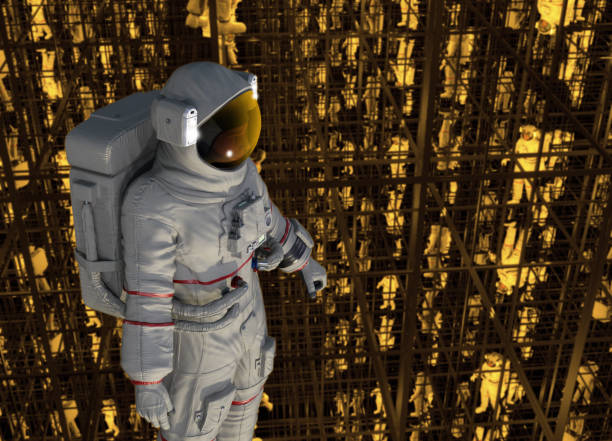
Dust is the second nightmare. Lunar regolith is not like beach sand. It is jagged, electrostatically charged, and gets into every seam, bearing, and connector. Apollo astronauts reported that dust clogged their suit joints, scratched their helmet visors, and caused the seals on their backpacks to fail. The xEMU has to seal out that dust for multiple surface excursions. Engineers have redesigned every rotary joint on the suit with dual seals and a purge system that can blow grit out before it works into the mechanism. The suit’s outer layer is a Teflon-like fabric that is tougher than Kevlar and resists abrasion. The helmet visor now has a gold-coated thermal shield that can be flipped up or down, and it is coated with a diamond-like carbon film that prevents scratches. These may sound like small details, but in a vacuum, dust penetration means suit failure, and suit failure means death.
Mobility is perhaps the most visible upgrade. Apollo suits were inflated balloons with limited joint articulation. Astronauts had to shuffle because they could not bend their knees more than a few degrees. They could not reach below their waist. They could not kneel to pick up a rock without falling over. The xEMU uses a system called “bearing joints,” where each major joint—shoulder, elbow, hip, knee, ankle—is a rotating bearing rather than a flexible bladder. This allows full range of motion under pressure. An astronaut in the xEMU can squat, twist, and even touch the toes. That might sound trivial, but it changes everything for geology work, equipment repair, and climbing over uneven terrain. The suit also features a rear-entry hatch, meaning the astronaut climbs in through the back rather than wriggling into a one-piece suit from the waist. The backpack is part of the suit, not a separate unit. This makes donning and doffing faster and reduces the risk of contamination from the dust you bring back inside the lander.
The sizing requirements are also a major engineering challenge that Apollo never had to solve. Apollo suits were custom-tailored to each astronaut. That worked for a small all-male crew of the same general build. Artemis aims to include astronauts of both sexes and a wide range of body sizes. The xEMU must fit a fifth-percentile female to a ninety-fifth-percentile male without sacrificing performance. That means adjustable limb lengths, variable torso sizing, and interchangeable glove and boot components. The gloves are particularly difficult because they have to allow fine motor control while resisting pressure forces that want to blow the fingers straight. Engineers have developed mechanical counterpressure gloves that use elastic materials to mimic the feel of bare hands, though full mechanical counterpressure for the whole suit remains a goal for future iterations.
Communications and life support have been modernized as well. The xEMU includes a wireless helmet camera with 1080p video, an improved voice system with noise cancellation, and a heads-up display that projects suit status data directly onto the visor. The backpack carries enough oxygen, water, and power for eight-hour sorties, with a six-minute emergency purge system if the primary supply fails. The entire suit is designed to be self-contained, with no tethers or umbilicals tying the astronaut to the lander. That gives Artemis crews the freedom to explore widely and respond to unexpected scientific opportunities.
The xEMU is not just a piece of clothing. It is a miniature spacecraft that has to survive the most hostile environment humans have ever attempted to work in. Every seal, bearing, and layer of insulation has been designed under requirements that demand absolute reliability in vacuum, extreme cold, abrasive dust, and radiation. For the Artemis generation of astronauts, this suit will be the difference between a successful mission and a disaster. It is the result of decades of lessons from Apollo, ISS, and commercial spaceflight, distilled into a single wearable machine. That is engineering at its sharpest.
Space News
Latest Articles
New rockets, upcoming launches, and the stories shaping humanity's push off this planet. No astronomy degree required.