Temperature control and the ammonia loops
Most people assume spaceships are just airtight buses with seatbelts. The reality is that every spacecraft is a closed-loop heat engine. Your body generates about 100 watts of heat just sitting still. A laptop puts out another 50. The space station’s life support, pumps, and science racks can push that into the tens of kilowatts. Without a way to dump that thermal energy into the void, the crew compartment would hit 120 degrees within hours. You need a radiator system, but radiators work by emitting infrared heat. They don’t work well in direct sunlight, and they need a fluid to carry the heat away from the source. That’s where ammonia comes in.
Ammonia has a very high heat capacity. Pound for pound, it can absorb more thermal energy than water, and it stays liquid under lower pressures. That matters because weight is everything in spaceflight. A water-based cooling loop for the International Space Station would require heavier pumps, thicker pipes, and more structural support. Ammonia lets you move the same amount of heat with a smaller, lighter system. The trade-off is that ammonia is toxic. A single leak in the crew cabin could knock everyone unconscious within minutes. So the engineers did something smart: they sealed the ammonia loops entirely outside the habitable volume. The heat from inside is transferred to the ammonia via heat exchangers. You don’t mix the air you breathe with the stuff that freezes at minus 108 degrees.
The system works in two halves. An internal water loop circulates through the station’s modules, collecting heat from equipment and crew. That warm water passes through a heat exchanger—basically a radiator core—where it transfers its energy to a separate ammonia loop. The ammonia then flows out to large radiator panels that look like oversized solar arrays. Those panels glow a faint cherry red in the infrared spectrum as they shed heat into space. After dumping its load, the cooled ammonia flows back to the exchanger, and the cycle repeats. It’s the same basic principle as your car’s radiator, except your car doesn’t need to reject heat into a vacuum while moving at 17,500 miles per hour.
Temperature control on a spacecraft isn’t just about cooling. It’s about balance. Too cold, and condensation forms on electronics. Valves freeze. Seals crack. Too hot, and batteries vent, plastics outgas, and your computer’s solid-state drives start throwing errors. The ammonia loops are paired with heaters and thermostats to maintain a narrow band between 65 and 80 degrees Fahrenheit inside the crew modules. That’s the same range as a comfortable home, but maintaining it requires constant adjustment. The space station uses a system of computer-controlled valves called thermal control valves that throttle the flow of ammonia based on sensor readings. When the station is in full sunlight, the ammonia flows faster. In Earth’s shadow, it slows down. It’s an automated dance of pressure and phase changes that happens every 90 minutes without anyone thinking about it.
The most critical component is the ammonia pump. This is a high-reliability, brushless DC motor spinning a sealed impeller that pushes the fluid through miles of aluminum tubing. If the pump fails, you lose heat rejection within minutes. The station carries spare pumps on board, and astronauts have performed emergency replacements during spacewalks. That’s a job you don’t want to get wrong. One misaligned bolt, one torn seal, and you’ve got a cloud of toxic vapor next to your helmet. The ammonia loops are tested before launch by running them at full pressure with helium leak checks. Any escape of gas is a fail. There is no margin for error.
As space travel moves toward longer missions—a trip to Mars, for example—the ammonia loop concept will evolve. Current designs for nuclear thermal propulsion and deep-space habitats use a variant called a pumped-fluid loop, but they still rely on the same principle of a high-capacity coolant moving through external radiators. The challenge becomes more intense when you factor in the Martian atmosphere, which is thin enough to mess with radiator efficiency but thick enough to corrode materials. Engineers are already testing ammonia-compatible coatings and variable-geometry radiators that can fold up during launch and unfold by themselves in orbit.
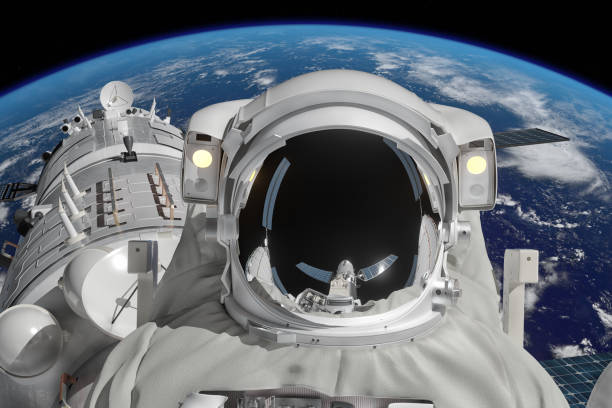
For the casual spacer, the takeaway is simple: you don’t survive the void by bundling up. You survive by engineering heat flow with the same discipline you’d use to design a bulletproof fuel system. Ammonia loops are the unsung plumbing of every crewed mission. They don’t get headlines, but they are the reason astronauts can drink coffee, run experiments, and send back selfies without cooking their own brains. When you see a photo of the space station shining against the black, remember that behind those solar panels are tubes of toxic coolant moving heat at the speed of life support. And that technology is exactly what keeps you from dying in space.
Space News
Latest Articles
New rockets, upcoming launches, and the stories shaping humanity's push off this planet. No astronomy degree required.