Space tourism and the week-long stay pricing
Let’s start with the price tag. A week-long stay in low Earth orbit, as of 2025, runs between 35 and 55 million dollars. That’s not a typo. That’s the current market rate for a seat on a SpaceX Crew Dragon or a future Blue Origin New Glenn capsule, plus accommodation at a commercial habitat like Axiom Station or the planned Orbital Reef. You are paying for the rocket launch, the reentry, the life support, the food, the waste management, and the insurance. You are also paying for the privilege of being one of maybe a dozen people on Earth who have done this.
Is it worth it? If you have to ask, the answer is no. This isn’t a vacation you save up for by skipping Starbucks. This is a transaction for people who have already bought the yacht, already flown the private jet, and now need a new horizon. But if you are the kind of person who actually wants to understand what that week looks like—beyond the Instagram photos—here is the unglamorous reality.
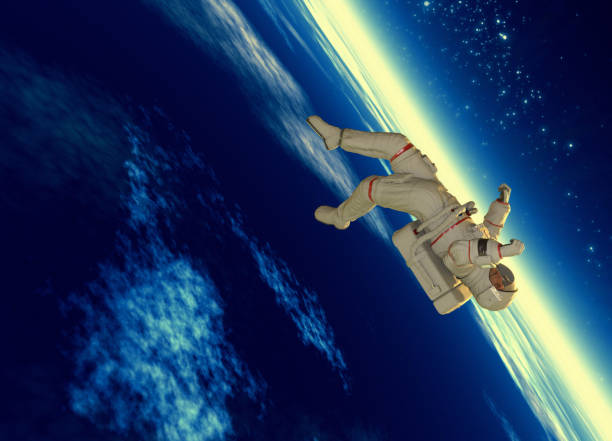
Day one is about survival. The launch is violent. You pull three to four Gs on ascent. Your body feels like it is being folded into a suitcase. Once you reach orbit, the real work begins. Microgravity is not weightlessness in the fun, floating-in-pool sense. It is a constant, disorienting lack of reference. Your inner ear rebels. Your sinuses swell because fluid shifts upward. For the first twelve to twenty-four hours, you will likely vomit. There is no shame in it. Astronauts train for this, and even they lose their lunch. The crew will hand you a barf bag and a bottle of electrolyte water. You will learn to hate the smell of the recycled air, which is sterile and metallic, like breathing through a can of soda.
By day two, your body starts to adapt. You can move without wanting to throw up. You learn to use the handrails. You figure out that you cannot just let go of a toothbrush or a spoon, because it will drift into the ventilation grate and you will never see it again. Meals come from vacuum-sealed pouches. You add water, wait a few minutes, and eat from the bag. Everything tastes muted because your taste buds are less sensitive in microgravity, so hot sauce becomes a mandatory condiment. Coffee comes in a squeeze pouch. You drink it through a straw.
Exercise is non-negotiable. Without gravity, your muscles atrophy and your bones lose calcium. You will spend at least two hours a day on a treadmill or a resistive exercise device, strapped down with bungee cords so you don’t float away. It is boring, sweaty, and the only part of the day where you feel like you are actually working. The rest of the time, you are either looking out a window or managing the mundane logistics of living in an environment that actively fights every habit you have.
By day four, the novelty of the Earth view wears thin. The window is great, but you cannot stare at it forever. You start to notice the small annoyances. Your skin is dry from the low humidity. Your fingernails grow faster because of increased blood flow, but you cannot trim them properly without the clippings floating everywhere. Sleep is a challenge. You zip yourself into a sleeping bag tethered to the wall. Without gravity telling your body it is lying down, you feel like you are falling. Some people sleep fine. Others don’t sleep at all.
Day six is when the isolation hits. The habitat is cramped. You are sharing it with four to seven other people, all of whom are probably Type-A, high-achieving personalities. Friction happens. There is no escape. You cannot go for a walk. You cannot open a window. The only sound is the hum of fans and pumps. If you have ever wanted to test your patience with humanity, this is the ultimate stress test.
The final day is a blur of reentry. You strap into the capsule, endure four Gs of deceleration again, and watch the plasma burn orange outside the window. Then you hit the water or the desert floor. The first breath of fresh air is shocking. You are back. Your legs feel heavy. Your bones ache. You stand up and realize how much you took gravity for granted.
So why would anyone pay fifty million dollars for this? Because it is not a vacation. It is a rite of passage. It is the chance to be a body in space—to see Earth not as a map but as a whole, fragile sphere. It is the thickest possible slice of perspective. For the men who can afford it, that perspective is worth the price. For the rest of us, it is worth understanding what it actually takes to live up there, even for a week. The habitats are coming. The price will drop. But the experience will never be comfortable. It will always require guts.
Space News
Latest Articles
New rockets, upcoming launches, and the stories shaping humanity's push off this planet. No astronomy degree required.