Fusion propulsion and the long-term bet
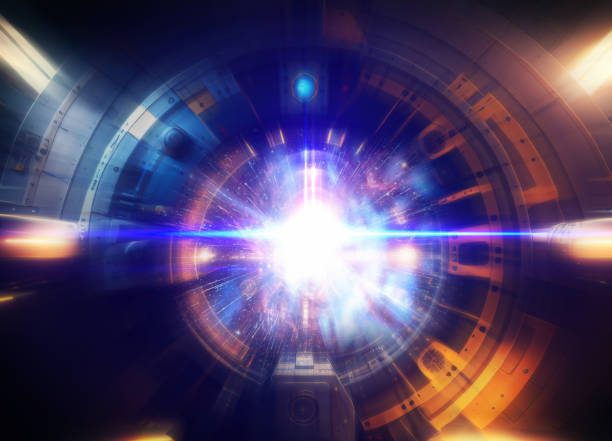
Fusion propulsion works by smashing light atomic nuclei together—usually isotopes of hydrogen like deuterium and tritium—to release enormous energy. A single kilogram of fusion fuel can produce roughly 80 million megajoules. That is eight million times more energy per kilogram than chemical fuel. In theory, a fusion rocket could cut travel time to Mars from six months to as little as thirty days. It could open up the outer planets for crewed missions that currently would take decades. But there is a catch: nobody has built a working fusion reactor on Earth that produces more energy than it consumes, let alone one small and light enough to strap to a spacecraft.
The core challenge is confinement. On the Sun, gravity does the work. In a fusion engine, you have to hold plasma at temperatures over 100 million degrees Celsius long enough for the nuclei to fuse. The two main approaches are magnetic confinement, like tokamaks, and inertial confinement, which uses lasers or ion beams to crush a fuel pellet. Right now, tokamaks are the frontrunner for terrestrial power, but they are enormous. The ITER reactor in France will weigh 23,000 tons. You cannot send that to Mars. The practical fusion engine for space will need to be scaled down drastically while still hitting the break-even point where fusion outputs more energy than it takes to ignite.
A few private companies and NASA-funded labs are working on this. The Princeton Plasma Physics Laboratory has a concept called the Direct Fusion Drive. It uses a compact fusion reactor to heat propellant directly, producing both thrust and electricity for the spacecraft. The design promises specific impulse—a measure of how efficiently the engine uses fuel—in the range of 5,000 to 10,000 seconds. Chemical rockets top out around 450 seconds. That means a fusion spacecraft could carry less propellant and more payload, or go much faster. Other concepts use magnetic nozzles to shape the plasma exhaust, eliminating the need for physical combustion chambers that would melt instantly under those temperatures.
But here is the reality check. As of 2024, no fusion propulsion system has been tested in space. The closest we have is nuclear thermal propulsion, which uses a fission reactor to heat hydrogen propellant. That technology is mature enough for NASA to consider it for a crewed Mars mission in the 2030s. Fusion propulsion is a decade or more behind that. The engineering hurdles are immense. You need a reactor that can sustain fusion continuously, not just in short laboratory bursts. You need radiators to dump the waste heat, which is substantial because no energy conversion is perfect. You need shielding to protect the crew from the high-energy neutrons produced during fusion. And you need to manage the tritium fuel, which is radioactive and has a half-life of just over twelve years, making long-duration storage a problem.
Why would anyone bet on fusion propulsion when the timelines keep stretching? Because the payoff is transformative. A fusion-powered spacecraft could perform aggressive orbital maneuvers, land on planets, and return across the solar system without the need for refueling. It could sustain a permanent human presence on Mars by reducing travel time and radiation exposure. It could enable missions to the outer planets that take years instead of decades. The economic argument hinges on the idea that speed saves money. A faster trip means less life support, less crew fatigue, and fewer consumables. If fusion propulsion can cut a Mars mission from two years round-trip to six months, the total cost drops dramatically.
The honest take is this: fusion propulsion is not the next step—it is the step after that. The industry should keep pushing nuclear thermal and electric propulsion for the near term. But for the long-term bet, fusion is the only technology that offers a genuine escape velocity from the chemical paradigm. It will require sustained investment, a breakthrough in compact reactor design, and a few lucky breaks. If it pays off, the solar system becomes our backyard. If it does not, we will still be stuck huddled around Earth, burning chemistry that nature gave us in limited supply.
For guys who grew up on sci-fi and want to see real humans walking on Mars and exploring the moons of Saturn, fusion propulsion is the engine we need to build. It is the long bet. And it is worth taking.
Space News
Latest Articles
New rockets, upcoming launches, and the stories shaping humanity's push off this planet. No astronomy degree required.