Regolith processing and the oxygen extraction plant
When the first crew touches down for that initial year of operations, they won’t be living off reserve tanks shipped from Florida. Those tanks are dead weight. Every kilogram of oxygen brought from Earth is a kilogram of food, fuel, or tools that didn’t make the manifest. The math is brutal: it costs roughly one million dollars to send a single kilogram of anything to the lunar surface. A person consumes about 0.84 kilograms of oxygen per day. A four-person crew for one year? That’s over 1,200 kilograms of oxygen just to stay alive. At those launch costs, breathing is the most expensive thing you will ever do. So you stop shipping oxygen. You start mining it.
That’s where regolith processing comes in. Lunar soil is roughly forty to forty-five percent oxygen by weight, locked inside minerals like ilmenite, anorthite, and olivine. The oxygen isn’t floating free. It’s chemically bonded to metals like iron, titanium, and silicon. To get it out, you have to break those bonds. The most straightforward method is called hydrogen reduction, and it’s exactly what it sounds like. You heat regolith to around nine hundred degrees Celsius in the presence of hydrogen gas. The hydrogen grabs the oxygen atoms from the iron oxide in the soil, forming water vapor. That water vapor gets captured, condensed, and electrolyzed into hydrogen (which you recycle back into the reactor) and pure oxygen. The leftover slag is mostly metallic iron and silicates. You can use that for construction material or just pile it up as radiation shielding.
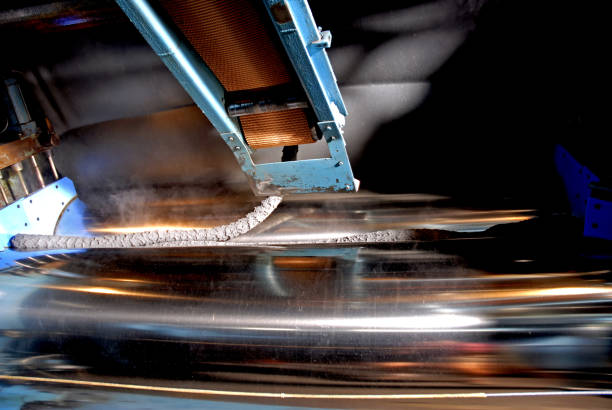
The plant itself is not glamorous. It’s a rugged, boxy module about the size of a shipping container. It has a hopper on top for raw regolith, a reactor chamber lined with ceramic insulation, a condenser coil, and an electrolysis stack. No windows. No blinking lights. It’s a chemical factory designed to run in vacuum, with no moving parts in the reaction zone if the engineers did their job right. The whole thing will be landed on the Moon in a prepackaged form, then connected to the base’s power grid. Solar arrays will feed it around ten to fifteen kilowatts during lunar day. At night, the two-week-long blackout, the plant will rely on stored energy or a small fission reactor. You can’t shut it down. The crew needs oxygen continuously.
During that first year, the processing plant won’t just supply breathing gas. It will also generate oxygen for life support top-ups, for the airlock repressurization cycles, and for eventual propellant production. The long-term goal is to produce enough oxygen to refuel a lunar ascent vehicle or a Mars transfer ship. But in Year One, the priority is survival. A single ton of lunar regolith yields about one hundred kilograms of oxygen. That sounds inefficient, but remember: the regolith is free, abundant, and lying right outside the airlock. You only need to process about eight to ten tons of dirt per month to keep a small crew alive. That’s roughly one wheelbarrow load per day. A robotic front-loader can handle that in an hour.
The engineering challenges are real. The regolith is abrasive, full of sharp glassy particles that will wear down seals and bearings. The extreme temperature swings from plus one hundred twenty degrees Celsius in sunlight to minus one seventy at night will stress every joint and gasket. Dust will get everywhere. It will stick to solar panels, clog filters, and work its way into the reactor. The plant has to tolerate that grit or the crew dies. Designs are leaning toward magnetic separation to pull out metallic particles before they reach the reactor, and using a fluidized bed reactor that keeps the regolith suspended in gas to prevent clogging. It’s a brutal environment, but the alternative—dependence on Earth—is a death sentence for any permanent presence.
You should also understand the political reality. The oxygen extraction plant is the linchpin of the entire Lunar Base Operations plan. Without it, the base is just an expensive campsite that gets resupplied every few months. With it, the base becomes a refueling depot, a manufacturing outpost, and a proving ground for Martian settlement. The first year will be a test of whether the plant can feed its crew reliably. If it works, the next decade sees expansion. If it fails, the whole vision of a self-sustaining lunar colony stalls.
So when you look up at that bright white disk tonight, know that a team of engineers is right now figuring out how to cook ten tons of moon dust to keep four guys alive. That’s not science fiction. That’s plumbing. That’s chemical engineering in the most hostile environment humans have ever tried to occupy. And it will happen in your lifetime.
Space News
Latest Articles
New rockets, upcoming launches, and the stories shaping humanity's push off this planet. No astronomy degree required.