Inconel and the engine nozzle hell environment
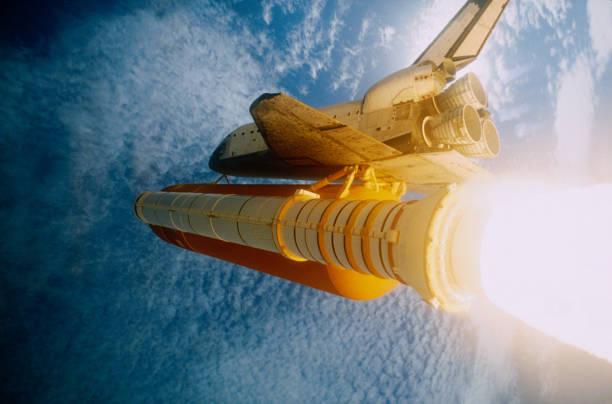
Let’s talk about what “hell environment” actually means for a rocket nozzle. A typical liquid-fueled engine like the SpaceX Raptor or the RS-25 burns fuel and oxidizer at temperatures exceeding 3,000 degrees Fahrenheit. That’s hot enough to soften steel, melt aluminum, and turn copper into a puddle. But the nozzle doesn’t just sit in that heat. It has to endure massive pressure differentials, with combustion chamber pressures that can exceed 300 atmospheres. The exhaust gas exits at supersonic speeds, ricocheting off the nozzle walls with the force of a sustained explosion. Add to that the violent vibrations from combustion instabilities, the thermal shock of repeated startups and shutdowns, and the abrasive particles in the exhaust from incomplete combustion. That’s the environment. It’s not a forge. It’s an active, continuous demolition.
So why Inconel? The secret is in its composition. Inconel alloys, particularly variants like Inconel 718 and Inconel 625, are packed with nickel, chromium, and molybdenum. These elements form a tough, stable oxide layer on the metal’s surface when exposed to high heat. That layer acts like a ceramic armor, preventing oxygen from eating into the core metal. Most metals oxidize and weaken above 1,000 degrees Fahrenheit. Inconel shrugs it off until well past 2,000 degrees. It doesn’t just survive the heat. It keeps its strength. While aluminum loses 90 percent of its tensile strength at 600 degrees, Inconel retains a serious chunk of its structural integrity even when glowing red hot.
But there’s another trick. Rocket engines don’t just rely on Inconel’s innate toughness. They use regenerative cooling, where the cold fuel or oxidizer is routed through channels inside the nozzle wall before being injected into the combustion chamber. This pulls heat out of the metal, keeping the nozzle surface at a livable temperature. But that only works if the metal can handle the thermal gradient. One side of the wall might be at minus 300 degrees Fahrenheit from the liquid methane or hydrogen flowing through it, while the other side is blasted by 3,000-degree exhaust. That kind of thermal stress warps, cracks, or destroys ordinary materials. Inconel’s low coefficient of thermal expansion and high resistance to thermal fatigue make it one of the few alloys that can survive that kind of abuse cycle after cycle.
The SpaceX Raptor engine, for example, uses Inconel for its nozzle extension and many hot-section components. That engine fires at over 330 bar of chamber pressure and produces nearly 1,000 pounds of force per square inch of nozzle wall. Without Inconel, the Raptor would be a single-use fireball. Instead, it flies reusable missions. Blue Origin’s BE-4 engine also leans heavily on nickel superalloys for its nozzle and turbine sections. Even the old Space Shuttle main engines used Inconel in key areas because nothing else could cut it.
One of the biggest practical headaches with Inconel is manufacturing. You cannot weld it like mild steel. It requires precise control over heat input to avoid cracking, and any post-weld heat treatment must be done in a vacuum or inert atmosphere to prevent oxidation. Machining Inconel is notoriously hard on tooling because it work-hardens rapidly. But aerospace engineers don’t care about tool wear. They care about the part surviving the mission.
The bottom line is that Inconel is the unsung hero of modern rocketry. The engine nozzle is a pressure vessel, a heat exchanger, and a high-speed gas duct all in one. It operates in an environment that would vaporize most materials in seconds. Inconel doesn’t just survive. It allows rocket engines to run hotter, harder, and longer than anyone thought possible twenty years ago. As space launch becomes a regular commercial operation, the demand for Inconel components will only grow. For anyone following the progress of SpaceX, Blue Origin, or Relativity Space, the nozzle isn’t just a cone of metal. It’s a monument to materials science that lets us punch through the atmosphere on a column of fire.
Space News
Latest Articles
New rockets, upcoming launches, and the stories shaping humanity's push off this planet. No astronomy degree required.