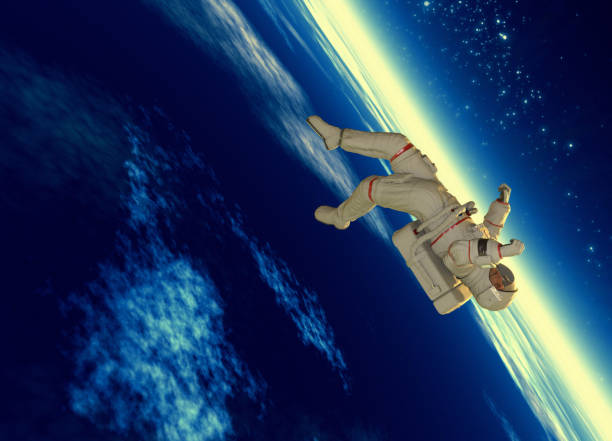
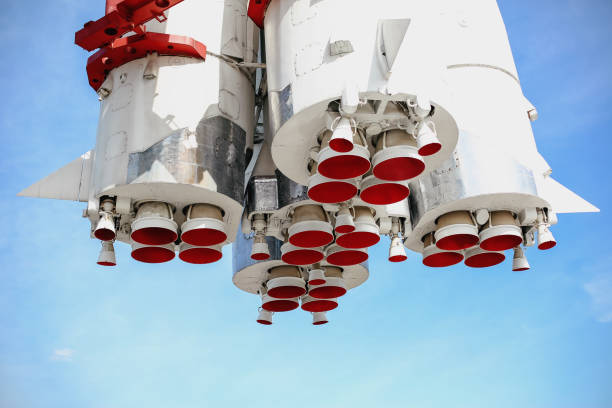
Cosmonaut training still world-class somehow
While the hardware ages and the political influence wanes, the human side of Russia’s space effort has not declined. If anything, the rigorous, punishing, old-school approach to cosmonaut training has become even more valuable as a baseline for what it takes to survive in low Earth orbit and beyond. For American men in their 20s who grew up on SpaceX livestreams and dreamed of Mars, understanding why Russia still produces elite crew members is a lesson in the difference between physical technology and human resilience.
Start with the obvious: Russia’s cosmonaut training facility, the Yuri Gagarin Cosmonaut Training Center in Star City, is not a Silicon Valley startup. It is a sprawling, Soviet-era complex that has changed surprisingly little since the 1960s. And that is precisely its strength. While NASA and commercial partners have increasingly shifted to simulation-heavy, computer-based training, Star City still puts candidates through what is essentially a physical endurance trial. Centrifuge runs that pull more than 8 Gs. Water survival drills in the Black Sea. Winter survival exercises in the Siberian forest. Isolation chambers that last days. The training is not just about learning procedures. It is about breaking the human body down and rebuilding it to withstand the raw hostility of space.
The key here is that Russia’s space agencies have never fully trusted automation. Western spacecraft rely heavily on autopilot, fault-detection software, and ground-based mission control. Russian spacecraft have always demanded more hands-on piloting. That means cosmonauts must know the Soyuz capsule inside and out, not just as a passenger but as a commander who can hand-fly the thing if the computers fail. This approach has paid off repeatedly. When a Soyuz malfunctioned during a 2018 launch, cosmonaut Alexey Ovchinin and astronaut Nick Hague survived a ballistic reentry because their training had drilled the emergency procedures into muscle memory. They didn’t have time to think. They just reacted.
For the American audience, this is a gritty, almost blue-collar approach to spaceflight. It matches the ethos of the men who built the early U.S. space program—test pilots who trusted their instincts over sensors. In an era where space tourism companies are turning astronauts into passengers, Roscosmos still insists that its crew members earn their seats through pain and repetition. That makes the cosmonaut training pipeline a kind of cultural preserve, a deliberate resistance to the softening of human spaceflight.
There is also a structural reason why the training remains strong. Russia has fewer launch vehicles and fewer seats to orbit than it once did. That puts enormous pressure on the selection process. Each cosmonaut slot is precious, and the agency cannot afford to waste one on a candidate who cracks under pressure. The result is a brutally selective funnel. Out of thousands of applicants each cycle, only a handful make it to the final training class. The curriculum is not designed for comfort. It is designed to weed out the weak. That may sound harsh, but for the mission’s sake, it works.
The declining political and economic status of Russia’s space program actually reinforces this focus on training. Without the budget to build new rockets or compete with SpaceX on launch cadence, the only remaining asset that Russia can truly claim as superior is its people. The cosmonauts themselves know this. They carry the weight of their nation’s space legacy on their shoulders, and they train accordingly. The best among them are arguably more capable in a survival scenario than their American counterparts, because they have to be. Their margin for error is smaller. Their backup systems are older. Their spacecraft are less forgiving. That forces a level of competence that cannot be faked.
This does not mean Russia’s training is perfect. It is slower. It is more bureaucratic. It sometimes resists new technology. But for the core task of producing crew members who can handle emergencies, endure isolation, and function in a tin can at 17,500 miles per hour, the Russian system remains a benchmark. NASA still sends astronauts to Star City for cross-training. Commercial crews still train on Soyuz systems. The reason is simple: when things go wrong in space, you want someone who has been through the hardest training on Earth.
As Russia’s glory in space fades, the quality of its cosmonauts remains a stubborn, almost defiant exception. The hardware may rust, but the human machine—forged in cold, darkness, and G-force—still works.
Space News
Latest Articles
New rockets, upcoming launches, and the stories shaping humanity's push off this planet. No astronomy degree required.