Schiaparelli EDM and the parachute failure
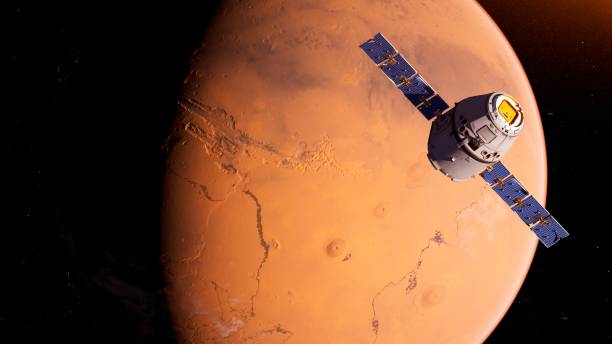
Schiaparelli launched on March 14, 2016, atop a Proton rocket from Baikonur, Kazakhstan. Its job wasn’t to rove around or snap pretty pictures. It was a technology test bed. The lander carried a small payload of science instruments, including a weather station and sensors to measure dust and atmospheric electricity, but the real mission was the descent sequence. ESA needed to demonstrate that its landing technology could survive the thin Martian atmosphere, which is only about 1% as dense as Earth’s. Without a successful landing demo, the upcoming ExoMars rover had no chance. So Schiaparelli was built to be disposable—a sacrificial lamb for data.
The mission went smoothly until the parachute stage. Schiaparelli entered the atmosphere at 13,000 miles per hour, using its heat shield to bleed off most of that speed. At around 7.5 miles above the surface, the parachute deployed. That’s when things broke down. Data showed the parachute inflated, but the lander’s inertial measurement unit—the system tracking its rotation and orientation—started reporting wild, impossible readings. The computer, programmed to trust its sensors, got confused. It thought it was already on the ground. So it jettisoned the parachute prematurely, fired the braking thrusters for only three seconds instead of the planned 30, and then shut everything off, assuming touchdown. When the thrusters cut, Schiaparelli was still over two miles up. It free-fell, hitting the surface at over 300 mph. The impact turned the lander into a crater and a debris field, spotted later by NASA’s Mars Reconnaissance Orbiter.
Why does this matter? Because every failed Mars lander teaches the next one. The root cause of Schiaparelli’s crash was a software bug that the engineering team hadn’t anticipated. The parachute deployment caused a slight spin, just a few degrees per second, but the inertial measurement unit—which had been calibrated for the static launch phase—couldn’t handle the dynamic descent. The computer couldn’t tell the difference between a normal parachute wobble and a catastrophic failure. It interpreted the motion as already being on the ground, which triggered the abort. That sounds like an oversight, but it wasn’t obvious. No other lander had crash-landed in exactly that way. By working through the failure analysis after the crash, engineers identified the exact margins where sensors need to be recalibrated for the chaotic descent environment. That data directly fed into the design of the next ExoMars rover, Rosalind Franklin.
Schiaparelli also proved that cheap, disposable test missions are worth the investment. The entire ExoMars program cost about $1.4 billion, with Schiaparelli accounting for a fraction of that. If the lander had been a fully operational science platform, the loss would have stung harder. But because it was purpose-built to fail, the cost was acceptable. The mission was designed to collect telemetry during descent, and it did that until the end. The 600 megabits of data transmitted during the landing sequence gave engineers a treasure trove of real-world measurements. You can’t simulate atmosphere entry at full scale on Earth. You have to fly it. Schiaparelli flew it, broke, and told you exactly why.
For casual space fans, Schiaparelli is a reminder that Mars doesn’t hand out wins easily. As of 2025, only about half of all Mars missions have succeeded. The planet has a way of exposing weaknesses in hardware and software that Earth tests can’t catch. Failures like Schiaparelli’s are part of the cost of doing business on a planet that’s 140 million miles away and has a gravity field just strong enough to make landing a problem. Every time you see a rover roll across the surface, you’re looking at the accumulated lessons from a dozen smashed landers before it.
Schiaparelli failed in the most literal sense—it smashed into the ground. But it succeeded in its core mission: showing engineers what not to do. That’s why it still matters. It didn’t deliver science, but it delivered wisdom. And on Mars, wisdom is worth more than rocks.
Space News
Latest Articles
New rockets, upcoming launches, and the stories shaping humanity's push off this planet. No astronomy degree required.