The sound pressure of a liftoff described
Sound pressure is measured in decibels (dB), but that number alone doesn’t tell the full story. A rock concert might hit 120 dB near the speakers. A jet engine at takeoff can reach 140 dB. A Saturn V rocket at liftoff, the most powerful ever flown, generated around 220 dB at the pad. To put that in perspective, 194 dB is the theoretical limit for a sound wave in Earth’s atmosphere before the air itself distorts and the wave becomes a shockwave. The Saturn V didn’t just push that boundary—it obliterated it. At those levels, sound stops being something you hear and becomes something you feel. Walls vibrate. Windows shatter. The ground shakes under your feet like a minor earthquake.
The source of that hellish noise is not the rocket engine’s flame itself, but the violent expulsion of exhaust gases. When a rocket ignites, it blasts out thousands of pounds of superheated gas per second at supersonic speeds. These gases slam into the air, the launch pad, and the concrete flame trench. The collision creates chaotic turbulence, and that turbulence radiates outward as intense acoustic energy. The noise is broadband—meaning it covers a huge range of frequencies—but a significant portion sits in the low-frequency range, between 20 and 200 Hz. Low frequencies travel farther and pass through solid objects more easily than high frequencies. That’s why you can feel a launch in your bones a mile away, even if you’re wearing earplugs.
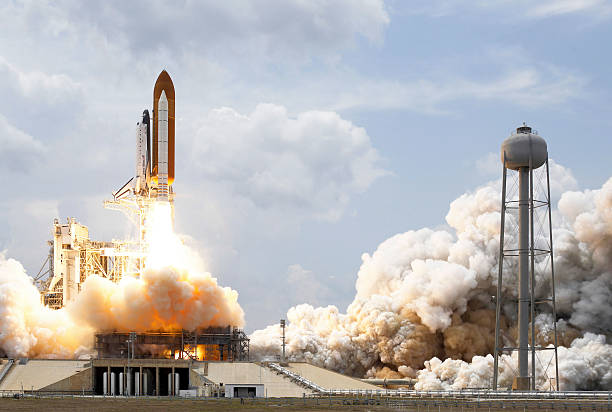
The people who design launch pads and surrounding infrastructure have to account for this sound pressure. Without mitigation, the reflected noise from a big rocket can damage the vehicle itself. Acoustic waves hitting the rocket structure can cause vibration that fatigues metal, cracks components, and disturbs sensitive electronics. That’s why you see massive water deluge systems at launch pads like Kennedy Space Center’s Launch Complex 39. Hundreds of thousands of gallons of water are dumped onto the pad immediately before and during liftoff. The water absorbs and scatters a huge portion of the acoustic energy, dropping sound pressure levels by up to 30 dB. It also suppresses the intense heat, but noise reduction is the primary reason it exists. That white cloud of steam you see? It’s a soundproofing system.
For spectators, the experience depends entirely on distance and terrain. The official viewing areas at Cape Canaveral are about three to five miles from the pad. At that range, you’ll hear the rocket before the light reaches you—sound travels slower than light, obviously—and the initial crackle builds into a continuous, thunderous roar. It’s not like a movie explosion. It’s more like standing next to a freight train that is also a volcano. The peak sound pressure at those distances is still around 120 to 130 dB, which is enough to cause immediate hearing damage if you’re unprotected. Earplugs or noise-canceling headphones aren’t optional; they are mandatory. Hearing loss from a single launch is rare, but permanent tinnitus is not.
NASA and other launch providers now publish “sound maps” for major launches, showing predicted noise levels across nearby communities. These models account for weather, especially wind direction and humidity, which can carry or suppress sound. A launch on a calm day with high humidity sounds different than one on a dry, breezy day. Low clouds can also trap and reflect sound, making it seem louder and more concentrated. If you’re watching from a public beach or parking lot, keep an eye on the forecast. You might get a quieter experience, but you won’t get a quiet one.
For those who can’t make it to Florida or Texas, the next best thing is a high-quality recording through a proper sound system. But nothing substitutes for the real thing. The sound pressure of a liftoff is not an accessory to the launch. It is the launch, expressed as force against your body. It tells you, in a way no video can, that you are watching something that is literally defying gravity through controlled violence. That’s not poetic hyperbole. That’s physics. And physics, at 200 decibels, doesn’t ask for your permission.
Space News
Latest Articles
New rockets, upcoming launches, and the stories shaping humanity's push off this planet. No astronomy degree required.