Birth in partial gravity and the health unknowns
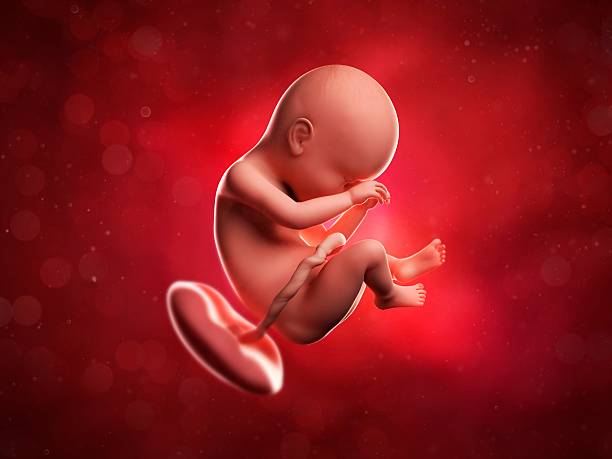
First, let’s define “partial gravity.” On the Moon, gravity is about one-sixth of Earth’s. On Mars, it’s roughly 38%. We have decades of data on zero-g from the ISS, but partial gravity is a different beast. Astronauts in microgravity lose bone density, muscle mass, and suffer fluid shifts. But gestation involves a developing fetus that depends on mechanical forces, fluid dynamics, and a precise sequence of biological cues that evolved over millions of years in full Earth gravity. Nobody has ever studied a full human pregnancy in anything less than 1G. That’s a gap the size of a crater.
The immediate unknowns start with the placenta. In Earth gravity, blood flow, nutrient exchange, and waste removal depend on a complex interplay of pressure gradients and the mother’s cardiovascular system. In partial gravity, the heart doesn’t have to work as hard to push blood upward. That could alter placental perfusion, potentially starving the fetus of oxygen or nutrients. We already see cardiovascular deconditioning in astronauts. Now imagine that happening to a pregnant woman whose body is also supporting another life. Animal studies from the Soviet-era biosatellites and recent rodent experiments suggest that rat fetuses exposed to partial gravity show altered bone development and smaller sizes. But rats aren’t humans, and short-duration missions tell us nothing about nine months of continuous low-G exposure.
Then there’s the skeleton. A fetus builds its bone structure under mechanical load from the mother’s movement and the pressure of the amniotic fluid. In low gravity, those forces are drastically reduced. We already know that astronauts lose bone density at about 1% per month in zero-G. A developing skeleton in partial gravity might never achieve proper mineralization, leading to lifelong frailty or deformities. And because the baby’s bones are growing in real-time, the damage could be irreversible before birth even happens. The same goes for muscle development, which relies on the fetus pushing against the uterine wall. Less resistance means weaker muscles and potentially underdeveloped diaphragm function, which could affect breathing after birth.
The birth process itself is another black box. On Earth, labor is triggered by hormonal signals and mechanical stretching of the cervix. In partial gravity, the uterus and the baby’s position would behave differently. The forces required to push a baby through the birth canal are partly gravity-assisted. In one-sixth G, those forces are effectively gone. Would labor stall? Would the baby float in the birth canal instead of descending? Nobody knows. Emergency C-sections in a low-G environment present their own nightmare: blood doesn’t pool the same way, surgical tools float, and contamination risk increases. Even if you manage a successful delivery, the newborn would face immediate challenges. Lungs need to clear fluid and expand against gravity. In partial gravity, that process might be less effective, leading to respiratory distress. And blood circulation, which normally redistributes after clamping the cord, might behave unpredictably.
Beyond the obvious physical risks, there are subtler health unknowns. The fetal brain develops in response to sensory input, including the constant pull of gravity that tells the inner ear which way is down. In partial gravity, the vestibular system would receive abnormal signals. That could affect everything from balance to spatial awareness to cognitive development. We don’t know if those effects are permanent or if the brain can adapt after returning to Earth—assuming a return is even possible. Then there’s the immune system. Microgravity weakens adult immune responses. A fetal immune system shaped in that environment might be chronically compromised, leading to higher rates of infection, allergy, or autoimmune issues later in life.
The ethical and legal dimensions are also worth considering. If a couple conceives on Mars and the child is born with severe skeletal or neurological problems, who is responsible? The colony? The sponsoring nation? The parents who chose to reproduce in an unproven environment? Space agencies currently have no guidelines for human reproduction beyond Earth, and most assume that any off-world pregnancy will be an accident that triggers an immediate evacuation. But as colonies grow, planned pregnancies become inevitable.
The bottom line is clear: we are not ready. Proponents argue that we’ll learn by doing, but the stakes here are a human life that gets one shot at healthy development. Until we send pregnant animals to the Moon or Mars for extended periods—and study them over multiple generations—we are guessing. And guessing with human fetuses is not acceptable. The health unknowns surrounding birth in partial gravity are not a distant concern. They are a hard deadline that the space industry must face before the first colony baby is born. Otherwise, that first off-world generation may start life with a permanent handicap we cannot fix.
Space News
Latest Articles
New rockets, upcoming launches, and the stories shaping humanity's push off this planet. No astronomy degree required.