The dual-use technology export restrictions
Dual-use technology is any product, software, or know-how that has both civilian and military applications. Think advanced microchips, precision gyroscopes, high-performance computers, or specialized alloys for rocket engines. When the U.S. government, through agencies like the Bureau of Industry and Security (BIS) at the Department of Commerce, restricts the export of these items to China, it directly impacts how agencies like the China National Space Administration (CNSA) and its commercial partners develop their machinery. The result is a space race fought not on launch pads, but in procurement offices and export control databases.
The key U.S. agencies here are the Department of Commerce’s BIS, the Department of State’s Directorate of Defense Trade Controls (DDTC), and the Department of Defense, which provides technical assessments. They enforce the Export Administration Regulations (EAR) and the International Traffic in Arms Regulations (ITAR). If a Chinese agency wants to buy a radiation-hardened chip from an American supplier, that transaction is subject to review. If the chip could serve a military satellite, the license is denied. This forces the Chinese space machine to either develop its own equivalent—often at higher cost and with lower reliability—or find alternative sources from allies like Russia, which faces its own sanctions.
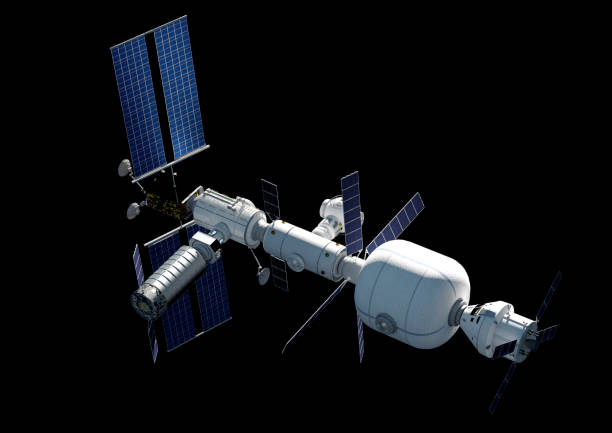
What does this mean for the agencies running China’s space program? It means they cannot simply buy off-the-shelf components from Silicon Valley. The CNSA and its state-owned contractors—like the China Aerospace Science and Technology Corporation (CASC) and the China Aerospace Science and Industry Corporation (CASIC)—have had to launch massive indigenous research and development programs. The dual-use restrictions have, paradoxically, accelerated China’s push for self-sufficiency. Their rocket engines, satellite buses, and deep-space probes now rely on domestically manufactured parts that can match or even exceed American specifications in certain areas. The Tiangong space station, for example, runs on Chinese-made CPUs and power systems. That hardware had to be built from scratch because export controls blocked the easy path.
But the restrictions don’t just hurt Chinese agencies. They also create headaches for American agencies like NASA and the National Oceanic and Atmospheric Administration (NOAA), which manage satellite data and international coordination. The Wolf Amendment, a 2011 law, prohibits NASA from direct bilateral cooperation with China without explicit congressional approval. That means American and Chinese space agencies cannot share tracking data, coordinate orbital maneuvers, or collaborate on safety protocols for the International Space Station versus Tiangong. This lack of coordination increases collision risks in low Earth orbit, which is becoming congested with satellites from Starlink, OneWeb, and Chinese constellations like Qianfan (formerly known as GW). So the same export controls designed to protect American military advantage also degrade situational awareness for all agencies involved.
For the commercial side, the restrictions are a double-edged sword. American companies like SpaceX and Blue Origin cannot sell rockets or engines to Chinese launch firms. That protects the U.S. industrial base, but it also means Chinese companies have no incentive to use American launch services. Instead, they build their own heavy-lift vehicles like the Long March 9 and the reusable rocket under development by the private firm Space Pioneer. Meanwhile, European and Japanese agencies like ESA and JAXA must navigate a minefield of ITAR and EAR compliance if they want to use any component with American origins in a satellite launching from China. This pushes non-aligned nations to develop their own sovereign launch capabilities, fragmenting the global market.
Looking ahead, the dual-use technology restrictions will remain a central lever for U.S. agencies trying to slow China’s military space progress. But as the Chinese space machine becomes more self-reliant, the restrictions lose their bite. The real question is whether American agencies can adapt fast enough to maintain technical superiority. If they cannot, the future of space travel will be shaped not by what Washington allows to be exported, but by what Beijing can build on its own.
Space News
Latest Articles
New rockets, upcoming launches, and the stories shaping humanity's push off this planet. No astronomy degree required.