Dust storms and the global planet-covering events
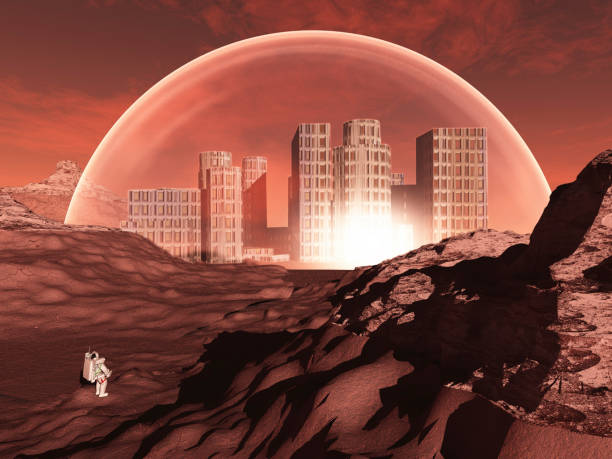
Let’s cut through the noise. Mars has an atmosphere about 100 times thinner than Earth’s. You can’t breathe it, and it offers almost no protection from radiation. But that thin air is still thick enough to move dust. And when it moves, it moves big. Local dust storms happen all the time, like haboobs in the American Southwest. But roughly every three to five Martian years—that’s about five to eight Earth years—conditions align for a planet-encircling dust event. These are not hurricanes or tornadoes. They are slow, creeping blankets of fine dust that can rise tens of kilometers into the atmosphere, blocking out the sun for weeks or months.
Why does this matter for the human future? Because you don’t get to pick your weather when you live on another world. The first settlers won’t have the luxury of waiting for a good season. They’ll land, and they’ll have to deal with the fact that Mars doesn’t care about their schedule. A global dust event can drop surface temperatures by dozens of degrees. Solar panels, the backbone of early Martian power systems, get coated in fine, static-charged dust that reduces efficiency dramatically. NASA’s Opportunity rover died in a 2018 global dust storm because its batteries couldn’t recharge. Humans cannot afford that failure.
But here’s the thing: dust storms also shape where we go and how we build. The equatorial regions, like the Valles Marineris or the plains around Jezero Crater, see more dust activity than higher latitudes. That doesn’t mean we avoid them entirely—the equator has better solar exposure and warmer temperatures overall. It means we design for it. Habitats need dust mitigation: airlocks that blast off particles, interior filtration systems that don’t clog, and power backups that don’t rely solely on sunlight. Nuclear power, like the Kilopower reactors NASA is testing, becomes a non-negotiable part of the energy mix. You can’t have a colony black out for three months because the sky turned to orange mud.
The dust itself is also a destination hazard you can’t ignore. It’s not beach sand. Martian dust is fine, sharp, and loaded with perchlorates—chemical compounds that are toxic to humans. It gets everywhere. It seeps into suit joints, electronics, and lungs. If you breathe it in, it’s like inhaling glass fibers laced with bleach. That’s why every habitat, rover, and spacesuit must be a sealed system. The dust is a constant, hostile presence in the environment. You don’t fight it; you manage it.
So what does all this mean for the human future on Mars? It means we’re not going there for a vacation. We’re going there to work, to survive, and eventually to thrive. The dust storms are not a show; they are a test. They force us to build with redundancy, with self-sufficiency, and with respect for a world that doesn’t care about our plans. The first permanent base will likely be in a mid-latitude location like Arabia Terra or the lowlands of Utopia Planitia, where storms are less frequent but still a real threat. It will be buried, or built into cliffsides, to protect against both radiation and dust.
The planet-covering events are also a reminder of how small our knowledge still is. We’ve only been watching Mars closely for a few decades. We don’t fully understand what triggers these global events or when the next one will hit. A crew arriving during the wrong season could face a months-long brownout. That risk shapes everything from launch windows to supply schedules. You don’t send people to Mars and hope for clear skies. You send them prepared for the worst.
Look, if you’re into space because it’s clean and sterile, you’re looking at the wrong planet. Mars is dirty, dusty, and dangerous. But that’s exactly why it’s a worthwhile destination. It demands every ounce of engineering and grit we have. The dust storms are not a bug; they are a feature of the Martian environment that will define how we live there. The human future on Mars isn’t about escaping Earth’s weather. It’s about learning to call a planet of dust our home.
Space News
Latest Articles
New rockets, upcoming launches, and the stories shaping humanity's push off this planet. No astronomy degree required.