UAP reports and the government disclosure movement
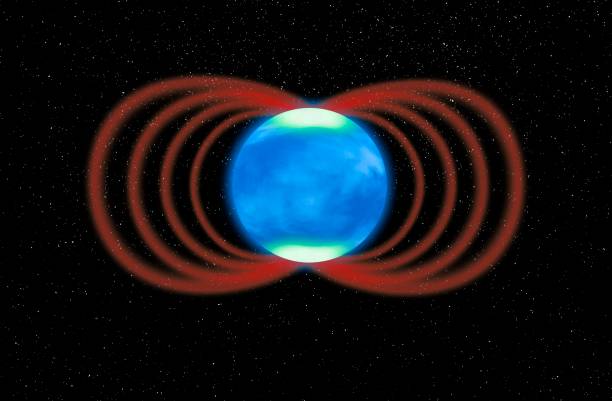
The Fermi Paradox, if you need a refresher, is the tension between the high probability that intelligent alien life exists and the complete lack of evidence we’ve found for it. The universe is vast, ancient, and full of planets. Statistically, we should have seen a signal, a probe, or a civilization by now. Instead, we get radio silence. That’s the Great Silence. And UAP reports, for all their controversy, offer a potential crack in that wall of silence—or at least a reason to question whether the silence is really as empty as it seems.
Let’s cut the mystery-mongering. The government disclosure movement isn’t about little green men or tinfoil hats. It’s a slow, bureaucratic process where former intelligence officials, pilots, and Pentagon insiders are pushing for Congress and the public to take UAP seriously as a national security and scientific issue. The 2021 ODNI report, the establishment of the All-domain Anomaly Resolution Office (AARO), and recent hearings have made one thing clear: there are objects operating in our airspace—and sometimes in our oceans—that exhibit flight characteristics beyond any known human technology. They accelerate without visible propulsion, they hover at hypersonic speeds, and they linger in environments as extreme as the upper atmosphere and deep ocean. No one has claimed they’re aliens. But no one has explained them away either.
So where does deep space come in? If these objects are real and not human, their origin point likely isn’t next door. The vast distances between stars mean any civilization capable of reaching Earth is operating on a scale that dwarfs our current understanding of physics. That’s where UAP reports reset the terms of the Fermi Paradox. If you assume even a fraction of these sightings are non-human craft, then the Great Silence isn’t really silence at all—it’s a one-way conversation we’ve been too distracted to translate. We’ve been listening for radio signals for sixty years, but maybe the message isn’t in the radio band. Maybe it’s in the gravitational anomalies, the plasma signatures, or the material samples AARO is reportedly analyzing.
This is the part that should grab any space enthusiast in their twenties. The future of space travel isn’t just about faster rockets or Martian colonies. It’s about understanding what’s already here. If UAP represent a deep-space intelligence, then the entire human spaceflight enterprise becomes a second-tier effort. We’re building Starships to get to Mars while something else might be running a trans-medium highway system between our oceans and the Oort Cloud. That’s humbling, but it’s also motivating. It means the Fermi Paradox isn’t a dead end—it’s a filter. Either we’re alone in a dead galaxy, or we’re being observed by something that has cracked the energy and propulsion problems we’re still fumbling with.
The disclosure movement matters because it forces the conversation out of fringe forums and into the mainstream science and policy world. When the NASA UAP study team releases its findings, when AARO publishes its historical review, when former Director of National Intelligence John Ratcliffe says there are “more sightings than have been made public,” you don’t have to believe in aliens to admit the data is worth investigating. And if the data leads to a confirmation that some UAP are non-human, the Fermi Paradox collapses into a set of new questions: Why are they here? How do they get here? And what does that mean for our own deep space ambitions?
Right now, you can track SpaceX launches, Blue Origin’s lunar lander, and the Artemis program. Those are concrete, visible steps toward becoming a spacefaring species. But the UAP disclosure movement suggests there might be a much older, much more advanced species already in the neighborhood. That doesn’t make our efforts pointless. It makes them urgent. The Great Silence might not be a void. It might be a waiting room. And the disclosure movement is slowly turning the lights on.
Space News
Latest Articles
New rockets, upcoming launches, and the stories shaping humanity's push off this planet. No astronomy degree required.