Dispersion measure and the distance calculation
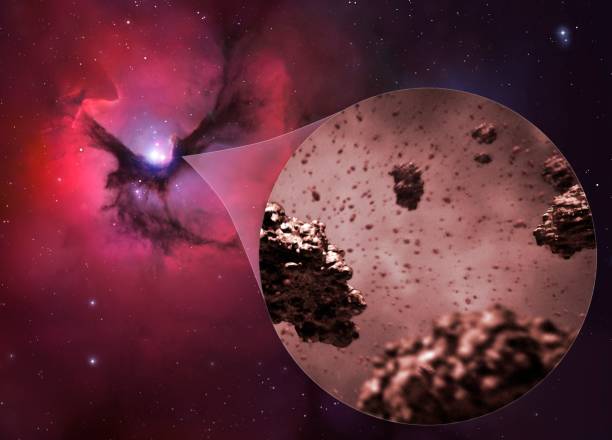
Dispersion measure works because space isn’t empty. It’s filled with free electrons—charged particles that get stripped from atoms by radiation or collisions. When a radio wave travels through this plasma, it interacts with those electrons. The higher the frequency of the wave, the less it’s slowed down. The lower the frequency, the more it’s delayed. So if a signal contains a range of frequencies—like a millisecond-long FRB—the high-frequency part arrives at your telescope first. The low-frequency part drags behind. The time delay between them is what astronomers call dispersion. Measure that delay, and you can calculate the total number of electrons the signal passed through along its path. That number is the dispersion measure, expressed in units of parsecs per cubic centimeter.
Now, here’s where it gets practical. You don’t care about electrons for their own sake. You want distance. The trick is that the distribution of electrons in the universe isn’t random. In our own galaxy, the average density of interstellar electrons is well mapped. Look at the sky in any direction, and astronomers have a solid model of how much dispersion our local patch of space adds. Subtract that from the total DM you observe. What’s left is the dispersion contributed by everything between us and the source—mostly the intergalactic medium, the thin soup of plasma that fills the space between galaxies.
That leftover DM gives you a rough but reliable distance. Over vast cosmic scales, the intergalactic medium is surprisingly uniform. Decades of observations have shown that for every billion light-years a signal travels, it picks up roughly 800 to 1,000 parsecs per cubic centimeter of DM. So if you detect an FRB with a total DM of 1,500, and you subtract about 50 for our own galaxy, you get 1,450 left for the intergalactic path. Divide that by 900, and you’re looking at a distance of roughly 1.6 billion light-years. It’s not perfect. There are uncertainties. Some galaxies along the line of sight add extra electrons. The intergalactic medium isn’t perfectly smooth. But for a field that started with just a handful of detections a decade ago, it’s stunningly good.
Why does this matter for fast radio bursts? Because FRBs are the ultimate cosmic unknowns. They fire off in milliseconds, releasing as much energy as the Sun does in a week—maybe more. Nobody knows exactly what makes them. Neutron star collisions? Magnetar flares? Alien technology? The possibilities are wild. But you can’t even begin to test those theories if you don’t know where the bursts come from. Dispersion measure is the only way to get that distance. Without it, every FRB might as well be static in space.
Take FRB 121102, the first repeating burst ever found. Its DM was measured at 557. That put the source at about 3 billion light-years away. That distance meant it was outside our galaxy, not some local flare-up. Later, telescopes pinpointed it to a dwarf galaxy—a dim, star-forming blob that would have been impossible to link without the DM estimate first. Without dispersion measure, that galaxy stays invisible. The signal is just noise.
There’s a catch. The DM to distance conversion isn’t a perfect ruler. Most of the intergalactic electrons are concentrated in the halos around galaxies and in large-scale filament structures. A signal that passes through a massive cluster will show a higher DM than one that takes a clear path to the same distance. That’s why astronomers don’t just trust a single DM value. They cross-reference with host galaxy redshifts when possible, using optical or infrared telescopes to measure the actual expansion-of-universe distance. Recent work has shown that these independent checks match up well—dispersion measure is accurate within about ten to twenty percent for most bursts. That’s good enough to tell you whether you’re looking at something in the local universe or at the edge of the observable cosmos.
The future is brighter. New telescopes like the Canadian Hydrogen Intensity Mapping Experiment, or CHIME, are catching dozens of FRBs every month. Every one of those comes with a DM. As the data pile up, the electron models will get sharper. The distance calculations will tighten. And the real payoff? We’re starting to use DM not just for individual bursts but to map the large-scale structure of the universe itself. The intergalactic medium is mostly invisible to normal telescopes. But FRB signals carve through it, leaving a DM fingerprint that reads like a topographic map of matter across billions of light-years.
For now, dispersion measure is the unsung hero of deep space distance work. No glamour. No gravity lensing fanfare. Just a straightforward physics trick that turns a radio chirp into a cosmic odometer. Every time an FRB pops up, someone in a control room looks at the DM first. That number lets you say precisely how far away the unknown signal lives. And that’s exactly the kind of straightforward, no-bullshit tool you want when you’re staring into the darkest parts of the sky.
Space News
Latest Articles
New rockets, upcoming launches, and the stories shaping humanity's push off this planet. No astronomy degree required.