GoPro mounts and the EVA footage setup
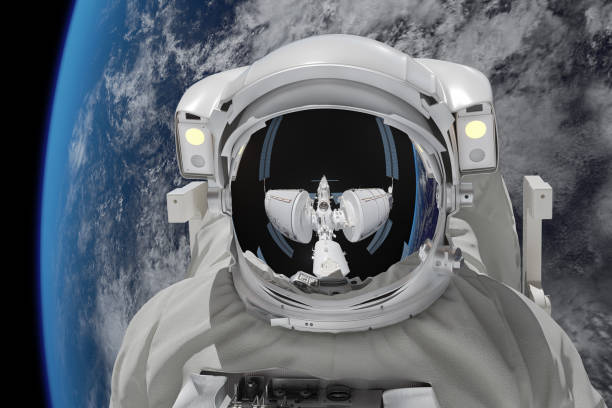
The core of any EVA camera setup is the mount. NASA and commercial crews like SpaceX don’t just Velcro a GoPro to a spacesuit. They use custom-fabricated brackets machined from anodized aluminum or titanium. These mounts attach to the hard points on the suit’s torso—specifically the chest plate and the helmet rim. The chest mount is the workhorse. It’s a low-profile, articulating arm that allows the astronaut to tilt the camera up or down while keeping their hands free. The arm locks tight with a thumbscrew that can be operated with gloved hands. Gloves on a spacesuit are like wearing boxing gloves while trying to thread a needle, so every adjustment has to be intuitive. The mounting base itself is bolted into the suit’s structural ring, not just clipped on. If a clip fails, that camera goes drifting off into orbit. That’s a debris hazard and a loss of irreplaceable training data. So bolts it is.
The helmet mount is even more specific. This is the camera that gives you the first-person view of the astronaut’s face and the horizon shifting as they spin. The helmet rim mount is a small, cleat-style bracket that slides into a groove on the side of the helmet. It holds a GoPro oriented at a 45-degree downward angle. That angle is critical. If the camera points straight forward, you only see the inside of the visor. If it points straight down, you get a neck-level view of the astronaut’s chest. The 45-degree offset gives you both their hands and the distant Earth. The mount also includes a small shock-absorbing pad made of silicone-infused rubber. Spacewalks involve sudden head turns and jolts from adjusting tethers. That rubber damps the micro-vibrations that would make your footage look like a shaky cam horror movie.
Now let’s talk cameras. The standard for current EVA work is the GoPro HERO 12 Black or the HERO 11 Black. Why not the latest model? Because reliability trumps novelty. These cameras are radiation-hardened by wrapping the electronics in Kapton tape and thin sheets of lead. That foil blocks ionizing particles that would corrupt the memory card in minutes. The lens is swapped for a custom ground element made of fused silica, not standard glass. Fused silica doesn’t fog or crack under thermal cycling. The camera bodies are also coated with a white thermal paint that reflects more than 90 percent of solar radiation. Without that, the internal temperature would spike past the electronics’ rated limits inside ten minutes.
Battery life is another beast. In a vacuum, standard lithium-ion batteries can vent and fail. The EVAs use modified battery packs with a pressure relief valve and a lower discharge rate. A typical six-hour spacewalk uses two camera batteries, swapped mid-EVA. The astronaut keeps spare batteries in a pouch on their suit’s thigh. That pouch is insulated with aerogel, the same stuff that protects Mars rovers. The swap itself is practiced hundreds of times on the ground in a neutral buoyancy pool. In microgravity, you can’t just drop a battery. It floats away. So the replacement process is a magnetic interlock system. The dead battery clicks into a holster that seals it inside the pouch. The fresh battery releases only when the mounting plate’s contact pins engage. One misstep and you’re dead in the water.
The footage format is also unique. GoPros normally record H.264 video, which compresses data hard. In space, they record H.265 at a higher bitrate, usually 100 megabits per second. That gives the mission control team enough clarity to spot a single loose bolt or frayed tether during a live downlink. The footage is not stored on the camera’s internal memory long. It’s dumped to the station’s server via a USB-C tether as soon as the astronaut re-enters the airlock. The camera itself gets wiped and recharged for the next EVA. Nothing backs up in orbit unless it’s on a hard drive in the station’s shielded module.
Why should a guy in his twenties care about this? Because every trick in this setup—radiation shielding, thermal management, one-hand mount adjustments—is being tested now for the moonwalkers and eventual Mars crews. The same camera rig you watch on YouTube is the blueprint for what will document humanity’s first steps on another planet. The mounts you see today are the direct ancestors of helmet cams that will stream live footage from the lunar south pole or the Valles Marineris. The gear is not glamorous. It is overbuilt and understated. But that is exactly how good tools should feel. The next time you watch a wobble-free clip of an astronaut fixing a solar array, remember the anodized bracket, the fused silica lens, and the thumbscrew that held it all together in the cold dark.
Space News
Latest Articles
New rockets, upcoming launches, and the stories shaping humanity's push off this planet. No astronomy degree required.