Enceladus and the south pole tiger stripes
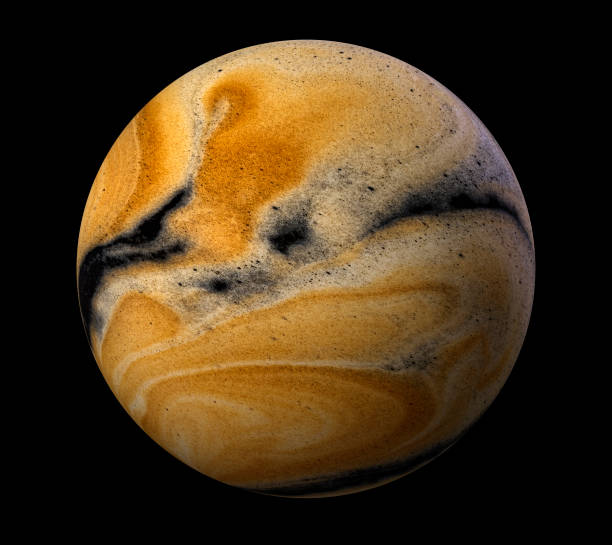
Enceladus is only about 310 miles across, roughly the width of Arizona. That makes it small enough to fit inside the borders of several U.S. states. But size is deceiving. In 2005, NASA’s Cassini spacecraft flew past Enceladus and spotted something that changed the game entirely. The south pole region was not the quiet, cratered wasteland you would expect from an icy moon. Instead, it was active. Four long, parallel fractures, each roughly 80 miles long, cut across the southern terrain like claw marks. That is where the nickname tiger stripes comes from. Their official names are Alexandria Sulcus, Cairo Sulcus, Baghdad Sulcus, and Damascus Sulcus. And they are the source of continuous geysers that shoot icy particles, water vapor, and organic compounds hundreds of miles into space.
The tiger stripes are not just cracks in the ice. They are thermal vents. Cassini’s instruments measured temperatures near the stripes that were far warmer than the surrounding surface, sometimes above minus 130 degrees Fahrenheit, which sounds cold until you realize the rest of the moon sits at around minus 330 degrees. That temperature difference means something is heating the stripes from below. That something turns out to be tidal flexing, the same gravitational squeeze-and-release effect that powers Jupiter’s volcanic moon Io. But on Enceladus, instead of lava, you get liquid water.
Here is the key point for anyone serious about future space destinations. The tiger stripes provide direct access to an ocean that is global in scale. Below the icy crust, which is estimated to be between 12 and 20 miles thick at the south pole, there is a salty ocean that covers the entire moon. Cassini flew through the plume material multiple times and sampled it directly. The results were stunning. The plume contains molecular hydrogen, which is a potential energy source for microbial life. It contains simple and complex organic compounds, including carbon, hydrogen, nitrogen, and oxygen. It even contains sodium salts, which means the ocean is in contact with a rocky seafloor. That rocky seafloor is likely hydrothermal vents, just like the ones on Earth where whole ecosystems thrive without sunlight.
For a destination, Enceladus checks boxes that no other place in the solar system can match. You do not have to drill through miles of ice to sample the ocean. You just have to fly through the plume. Any future mission, whether it is a flyby probe or a dedicated lander, can collect pristine samples from the ocean without ever touching down. The tiger stripes act as an automatic delivery system. That makes Enceladus infinitely more accessible than Europa, which hides its ocean under a thicker, more fractured ice shell that requires heavy drilling even to get close.
From a travel perspective, the south pole of Enceladus is the only place in the Saturn system where you can witness active geology happening in real time. The plume constantly erupts, feeding Saturn’s E ring with fresh material. It is not a one-time event. It is ongoing, year after year, century after century. If you could stand on the surface near the tiger stripes, you would see towering jets of ice rising against a black sky, backlit by the distant Sun, with Saturn hanging huge overhead. It would be one of the most surreal landscapes imaginable.
Of course, getting there is the hard part. Saturn is roughly nine astronomical units from Earth, about 840 million miles. A one-way trip with current chemical propulsion takes seven to eight years. But that is not a dealbreaker for the timeline we are looking at. Space enthusiasts in their twenties today will likely see the first dedicated Enceladus orbiter launched within their lifetimes. NASA’s Dragonfly mission is already headed to Titan, Saturn’s largest moon, with an arrival in the mid-2030s. Enceladus is the logical next step.
The tiger stripes are not just a geological curiosity. They are the front door to one of the most promising environments for life beyond Earth. They are a destination where you do not have to dig for answers. The answers are already blowing out into space, waiting for us to catch them. For anyone tracking the future of space travel, Enceladus deserves a spot near the top of the list. It is small, it is active, and it is open for business.
Space News
Latest Articles
New rockets, upcoming launches, and the stories shaping humanity's push off this planet. No astronomy degree required.