Solar array deployment and the single-point failure
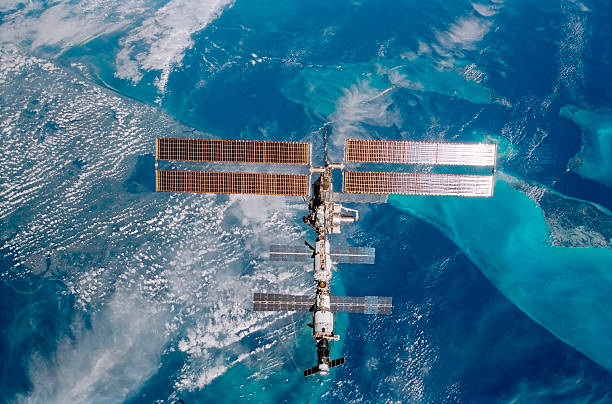
When we talk about power systems in the void, we have to talk about the moment the system goes from stored, inert geometry to operational, energy-generating geometry. That transition is not a gentle process. It is a violent, high-stakes mechanical event that happens in a vacuum, at extreme temperatures, often while the spacecraft is tumbling or under thrust. And if it fails, the mission is effectively over.
The first problem is solvable, but still dangerous: deployment itself. Most arrays use a combination of springs, motors, and lanyards to unfold from a tightly packed launch configuration. On Earth, you test this in a clean room with gravity compensation rigs. You test it in thermal vacuum chambers. You test it a hundred times. But the real environment is different. The hinges are under vacuum cold-welding risks. The lubricants outgas and change viscosity. A single micro-switch that tells the computer “yes, the array is locked” can stick. If that switch fails, the computer might refuse to switch on the power regulator, and you have an unfolded but electrically dead wing. That’s what nearly killed the Skylab rescue mission in 1973—a stuck micrometeoroid shield that deployed wrong.
Then there’s the single point you actually can’t fix. On most modern spacecraft, the array is connected to the main power bus through a single rotating joint. That joint allows the array to track the sun. But that joint also contains slip rings, bearings, and a motor. If that motor seizes, the array points away from the sun. You lose power. If the slip rings short, you lose power. If a bearing jams, the array twists against its own structure and snaps. This isn’t theoretical. In 1998, the Mars Climate Orbiter’s solar array deployed perfectly, but the spacecraft itself burned up because of a navigation error. In 2015, the Juno probe’s array deployed, but a pair of stuck valves in the propulsion system added months of troubleshooting. The array worked, but the single-point failure in the propulsion chain nearly killed the mission.
The real problem is that you cannot send a repair crew. If you deploy an array and it fails halfway, you don’t go out with a wrench. You have no thermal control, no power, and no way to actuate backup mechanisms. Some designs use redundant deployment motors. Some use dual springs. Some have break-wire systems that can cut a stuck lanyard. But none of these eliminate the fundamental single-point fact: if the hinge pin shears, the array is gone. If the solar cells are damaged during deployment, you lose that portion of power forever.
In the current commercial and government space boom, this matters more than ever. Low Earth orbit constellations like Starlink get away with cheap, non-deployable panels because they don’t need massive wings. But deep space missions—lunar landers, Mars spacecraft, asteroid interceptors—they all rely on massive, rigid arrays. The NASA Gateway station, the Artemis lunar base, the Dragon XL cargo spacecraft, every one of them has a critical deployment sequence. The Artemis missions will use roll-out solar arrays that unfurl like a party blower. They are lighter and more compact, but they introduce a new single-point: the canister that stores the rolled-up material. If that canister jams, you have a stowed blanket and no power.
The only real countermeasure is redundancy that doesn’t share a common path. That means dual deployment motors on separate circuits. It means separate slip rings for power and data. It means physical separation of the mechanical release latches so that a single jam doesn’t lock the whole assembly. But redundancy costs mass, and mass costs fuel, and fuel costs money. So program managers play a game of probability: the deployment has a 99.9% chance of success. They accept the 0.1% risk. But for the crew on a lunar mission, that 0.1% is a death sentence.
Next time you see a solar array deploy on a live feed, remember what you’re actually watching. You’re watching a moment where the entire mission balance—time, money, engineering, human lives—hangs on a single latch, a single motor, a single wire. The void doesn’t forgive. It just waits.
Space News
Latest Articles
New rockets, upcoming launches, and the stories shaping humanity's push off this planet. No astronomy degree required.