NASA centers competing for relevance
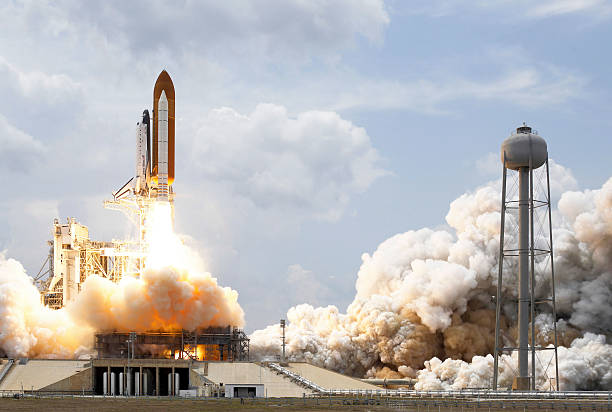
The core of the problem is that NASA no longer has a single, unifying mega-project like Apollo or the Space Shuttle. The Artemis program, which is supposed to return humans to the moon, is real, but it is underfunded, constantly delayed, and lacks the national urgency of the 1960s. Meanwhile, the commercial space industry—SpaceX, Blue Origin, Rocket Lab—is eating NASA’s lunch on launch costs, innovation, and speed. Congress still funds NASA, but the money gets spread thin across all ten centers. And every center has to justify its existence to keep its budget, its workforce, and its political patrons in Washington happy.
Let’s start with the Kennedy Space Center in Florida. For decades, KSC was the launch hub of the free world. Today, it has become a landlord for SpaceX and other commercial operators. The Apollo-era launch pads are still used, but the real action is happening on the Cape’s commercial side. KSC’s workforce has pivoted from running launches to managing leases and safety oversight. It is a downgrade in purpose, and everyone there knows it. The center is scrambling to find a new identity, pushing for more involvement in Artemis ground operations and even proposing to take over some of the next-generation rocket testing work that used to go to Mississippi or Alabama.
Then you have the Johnson Space Center in Houston. JSC has always been the face of human spaceflight. Mission Control, astronaut training, the whole deal. But now, Houston is fighting a two-front war. On one side, the commercial crew program has shifted astronaut training to private companies. On the other side, the Artemis program is spreading command-and-control duties across multiple centers. Houston is no longer the undisputed king of human missions. It has to argue for every piece of Artemis work it gets, and it is losing some fights to centers like Marshall, which wants more say in the Space Launch System rocket program.
Speaking of Marshall Space Flight Center in Huntsville, Alabama, that place has been on a power trip. Marshall built the Saturn V. It knows heavy lift. But in the Artemis era, Marshall is pushing hard to take over more mission control functions and even some astronaut-related planning. They argue that their experience with the Space Launch System makes them the natural lead for any deep-space mission. Houston disagrees. Loudly. Behind closed doors, the battles are about budgets, not logic. Each center has a congressional delegation ready to fight for jobs, and that is what keeps these turf wars alive. It is pork-barrel politics dressed up as technical expertise.
Out in California, the Ames Research Center and the Jet Propulsion Laboratory are getting squeezed in a different way. JPL is a NASA center, but it is managed by Caltech, and it specializes in robotic planetary science. That was fine when Mars rovers were the big story. But now the agency is prioritizing human exploration over robots, and JPL finds itself fighting for relevance. Ames, which focuses on space biology and supercomputing, has an even tougher road. Its niche is important, but nobody is going to the moon to study space algae. So Ames has been trying to rebrand itself as a hub for in-space manufacturing and artificial intelligence. It is a stretch.
The Glenn Research Center in Cleveland and the Langley Research Center in Virginia are both research and development houses. They have no astronauts, no launch pads, and no rockets of their own. They depend on being the brains behind new propulsion systems, materials, and aeronautics. But as NASA’s budget shrinks relative to inflation, the research centers get the smallest slices of the pie. They survive by partnering with the Department of Defense or universities, which dilutes their NASA identity even further.
The bottom line is that NASA is still a world-class engineering organization, but it is being pulled apart by a lack of strategic direction. The Artemis moon program is real, but it is not big enough to keep all ten centers fully busy and fully funded. Commercial space is growing, but it is eating the agency’s traditional roles. And Congress is not going to let any center close, no matter how redundant it becomes. So the centers fight. They compete for projects, for contracts, and for relevance. And until NASA gets a single, clear, funded mission that everybody buys into, this internal war is not going to stop.
Space News
Latest Articles
New rockets, upcoming launches, and the stories shaping humanity's push off this planet. No astronomy degree required.