Follow-up observations and the multi-wavelength campaign
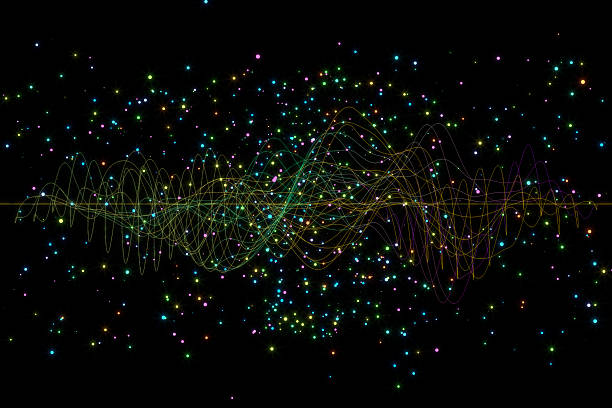
The core problem is that a single telescope, no matter how powerful, only sees one slice of the electromagnetic spectrum. A radio observatory catches the burst itself, but that tells you almost nothing about what caused it. Was it a neutron star collapsing? A magnetar erupting? Something weirder, like alien technology? To get answers, you need to look at the same spot in the sky across every possible wavelength: radio, infrared, visible light, X-rays, and gamma rays. That is the multi-wavelength campaign. It is like assembling a crime scene from a dozen different angles. Each wavelength reveals a different piece of evidence.
When a Fast Radio Burst fires off, the clock starts ticking. Within minutes, automated systems alert observatories around the world and in orbit. Teams drop everything. They aim telescopes ranging from the Very Large Array in New Mexico to the Chandra X-ray Observatory in space. They are hunting for afterglows. Most bursts leave no trace, but some leave a faint, fading emission in other bands. If you catch that afterglow in X-rays, for example, you can trace it back to a specific galaxy or even a specific star-forming region within that galaxy. That is how you move from a random blip to a confirmed origin point.
Follow-up observations are the backbone of this whole operation. You cannot just catch a burst and call it a day. You have to revisit the same coordinates days, weeks, and months later. You are looking for the host galaxy. You want to know what kind of environment spawned this event. A burst coming from a quiet, elderly galaxy points to a different engine than one coming from a chaotic, star-burst nursery full of young magnetars. This kind of persistent surveillance has already paid off. By nailing down the host galaxies of a handful of repeating bursts, scientists have linked some of them to highly magnetized neutron stars. That does not solve the entire mystery, but it narrows the list of suspects dramatically.
What makes this relevant to a man in his twenties who dreams of deep space? It is about navigation and survival. If humanity ever builds interstellar probes or habitats in the outer system, the ability to understand and predict these high-energy events matters. Fast Radio Bursts can travel billions of light years. That means they interact with every scrap of matter and every magnetic field along the way. By studying how the burst scatters and polarizes, astronomers are mapping the invisible structure of the universe. They are measuring the density of electrons between galaxies. That is raw, practical data. It is the same kind of knowledge you would need to shield a spacecraft from radiation or calibrate a long-range communication system.
The multi-wavelength campaign is also a test of international coordination. Observatories in Chile, Hawaii, Australia, and space telescopes operated by NASA and the European Space Agency all link up for these events. It is not glamorous. It involves sleepless nights, late phone calls, and a lot of software that barely works. But it works. In 2020, a burst was caught in real time across radio, X-ray, and visible light for the first time. That single event tied the burst directly to a magnetar in our own Milky Way. It was a breakthrough that only happened because every available tool was aimed at the same patch of sky at the same moment.
For the casual space enthusiast, the takeaway is simple. The unknown signals coming from deep space are not just curiosities. They are probes of the fundamental stuff of the universe. Every burst is a data packet sent across cosmic distances. We just have to be smart enough to read it. Multi-wavelength campaigns are the method. Follow-up observations are the discipline. Together, they are turning the most mysterious blips in astronomy into hard science. And that science is the foundation for everything from the next generation of space telescopes to the day we finally build a starship. Keep watching the sky. The signals are out there, and we are learning to decode them, one wavelength at a time.
Space News
Latest Articles
New rockets, upcoming launches, and the stories shaping humanity's push off this planet. No astronomy degree required.