Biosignatures and the oxygen false positive problem
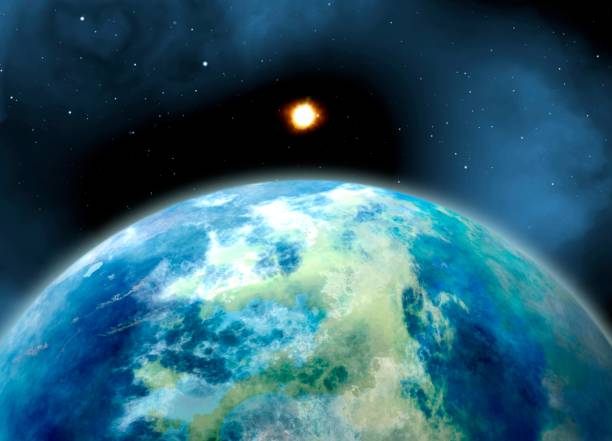
When we talk about destinations in space, we’re not just talking about planets with the right temperature or the right size. For the SpacePilgrim crowd, the ultimate destination is a world where we could theoretically step out of a ship and take a lungful of air. That’s why the James Webb Space Telescope and the next generation of observatories are so hyped: they can sniff the atmospheres of distant exoplanets and look for biosignatures—chemical fingerprints that suggest life is busy at work. On Earth, oxygen is the obvious one. Our atmosphere is 21% oxygen, and almost all of it comes from photosynthesis. Find a planet with oxygen, the logic goes, and you’ve found a living world.
Not so fast.
The problem is that oxygen can be produced without life. It’s not an easy process, but it happens. Take photolysis, for example. When ultraviolet light from a star hits water vapor or carbon dioxide in a planet’s atmosphere, it can split those molecules apart, releasing oxygen. On a planet with negligible volcanism or geological processes to scrub that oxygen back out, the gas can build up to Earth-like levels. No microbes. No plants. Just physics and chemistry playing a trick on you.
Then there’s the runaway greenhouse scenario. If a planet is too close to its star, water vapor can rise high into the atmosphere, get zapped by UV, and the hydrogen escapes into space. The leftover oxygen accumulates. That’s essentially what happened to Venus—minus the life part. Venus likely had oceans at one point, but it boiled them away, and now its atmosphere is loaded with oxygen in the form of carbon dioxide and trace amounts of free oxygen. Not a destination you want to book a ticket to.
So here’s the hard reality for exoplanet hunters: if we find a rocky planet in the habitable zone—the Goldilocks region where liquid water could exist—and we detect oxygen, we have to ask the ugly question. Is this oxygen made by living organisms, or is it a false positive? This isn’t an academic debate. It’s the difference between announcing “we found alien life” and “we found another dead rock that looks alive from 40 light-years away.”
The habitable zone itself complicates things further. For years, we thought that being in the habitable zone meant you were safe—just the right distance from the star, not too hot, not too cold. But we’ve learned that the habitable zone is messier than that. A planet could orbit in that zone and still have a Venus-style oxygen buildup with no life whatsoever. Meanwhile, a planet outside the habitable zone—like a tidally locked world orbiting a red dwarf—could have life in a subsurface ocean, but we’d never see oxygen in its atmosphere because it’s frozen under miles of ice. The destinations we can actually see may be the least likely to host life.
So what’s the solution? Scientists are now looking at combinations of biosignatures. Oxygen alone isn’t enough. You need to see methane alongside it, because methane and oxygen react with each other quickly. If both are present in a stable atmosphere, something has to be making them simultaneously. That something is usually life. You also need to rule out the star’s activity—some stars, especially flaring red dwarfs, can produce false signatures that look like oxygen. And you need to measure the planet’s atmosphere in multiple wavelengths to understand the pressure and temperature, because a “false positive” oxygen signal under high pressure might be just dead chemistry.
All of this means that the next decade of exoplanet science isn’t going to give us a single, clean answer. We’re going to find a lot of worlds that smell like oxygen, and most of them will be disappointments. But that’s the game. The destination isn’t just the planet itself—it’s the process of ruling out the traps. Every false positive teaches us something about planetary evolution, about how stars interact with their worlds, and about how rare true biosignatures might be.
For now, keep your expectations in check. The next time you see a headline about an oxygen-rich exoplanet, don’t pack your bags. Ask whether that oxygen is a promise of life or just another chemical illusion. The truth is out there, but it’s going to take a lot more than a whiff of O2 to find it.
Space News
Latest Articles
New rockets, upcoming launches, and the stories shaping humanity's push off this planet. No astronomy degree required.