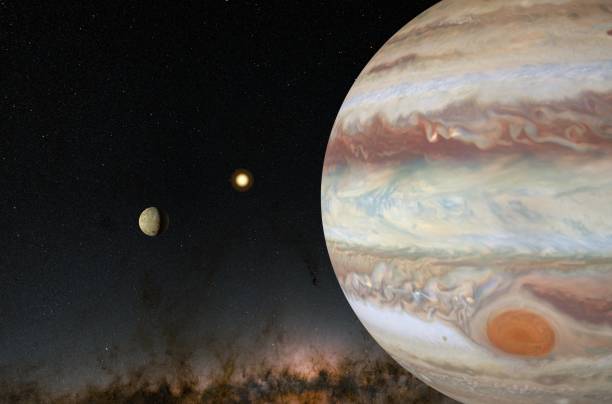
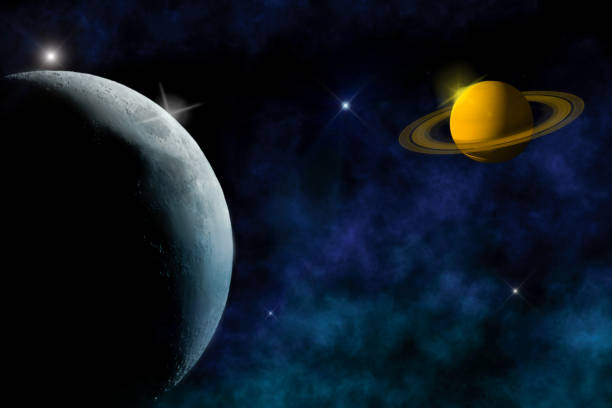
Callisto and the heavily cratered ancient surface
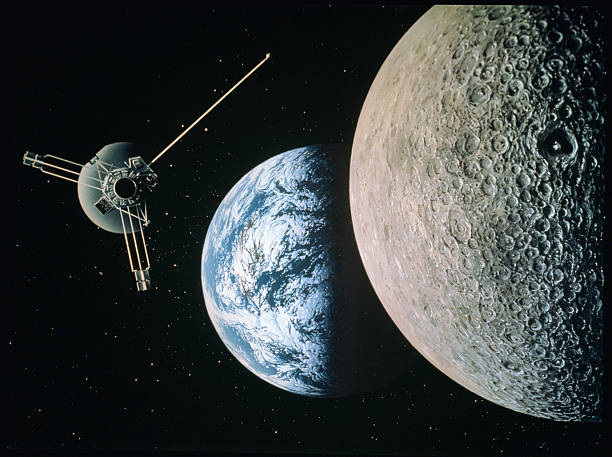
Callisto is Jupiter’s second-largest moon and the third-largest in the solar system. It orbits farther out than the other Galilean moons, which means it gets less of Jupiter’s tidal heating. That fact alone makes it a completely different beast. While Io gets stretched and squeezed into volcanic insanity, and Europa keeps a liquid ocean warm beneath its ice, Callisto just sits there. Cold. Still. Unchanged for billions of years. And that’s exactly what makes it so valuable.
The surface of Callisto is the most heavily cratered landscape in the solar system. We’re not talking a few dings and dents. We’re talking saturation cratering, where every square mile has been slammed by impacts so many times that the surface is basically pulverized. No large-scale resurfacing has happened here. No volcanic eruptions, no tectonic shifts, no ice flows smoothing things over. What you see is what formed when the solar system was still a cosmic shooting gallery. It’s like a fossil record of the early solar system, frozen in place and preserved in near-vacuum.
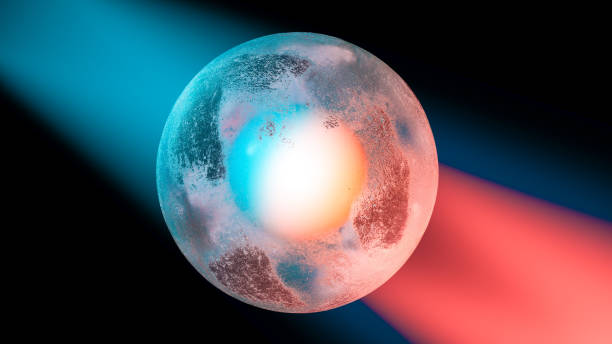
The craters themselves range from tiny pits to enormous basins like Valhalla, a multi-ring impact structure over 3,800 kilometers across. That thing is so big it would stretch from New York to Los Angeles and then some. The rings are actually concentric fractures in the ice, like ripples in a frozen pond after a rock the size of a small moon hit it. Underneath that icy crust, Callisto is a mix of rock and water ice, probably about 60% rock and 40% ice, with no evidence of a fully differentiated interior. That means it never got hot enough to separate into distinct core, mantle, and crust layers. It’s basically a giant, dirty snowball that’s been sitting in deep freeze for 4.5 billion years.
For a destination, Callisto offers something no other Jovian moon can: stability. While Europa and Ganymede are bombarded by Jupiter’s intense radiation belts, Callisto sits far enough out that the radiation levels are manageable. We’re talking about 100 times less radiation than Europa gets. That makes it the only one of Jupiter’s large moons where a human mission could set up a surface base without needing lead-lined bunkers and constant shielding. The radiation is still higher than Earth, but it’s survivable with current technology. NASA and other agencies have looked at Callisto as a potential staging point for deeper exploration of the Jupiter system. You park a habitat there, run supplies, and use it as a launchpad for missions to Europa or Ganymede without constantly worrying about your electronics getting fried.
The terrain itself is not inviting in the traditional sense. It’s gray, crumbling ice and dust. The temperature at the equator hovers around minus 140 degrees Celsius. Sunlight is about 25 times weaker than on Earth. You’re not going for a beach vacation. But if you’re the kind of guy who appreciates raw, untouched wilderness, Callisto is the ultimate backcountry. No atmosphere means every horizon is razor-sharp. No weather. No sound. Just silence and the slow, deliberate motion of Jupiter hanging overhead, four times the size of Earth’s moon in the sky.
From a scientific standpoint, Callisto is a time capsule. The craters preserve evidence of impacts from the early solar system that have been erased on Earth, Mars, and even the Moon. If we want to understand what conditions were like when the planets were still forming, Callisto has the receipts. Ice samples from deep inside those impact basins could contain organic compounds preserved for eons, maybe even clues about how life’s building blocks arrived on Earth. It’s not as sexy as swimming in Europa’s ocean, but it’s a lot more accessible and a lot less risky.
SpacePilgrim.com is all about keeping you ahead of the curve. Right now, the big missions are focused on Europa Clipper and the Juice probe, both of which will swing by Callisto for gravity assists and flybys. But the real prize for human exploration might be Callisto itself. It’s the only place in Jupiter’s neighborhood where we could realistically land, build, and survive without constant radiation suits and underground habitats. It’s cold, it’s dead, it’s scarred to hell. But it’s solid ground at the edge of the giant. And for anyone looking at the future of space travel, that’s worth a long, hard look.
Space News
Latest Articles
New rockets, upcoming launches, and the stories shaping humanity's push off this planet. No astronomy degree required.