Commercial landers and the CLPS program
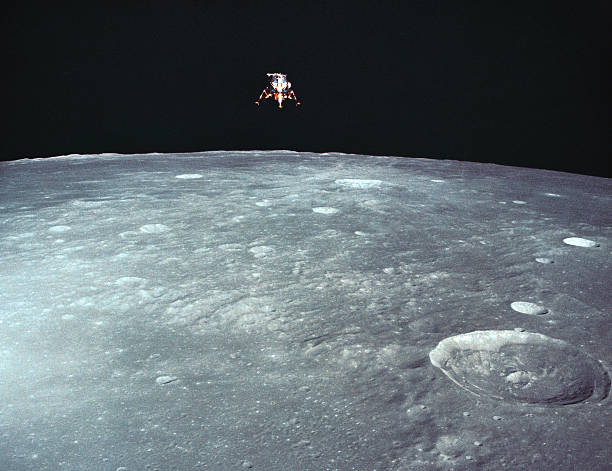
First, forget the Sea of Tranquility. NASA is not sending CLPS landers to the flat, boring plains of the near side. The real action is at the poles, specifically the lunar south pole. This region is a mix of permanently shadowed craters and sun-drenched ridges. The big draw here is water ice. We know it’s there, locked in the cold traps of craters like Shackleton, Shoemaker, and Haworth. Commercial landers like Astrobotic’s Griffin and Intuitive Machines’ Nova-C are aiming for these edges. The point isn’t just to snap a picture. The point is to drill, sniff the dirt, and see how accessible that ice really is. If you can extract water, you can make rocket fuel and drinking water. That makes the Moon a gas station, not just a museum.
Another key destination is a place called the Schrödinger basin. This is a massive impact crater on the far side of the Moon, near the south pole. It’s a big, flat, ancient hole that exposes deep crustal material. NASA wants to send a CLPS lander there to grab samples and study the Moon’s interior structure. Schrödinger is also a candidate for a future telescope array because it’s shielded from Earth’s radio noise. Commercial landers are the only way to get payloads there cheaply because a dedicated NASA rover would cost a billion dollars. Instead, companies like Firefly Aerospace are designing landers that can carry a few hundred pounds of instruments to this remote spot. It’s not glamorous. It’s a dirty, cold, dark crater. But it’s the kind of place where we learn what the Moon is actually made of.
Not every destination is a polar crater, though. The lunar near side still has value. The Mare Tranquillitatis region, where Apollo 11 landed, is being revisited by some CLPS landers, but with modern gear. The goal isn’t to retrace footprints. It’s to test technologies like precision landing and hazard avoidance. These missions are essentially flight tests. If you can land a box of sensors within a few meters of a target on a flat volcanic plain, you can later do the same near a dangerous crater rim. So companies like Draper are targeting areas near the Apollo sites, but not for nostalgia. It’s about proving the guidance systems work in a known environment before sending them into the polar shadows.
There’s also a weird one: the Gruithuisen Domes. These are volcanic formations on the near side that look like they were made from silica-rich magma, which is rare on the Moon. Normally the Moon has basalt, like hardened lava. But these domes suggest a different, stickier lava existed. That’s strange because silica-rich magma usually requires water or plate tectonics, neither of which the Moon has. Sending a CLPS lander to the Gruithuisen Domes is like sending a geologist to a crime scene. You need to land close, take measurements, and figure out if the Moon once had more complex geology than we thought. It’s a high-risk, high-reward destination where the science payoff could redefine lunar history.
Finally, there’s a destination that isn’t a place at all yet, but a concept: the lunar surface near future landing sites for crewed Artemis missions. CLPS landers are going to scout ahead. They will land near the lunar south pole, at spots like the Connecting Ridge or the Shackleton crater rim, and they will test how much dust gets kicked up, how hard the ground is, and whether solar power works when the sun is at a low angle. These are boring destinations in terms of sightseeing, but essential for survival. If you want to put boots back on the Moon by 2026 or 2027, you need to know if a landing pad can be Leveled or if a solar panel can work at 5 degrees above the horizon. CLPS landers are the scouts. They go where the engineers point.
The CLPS program isn’t flashy. It’s not sending astronauts. It’s sending rugged, compact landers built by companies with names like Masten Space Systems, Astrobotic, and Intuitive Machines. Their destinations are chosen with a cold, calculating logic: find water, test technology, understand weird geology, and prep for humans. For a guy in his 20s who follows space, this is the real lunar frontier. Not the flag-planting of 1969, but the mule work of the 2020s. The Moon is getting a network of delivery trucks, and they’re headed to the darkest, coldest, most dangerous parts of the lunar landscape. That’s where the future is.
Space News
Latest Articles
New rockets, upcoming launches, and the stories shaping humanity's push off this planet. No astronomy degree required.