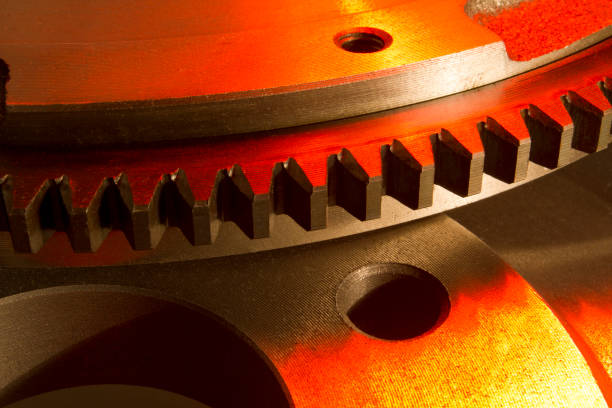
Crawler-transporter moving at walking speed

The crawler-transporter is not a truck. It is a mobile launch platform the size of a baseball infield, with eight tracks, each taller than a man, and a deck that can support 18 million pounds. It was built in the 1960s for the Apollo program and has been upgraded ever since. Today, it carries the Space Launch System, the heaviest rocket ever built for NASA. The rocket on top is a skyscraper filled with millions of gallons of cryogenic propellant. The structure is bolted together with tolerances measured in thousandths of an inch. If you hit a bump at fifteen miles per hour, you crack the fuel lines, snap the welds, and turn a billion-dollar rocket into a statue of twisted metal.
The walking speed is not arbitrary engineering nostalgia. It is the direct result of physics and mass. The crawler rides on a bed of river rock that is constantly graded and replaced. The ground pressure is so high that the machine sinks slightly under its own weight. At one mile per hour, the operators can feel every vibration through the control room floorboards. They can react to a sudden wind gust or a stray stone before it becomes a disaster. The journey from the Vehicle Assembly Building to Launch Complex 39B takes eight to ten hours. That is a full workday to move three miles. But when you are carrying a machine that can send humans to the Moon, you do not rush.
Cape Canaveral is the American cathedral because it is the place where we go to worship the future. The launch pads are the altars. The crawler is the processional. Every time a rocket rolls out, it is a ritual that takes half a day and involves hundreds of people. The engineers, the technicians, the security teams, the weather monitors all move at the same slow pace. They walk alongside the crawler, checking clearance, scanning for debris, breathing the salt air. There is no hurry. The rocket is going nowhere until it is ready.
For the casual space fan, the crawler is easy to ignore. It is not a rocket. It does not explode or roar. But it is the unsung foundation of every successful launch from the Cape. Without it, you cannot assemble a heavy launch vehicle indoors, protected from the Florida humidity and wind. Without it, you cannot move that vehicle to the pad intact. The crawler is the bridge between the factory and the sky.
There is also a deeper reason for the slow speed. The rocket on top carries fuel that is kept at cryogenic temperatures. Liquid hydrogen and liquid oxygen boil off even in insulated tanks. If the transporter moves too fast, the sloshing can create pressure spikes that rupture valves. The walking speed ensures the fuel stays settled. It ensures the loads on the structure stay within design limits. It ensures that when the rocket finally sits on the pad and the ground crew begins final countdown, everything is exactly where it was when the crawler left the building.
The men who drive the crawler are a breed apart. They train for months, learn every gauge and alarm, and understand that their job is to be boring. Boring is safe. Boring is reliable. When the crawler moves, there are no dashboard lights that flash victory. There is only steady gauge pressure, steady speed, and steady tension. The operator sits in a cockpit that looks like it was ripped from a 1960s submarine. He monitors temperature, vibration, alignment. He waits. He crawls.
That is the spirit of Cape Canaveral. Not the flash. Not the glory. The slow, grinding, deliberate work that makes the impossible possible. The next time you see a time-lapse of a rocket rolling to the pad, remember that behind the sped-up video is a machine that moves at walking speed. It is the slowest monster on Earth. And that is exactly why it works.
Space News
Latest Articles
New rockets, upcoming launches, and the stories shaping humanity's push off this planet. No astronomy degree required.