Deorbit plan and the South Pacific Ocean grave
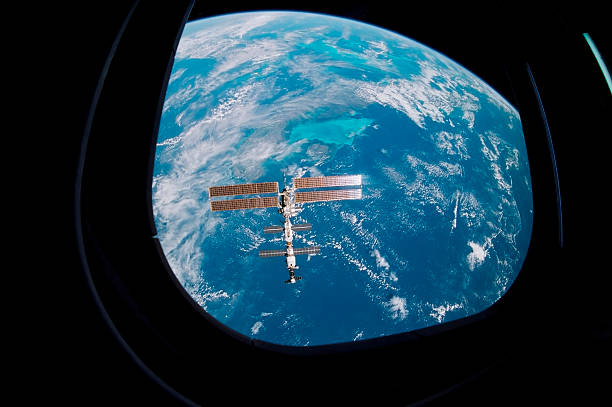
The decision to deorbit the ISS wasn’t made overnight. By the time the station is retired around 2031, it will have been in continuous operation for more than thirty years. Its modules, trusses, and solar arrays have endured constant thermal cycling, micrometeoroid impacts, and the wear of crew habitation. The cost of maintaining an aging structure that requires ever more frequent repairs becomes prohibitive. A controlled deorbit is the only option that guarantees the ISS doesn’t become a massive piece of space debris. The alternative is letting the station’s orbit decay naturally, which would create an unpredictable and dangerous reentry over populated areas. That is not an acceptable outcome.
The plan itself is methodical. The ISS orbits roughly 250 miles above Earth, but it slowly loses altitude due to atmospheric drag. In its final years, Russian Progress cargo spacecraft, and later a dedicated deorbit vehicle built by SpaceX that NASA awarded a contract for in 2024, will perform a series of braking burns. These thruster firings will lower the station’s perigee, or the closest point of its orbit to Earth, until the atmosphere grabs it. The final burn will be a last, powerful retrofire that sends the entire structure on a one-way trajectory over the South Pacific. From that point, nothing can be done to save it.
Why the South Pacific? Because that region of the ocean is statistically the most remote place on Earth. Point Nemo, also called the oceanic pole of inaccessibility, lies roughly 1,670 miles from the coasts of Antarctica, Australia, and South America. It is a literal graveyard for spacecraft. Over three hundred decommissioned satellites and space station components have already met their end there, including the Russian Mir station and several cargo ships. There are no islands, no shipping lanes, no flight paths. The risk of debris hitting a human is virtually zero. When the ISS tears apart during reentry, most of it will vaporize in the plasma of friction. But large chunks of titanium fuel tanks, docking ports, and solar array supports will survive the heat. Those will rain down into the ocean and sink to the seafloor, never to be seen again.
There is a misconception that the entire station will somehow be saved for a museum or broken down for parts in orbit. That is not feasible. The ISS is not a single object. It is a collection of modules built by different nations that were joined in space. No spacecraft currently in service has the cargo capacity to boost a twenty-foot module back to Earth intact. The cost of developing one would be astronomical. The space station was assembled piece by piece over dozens of missions, and deconstructing it in orbit would require a similar number of flights, each one a risk to human crews and expensive hardware. The most efficient and practical choice is to let the station burn.
Those who follow space news will notice that the deorbit plan has shifted NASA’s commercial partners toward the concept of private space stations. Axiom Space, for example, is already building commercial modules that will eventually detach from the ISS before its final plunge. This is the real legacy of the ISS legacy: it proved that continuous human presence in low Earth orbit is possible, sustainable, and valuable. But it also taught engineers that nothing stays up there forever. The ISS is not being abandoned. It is being retired with the same precision that put it in orbit.
For the American men in their twenties reading this on SpacePilgrim.com, the takeaway is simple. The South Pacific Ocean grave is not a dumping ground. It is a necessary destination for a machine that gave us two decades of science, international cooperation, and a home for more than two hundred and fifty astronauts. The final mission of the ISS is not a tragedy. It is a controlled, logical end to a remarkable chapter in human spaceflight. The next orbit belongs to the stations that replace it, but the Pacific floor holds a monument that matters more than most museums ever will.
Space News
Latest Articles
New rockets, upcoming launches, and the stories shaping humanity's push off this planet. No astronomy degree required.