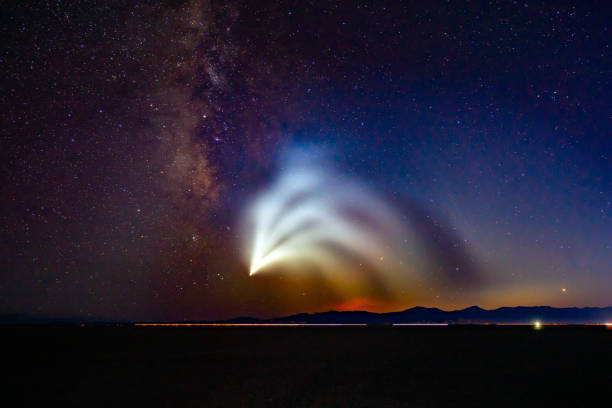
Dragon capsule and returning US crew

The key agency relationships here are not always obvious. When most people think of the Dragon capsule, they imagine Elon Musk standing next to a gleaming rocket. The reality is far more bureaucratic. The Commercial Crew Program, which funded Dragon development, was a NASA initiative that forced the agency to act more like a venture capital firm than a traditional engineering shop. Instead of dictating every bolt and valve, NASA set requirements and let SpaceX figure out the how. That shift was a radical departure from the old Apollo-era model where NASA specified everything down to the thread count on spacesuit gloves. For American men in their 20s who grew up watching the Shuttle program wind down, this matters because it means the next generation of spaceflight won’t be run by government committees—it will be run by agencies that know when to get out of the way.
The first crewed Dragon flight in May 2020—Demo-2—was a textbook example of agency coordination under pressure. NASA astronauts Bob Behnken and Doug Hurley strapped into a capsule built by a company that had never flown humans. The FAA had to approve launch licenses. The US Air Force provided range safety. NASA itself had to certify the vehicle against decades of safety standards that were originally written for the Shuttle. Every one of those agencies had a veto. If the FAA didn’t like the abort system software, no launch. If the Air Force thought the tracking radar was inadequate, scrub. The fact that Dragon flew at all is a testament to how these agencies learned to communicate without the old adversarial dynamic where NASA treated contractors like vendors rather than partners.
Returning US crew in that Dragon, splashing down in the Gulf of Mexico, also involved an interagency dance that most people never see. The recovery team included SpaceX employees, NASA safety officers, and US Coast Guard vessels keeping unauthorized boaters away from the capsule. The Navy helped with salvage and recovery planning. The Department of Defense provided weather forecasting support. What looked like a simple parachute landing was actually a coordinated operation involving half a dozen federal and private entities, all working from playbooks that had to be written from scratch because no American capsule had splashed down in the Atlantic since 1975. Every successful return since then—Crew-1, Crew-2, Crew-3, Inspiration4, Axiom-1—has refined those agency relationships. NASA stopped micromanaging SpaceX’s manufacturing. SpaceX started sharing real-time telemetry with NASA mission control in Houston instead of just Hawthorne, California. The agencies learned trust.
The bigger lesson for SpaceX’s impact on the space industry is that agencies don’t have to be monolithic. NASA’s centers—Johnson, Kennedy, Marshall, Ames—have different cultures. Some are still resistant to private partnerships. But the Dragon program proved that when an agency like NASA Space Operations commits to a commercial model, the results can be faster and cheaper than traditional procurement. The Crew Dragon cost NASA about 55 million per seat, versus 86 million for a Soyuz seat. More importantly, it gave the US independent access again. That sovereignty isn’t about flag-waving; it’s about not having to ask Russia for a ride when your national security astronauts need to get to the station.
For the casual enthusiast keeping up with the future of space travel, the Dragon capsule and its returning crews represent something bigger than a vehicle. They represent a new kind of agency relationship—one where NASA acts as a customer and regulator rather than a monopoly operator. The FAA is now certifying commercial crew launches faster than anyone expected. The State Department is negotiating new agreements for international crew rotations. Even the White House Office of Space Commerce is getting involved in setting standards for orbital traffic management. Every agency that touches spaceflight is being forced to adapt to a world where SpaceX can fly multiple crew missions per year, not one or two. The old pace of a single government-mandated program every decade is dead.
If you want to understand where space is going, stop looking at rocket specs and start looking at the agencies. The Dragon capsule didn’t just return US crew to orbit—it returned the US government to a role it hadn’t played in decades: a smart buyer instead of a clumsy builder. That shift is the real reason SpaceX changed everything. It forced every agency in the American space ecosystem to ask a simple question: Are we here to control access to space, or enable it? The answer, so far, is enabling. And that means more flights, more destinations, and more opportunities for private citizens and companies to follow where the astronauts have already gone.
Space News
Latest Articles
New rockets, upcoming launches, and the stories shaping humanity's push off this planet. No astronomy degree required.