Emergency return and the ascent vehicle readiness
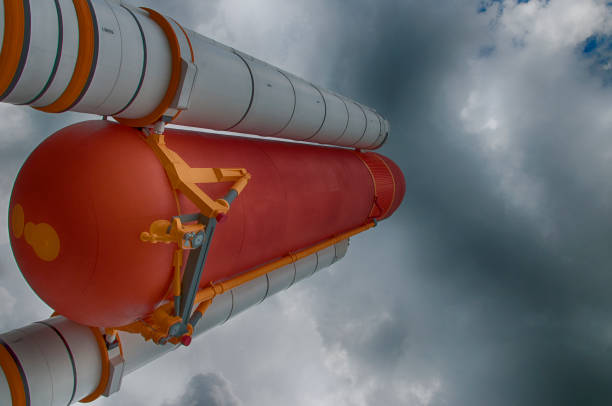
The Lunar Base Operations plan for Year One is built around a concept called “continuous emergency return capability.” In plain English: at any moment, every crew member on the surface must have a working, fueled, and certified vehicle that can get them off the ground and back to the orbiting Gateway station—or a free-return trajectory toward Earth. This isn’t a luxury. On the Moon, a failed life support system, a cracked habitat wall from a micrometeorite, or a medical emergency like a severe cardiac event doesn’t give you forty-eight hours to think. You have minutes to hours, tops. The ascent vehicle is the only way out.
So what does “readiness” actually mean for these vehicles? It’s not just sitting on the pad with a full tank. A vehicle that sits for months in lunar vacuum, exposed to extreme thermal cycling—daytime temperatures at the equator hit 250°F, night drops to minus 280°F—needs constant health checks. The propellant systems, especially cryogenic fuels like liquid oxygen and liquid methane, boil off over time even with the best insulation. A vehicle left idle for two months might have usable fuel, but it might not have enough for the full delta-V burn to rendezvous. That’s why the operations plan calls for a strict rotation: every ascent vehicle gets its systems fully cycled and its tanks topped off at least every thirty days. If a vehicle fails a health check, the crew needs to know immediately whether it’s repairable with on-site spares or if they need to call for a replacement mission from Earth—which takes weeks at minimum.
The real headache is what happens during the two-week lunar night. Solar power goes to zero. Batteries and fuel cells can keep the base running, but they can’t warm a parked ascent vehicle indefinitely. If the vehicle’s thermal management system fails, internal components—especially avionics and thrusters—can freeze solid or crack. A frozen valve means no engine start. A dead battery means no guidance computer. That’s a death sentence if an emergency happens during the night. The mitigation? Redundant heaters powered by dedicated radioisotope thermoelectric generators, not base power. The vehicle has to be a self-contained survival pod, not a dependent system.
Another angle: the ascent vehicle isn’t just an escape capsule. It’s also the only way to move personnel between the surface and Gateway. In Year One, cargo landers will be one-way. Crew landers are the only reusable transport. This means every time a new crew rotates in, the old ascent vehicle gets swapped out. But you can’t just leave an empty pad. The base must always have a “warm standby” vehicle at the ready. That means scheduling surface extravehicular activities, science work, and construction around vehicle maintenance shifts. If the ascent vehicle fails a preflight checkout during a crew’s first week on the surface, that crew is effectively grounded until a replacement arrives. No one wants to spend twelve months staring at a broken escape pod.
The psychological factor matters, too. American men in their twenties—the target demographic here—tend to pride themselves on being prepared, on having a plan B. But living with the knowledge that your only way off the rock might not work is a specific kind of stress. NASA and its commercial partners have started running simulations where the ascent vehicle fails during a mock emergency. The default rule is: no crew member should ever be more than a thirty-minute walk from a fully fueled ascent vehicle. For the first base, that likely means two dedicated ascent pads, each with its own vehicle, spaced a quarter-mile apart. If one goes down, you run for the other.
The bottom line for the first year on the Moon is brutal: the ascent vehicle readiness isn’t a backup plan. It is the plan. Every habitat module, every science instrument, every rover is secondary to the ability to leave. If you’re going to spend a year on the lunar surface, you need to trust that machine more than you trust your own heartbeat. The engineers who design them, the techs who maintain them, and the crew who fly them all know the same cold truth: out there, readiness is the only mercy you get.
Space News
Latest Articles
New rockets, upcoming launches, and the stories shaping humanity's push off this planet. No astronomy degree required.