Axiom Station and the ISS commercial successor
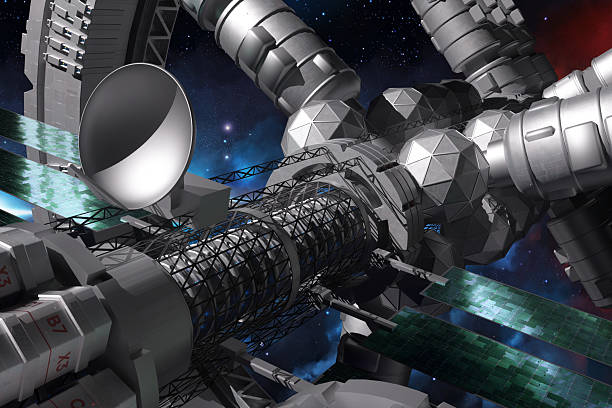
Life on the ISS today is a mix of rigorous science and carefully scheduled monotony. Crew members exercise two hours a day to prevent muscle and bone loss. They eat rehydrated meals from pouches, sleep in sleeping bags strapped to walls, and use a toilet system that costs tens of millions of dollars to maintain. Wastewater is recycled into drinking water. Every air molecule is scrubbed and recirculated. Privacy is a luxury — the sleeping quarters are closet-sized. The workday is packed with experiments, maintenance, communication checks, and photo ops. It is not comfortable. It is not glamorous. It is a professional outpost, built for maximum efficiency, not maximum livability.
Axiom Station changes that logic. Axiom’s plan is modular: they will attach their first commercial modules to the ISS while it still operates, then detach them to form a standalone station around 2028. The modules are designed by Belgian architect Philippe Starck, not just by engineers. They feature large windows, private crew quarters with actual beds, soft lighting, and dedicated areas for dining, recreation, and even video calls with family. The interior volume inside a single Axiom module is roughly equal to the entire habitable space of the ISS. That means more room to move, more storage, and less claustrophobia.
The real shift is in who lives there. The ISS is crewed by government astronauts who train for years and spend six months at a time. Axiom Station will host commercial astronauts — paying customers from private companies, research organizations, and even individuals. SpaceX already flies private missions to the ISS, like the 2022 Axiom Mission 1, which carried a former NASA astronaut and three businessmen for a two-week stay. These weren’t tourists taking selfies. They conducted experiments, tested manufacturing processes, and evaluated life-support systems for future stations. Axiom Station will scale that up. It will have dedicated labs for biotech, materials science, and even space manufacturing of fiber optics and pharmaceuticals — products that benefit from microgravity.
For the twenty-something American reading this, the big question is not if you can go to space, but when and how. Axiom plans to sell tickets for missions lasting anywhere from a few weeks to several months. Prices are not public yet, but expect them to start in the tens of millions. That’s not a price for you today. But compare it to the early days of aviation. In 1927, a transatlantic flight cost the equivalent of $150,000. Ninety years later, you could buy a discount ticket for $300. The same curve applies to space. The infrastructure is being built now to drive costs down. Axiom Station is designed for scalability — more modules can be added, more docking ports for SpaceX Starships, more room for paying passengers and researchers.
Living on Axiom Station will feel different from living on the ISS. The food will be better: private kitchens with fresh ingredients delivered on cargo ships. The schedule will be looser: commercial clients control their own time instead of following a rigid NASA agenda. Entertainment will improve: streaming video, virtual reality, even low-gravity sports. Axiom has already partnered with Red Bull and other brands to explore opportunities for live broadcasts and events. The station will have a crew manager instead of a commander, reflecting a more hospitality-driven approach.
But life in space is still life in space. You will float every second. Your body will atrophy without constant exercise. You will be isolated from friends and family, with only a slight time delay on calls. Sunrises will happen every ninety minutes. The toilet will still break. The air will smell faintly of metal and recycled sweat. No amount of commercial polish changes physics.
What Axiom Station does change is the reason we live in space. The ISS was built to prove we could. Axiom is built to prove we can profit. For a generation that grew up with Google, SpaceX, and gig economies, that shift makes sense. The future of orbital habitats is not a science experiment. It is a commercial destination. And for the first time since Apollo, living in space is becoming a real option — not just for astronauts, but for the rest of us. The question is no longer if we will have permanent homes off Earth. It is whether you can afford to visit.
Space News
Latest Articles
New rockets, upcoming launches, and the stories shaping humanity's push off this planet. No astronomy degree required.