Mobility and the unpressurized rover limits
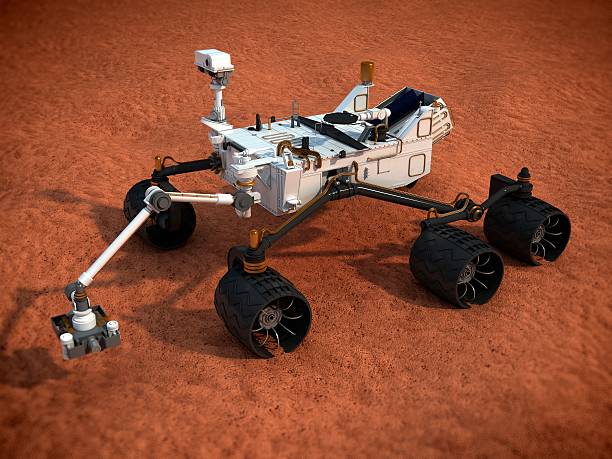
Let’s cut straight to it. An unpressurized rover is basically a glorified golf cart with a roll cage, lithium-ion batteries, and a seat that will punish your spine after about four hours. It has no cabin, no life support, and no airlock. You wear your spacesuit the entire time you’re driving it. That’s the first constraint that will shape your daily mobility. You can only stay outside as long as your suit’s oxygen and cooling systems last. On a standard lunar EVA suit, that’s about six to eight hours, including the time it takes to get in, get out, and walk to the rover. Realistically, your wheeled operating time is closer to four hours.
Now factor in the rover’s speed. Lunar terrain is unforgiving. It’s not a dirt road. It’s a field of razor-sharp volcanic glass, ankle-deep dust, and boulders the size of refrigerators. The Apollo-era lunar roving vehicle had a top speed of about 8 miles per hour. Modern unpressurized rovers like the ones being developed for Artemis missions might push that to 12 or 15 mph on a good day. But you will never drive that fast for long. Most of your driving will be at 5 mph or slower, because hitting a hidden rock at 10 mph in a vacuum means instant suit puncture and a very quiet, very final end to your day. So in a four-hour EVA window, at an average speed of 6 mph, your maximum round-trip distance from base is about twelve miles. That’s it. You can go twelve miles out, turn around, and come back. Anything further, and you’re asking for a dead battery or a dead crewmate.
That twelve-mile radius defines your entire first year of lunar base operations. The base itself, the habitat module, the solar farm, the water extraction plant, all of that sits inside that circle. Every geological survey, every sample collection, every experiment deployment must happen within a half-hour drive. You are effectively living on a patch of real estate the size of a small town. And that’s assuming you do not encounter terrain obstacles that force detours. Craters, ridges, and shadowed zones will carve your actual accessible area down to maybe fifty square miles. For perspective, the state of Rhode Island is over a thousand square miles. You will be operating on a patch of ground smaller than some national parks.
The real kicker is that this limit is not just a matter of hardware. It’s a matter of survival. An unpressurized rover offers zero protection from solar radiation. A solar flare goes off while you’re ten miles out, and you have no shelter. No thick walls. No water shielding. You’re sitting in a plastic seat under a thin plastic canopy, soaking up gamma rays because the rover cannot get you back to the base fast enough. The same goes for micrometeorites. A grain of sand traveling at 15 kilometers per second will punch through your suit and your body before you hear the impact. So mission planners will keep you close. They will enforce range limits based on the worst-case scenario, not the best.
What does this mean for your daily life during the first year? It means you will know every rock within five miles of the habitat by name. You will trace the same four or five traverse routes over and over until the wheel tracks become ruts. You will spend more time maintaining the rover than driving it, because lunar dust gets into every bearing, every motor, every seal. That dust is sharp, static-charged, and electrostatically clings to everything. It will abrade your rover’s suspension components and short-circuit its electronics if you don’t clean it after every sortie. You will hate the dust more than you hate the cold.
But there is a plan. The first year is not meant to be comfortable. It is meant to prove you can exist and work within the limits of unpressurized mobility. Once that baseline is established, the next resupply mission will bring a pressurized rover. That machine changes everything. A pressurized rover has a sealed cabin, a small bathroom, life support for days, and radiation shielding thick enough to survive a moderate flare. It extends your range from twelve miles to over a hundred. It lets you scout future landing sites, find water ice deposits, and build the infrastructure for a real lunar economy. But that comes later. In year one, you are the test pilot, the mechanic, and the guinea pig, all strapped into a glorified golf cart with a range shorter than a typical commute to a suburban office park.
So when you imagine living on the Moon, stop picturing epic road trips across the Sea of Tranquility. Start picturing the same six-mile stretch of dirt, driven twelve times a month, in a machine that feels like it was built in a garage with spare parts from a hardware store. That is the reality of mobility in the first year. It is limited, frustrating, and absolutely necessary. You will earn every mile.
Space News
Latest Articles
New rockets, upcoming launches, and the stories shaping humanity's push off this planet. No astronomy degree required.