ISS solar arrays and the beta angle constraint
Let’s cut through the jargon. The beta angle is simply the angle between the Sun and the orbital plane of the ISS. Imagine the station’s orbit as a flat ring around Earth. When the Sun sits directly above that ring, the beta angle hits a maximum. When the Sun is exactly in the plane, the beta angle is zero. Sounds simple, but the consequences are anything but. The ISS orbit is inclined 51.6 degrees, so depending on the time of year, the beta angle can swing from about zero up to roughly 75 degrees. That range is the difference between having near-constant sunlight and being plunged into darkness for half of every 90-minute orbit.
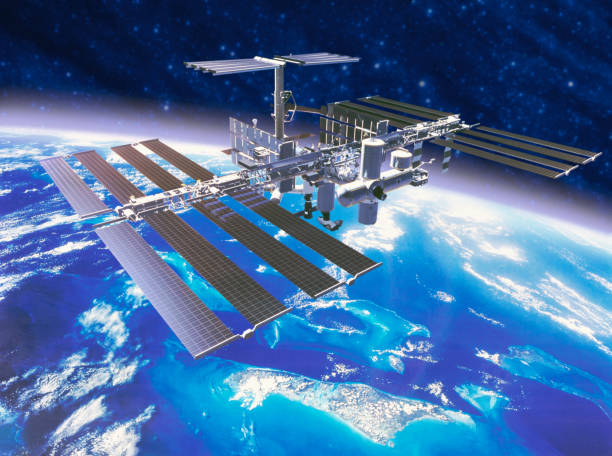
Here’s where the power problem kicks in. The ISS has eight solar array wings, each stuffed with thousands of photovoltaic cells. They produce roughly 120 kilowatts combined—enough to run a small subdivision on Earth. But the arrays aren’t stationary. They have to track the Sun to maximize incident light, and the beta angle dictates how fast and how far they can pivot. At low beta angles, the Sun zips across the sky from the station’s perspective, and the arrays must rotate continuously, year-round. At high beta angles, the Sun hangs nearly constant relative to the orbital plane, so the arrays barely need to rotate. That sounds like a win, except for one brutal downside.
When the beta angle gets high, the ISS enters what engineers call “beta cutout.” This occurs when the Sun’s rays hit the arrays nearly perpendicular to the station’s long axis. The dark side of the orbital night is shorter or nonexistent, which seems like infinite power. But the real driver is thermal management. The arrays can’t just sit there pointing at the Sun forever. They produce electricity, but they also absorb heat. Without regular periods in Earth’s shadow to cool down, the solar cells and their backing structure can overheat. The aluminum and silicon in those panels are tough, but thermal stress shortens their lifespan and drops efficiency. To avoid cooking the arrays ground-side, flight controllers actually command the arrays to stop tracking in certain high beta seasons. This reduces power generation intentionally, but it keeps the hardware safe.
This isn’t just a curiosity. The beta angle directly impacts mission planning. Cargo spacecraft like the SpaceX Dragon or Northrop Grumman’s Cygnus must rendezvous with the ISS along specific approach paths. If the beta angle is too high, the station’s attitude—its orientation in space—changes to keep the arrays aligned and the thermal loads manageable. That attitude change can make docking harder or even force a delay. For crewed missions, same story. A beta angle spike can push the station’s solar arrays into a “shadow” of the station itself, causing sudden drops in power that trip breakers. Those power transients have to be predicted days in advance and managed by the power distribution system, called the Electrical Power System on the US segment and the Russian segment’s separate network.
The arrays themselves are a marvel of modular assembly. The US-built arrays were launched in segments on Shuttle missions. Each wing has two blankets of solar cells stretched over a folding frame. They can rotate 360 degrees about their root via a massive, motor-driven beta gimbal assembly. But the gimbal’s rotation speed is limited—about 1 degree per second—so when the beta angle shifts rapidly, the arrays can lag behind. This introduces a game of tracking catch-up during each orbit, especially when transitioning between high and low beta seasons. The software that runs this is a custom blend of Sun sensors, torque equations, and thermal models that runs 24/7 in the Mission Control Center in Houston.
Bottom line: the ISS is a phenomenal machine, but it lives at the mercy of geometry. The beta angle is the unsung constraint that forces engineers to think about power not just as a resource, but as a dynamic, thermal, and mechanical trade-off. Next time you see the Station streak across the night sky, remember that behind those glowing panels, a constant, math-driven dance is keeping it alive—one that you can only see if you know exactly what to look for. The beta angle isn’t a bug. It’s a feature of flying a giant solar-powered fuel station through space. And understanding it is the first step to designing the next power system that will go far beyond Earth’s shadow.
Space News
Latest Articles
New rockets, upcoming launches, and the stories shaping humanity's push off this planet. No astronomy degree required.