Galactic center source and the weird one
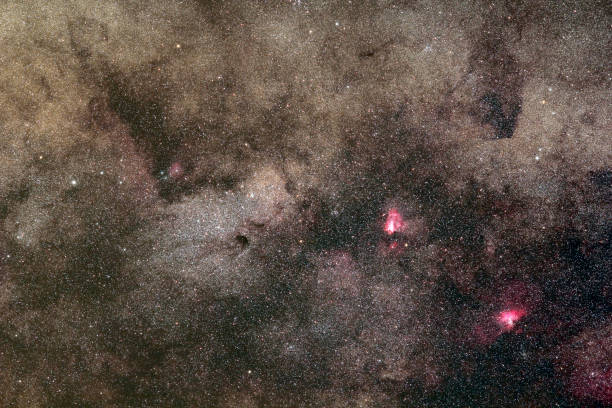
Let’s cut to the chase. The Galactic Center Source is a repeating fast radio burst, or FRB, but it’s not like the others. Most FRBs are one-off flashes that erupt from distant galaxies, billions of light-years away. They last milliseconds, then vanish. But this one is different. It’s coming from the heart of the Milky Way, just 25,000 light-years from Earth. And it’s behaving weirdly—not just repeating, but pulsing in a pattern that doesn’t fit any known explanation. No one saw this coming.
The source was first spotted by the CHIME telescope in Canada and later confirmed by other observatories. What makes it stand out is its location. The galactic center is a chaotic place—dense gas clouds, supernova remnants, and the supermassive black hole Sagittarius A all churning together. You’d expect radio noise, sure. But this signal is sharp, periodic, and powerful. It’s not a random hiss. It’s a deliberate-looking pulse that repeats every few minutes, sometimes with bursts that last longer than typical FRBs. That’s unusual enough to get serious attention.
So what’s causing it? Right now, the leading theory points to a magnetar—a neutron star with an absurdly strong magnetic field. Magnetars are cosmic wrecking balls, capable of blasting out energy that dwarfs our Sun. In fact, in 2020, astronomers caught a magnetar in our own galaxy spitting out FRB-like bursts, which was a huge clue. The Galactic Center Source might be a similar object, but with a twist. Its pulses are too regular, too structured. Some researchers think it could be a pulsar—a spinning neutron star that sweeps a beam of radio waves like a lighthouse. But pulsars don’t usually produce FRBs. They’re steady, not explosive.
Then there’s the wilder idea. A small but vocal group of scientists hasn’t ruled out artificial origins. Look, no one’s screaming “aliens” here, but the signal’s properties—its tight frequency, its repeating cadence, its contrast against the galactic background—make it a candidate for SETI (Search for Extraterrestrial Intelligence) analysis. So far, no verdict. But the fact that it’s coming from the galactic center, a region where intelligent life might theoretically arise, keeps the door cracked. It’s not a NASA press release yet, but it’s enough to make you pause.
Why should you care? Because this isn’t just another deep space curiosity. The Galactic Center Source is a living experiment in how the universe works. If it’s a magnetar, we learn more about extreme physics—magnetic fields so intense they warp atoms. If it’s a new class of object, we rewrite textbooks. And if it’s something else entirely—like a transmission—well, that changes everything. For space enthusiasts, this is the kind of signal that could guide future missions. Imagine sending a probe to the galactic center to investigate. That’s decades away, but the data we collect now shapes the roadmap.
There’s also the practical angle. FRBs, especially repeating ones, act like cosmic lighthouses. They can help us map the invisible matter between stars—the stuff that makes up most of the universe but we can’t see. By studying how the Galactic Center Source’s pulses get distorted as they travel, we refine our models of dark matter, gas clouds, and the Milky Way’s structure. It’s not sexy, but it’s vital. Every ping tells a story.
The bottom line: deep space isn’t silent. It’s full of signals, but every so often, one stands out. The Galactic Center Source is that outlier. It’s not a solved problem, and that’s exactly why it’s exciting. For American men in their 20s who follow space travel—whether you’re into SpaceX launches, Starlink constellations, or just the next frontier—this is a reminder that the universe still surprises us. The signal keeps pulsing, and astronomers keep watching. No one knows the punchline yet. Stay tuned.
Space News
Latest Articles
New rockets, upcoming launches, and the stories shaping humanity's push off this planet. No astronomy degree required.