How the First Stars Ended the Cosmic Dark Ages
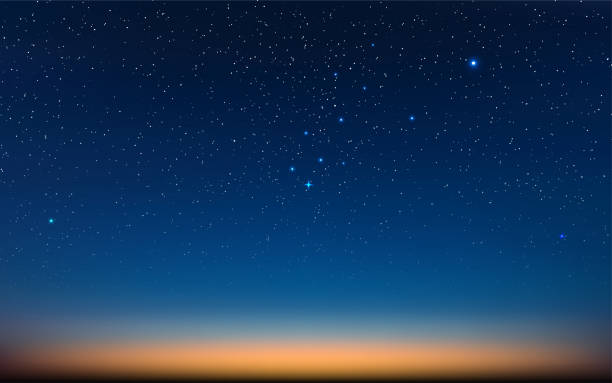
That dark age didn’t last forever. Somewhere between 100 million and 200 million years after the Big Bang, the first stars ignited. They weren’t like the sun. They were monsters, probably dozens to hundreds of times more massive. They formed from gas that had almost no heavy elements. That matters because metals cool gas. Without them, gas clouds struggle to collapse into small stars. So the first stars formed in rare, dense pockets and grew huge fast.
When those stars turned on, they didn’t just light up their own neighborhoods. They changed the entire universe. Their ultraviolet light ripped electrons off neutral hydrogen atoms. This process is called reionization. Before the first stars, the universe was mostly neutral. After them, it became mostly ionized. That transition is one of the biggest milestones in cosmic history. It’s the moment the universe went from dark to visible.
The first stars lived fast and died young. Massive stars burn through their fuel in a few million years. Then they exploded as supernovae. Those explosions forged heavier elements and blasted them into space. That enriched the next generation of stars and eventually made planets and people possible. Without that first batch of stars, you wouldn’t be here.
But seeing this era is hard. The first stars are too far away and too faint for even our best telescopes to see directly. Their light has been stretched by the expansion of the universe into infrared wavelengths. The James Webb Space Telescope is built to catch some of that ancient light. It has already spotted galaxies that existed within the first few hundred million years after the Big Bang. Those galaxies aren’t the first stars themselves, but they’re close. They show that star formation ramped up fast.
Another tool is the 21-centimeter line. Neutral hydrogen emits a faint radio signal at a specific wavelength. When the universe was neutral, that signal was everywhere. As reionization happened, the signal changed. Radio telescopes like HERA and the future SKA are trying to detect that shift. If they succeed, they’ll give us a timeline of when the lights came on. That’s like finding the universe’s first power switch.
The cosmic microwave background also helps. It’s the afterglow of the Big Bang, but it carries clues about reionization. The way its polarization is patterned tells us how much light was around later. It’s not a direct photo of the first stars, but it’s a fingerprint. Combined with galaxy surveys and 21-centimeter data, it lets astronomers piece together the story.
Why should you care? Because this isn’t just about ancient history. The first stars set the stage for everything that followed. They created the heavy elements. They heated and ionized the gas. They helped shape how galaxies formed. The universe we see today, with its clusters of galaxies and supermassive black holes, was influenced by those early, violent stars. Understanding them is like reading the first chapter of a book that’s still being written.
There are still big questions. Did the first stars form one at a time or in clusters? How massive were they really? Did dark matter play a bigger role in pulling gas together? How long did reionization take? Was it quick and patchy, or slow and even? Every new observation tightens the constraints. Every new telescope pushes the timeline back further.
The Big Bang gave us the ingredients. The first light gave us the spark. The dark ages were the quiet before the storm. When the first stars ignited, they didn’t just shine. They transformed the universe from a cold, neutral fog into something we could eventually call home. That’s the real first light. Not just a glow in the dark, but the moment the cosmos started writing its own story.
Space News
Latest Articles
New rockets, upcoming launches, and the stories shaping humanity's push off this planet. No astronomy degree required.