Io and the volcanic hellscape constantly erupting
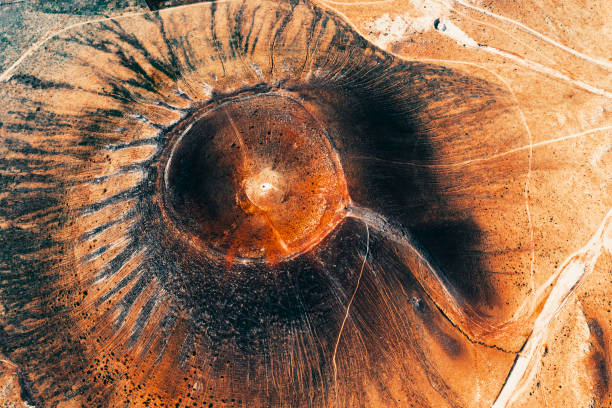
Io is roughly the same size as Earth’s moon, but that’s where the resemblance ends. Its surface is painted in shades of yellow, red, orange, black, and white—a direct result of all that sulfur. The stuff gets spat out, freezes in the vacuum, and then settles back down like a bad paint job. The moon has no water to speak of, no atmosphere to breathe, and a surface temperature that swings from brutally cold in the shade to scorching hot near lava vents. It is, by any measure, a hellscape.
So why does Io look like a pizza that got left in the oven too long? Blame Jupiter. Io orbits the gas giant in a gravitational tug-of-war with two other large moons, Europa and Ganymede. As Io swings around Jupiter, the giant planet’s gravity squeezes and stretches the moon’s interior. This constant flexing generates enormous tidal friction—enough to melt rock deep inside the moon. That molten rock then pushes up through cracks in the crust and explodes into space. This process is called tidal heating, and it never stops. While Earth’s volcanism is driven by radioactive decay in the core, Io’s furnace is running on pure gravitational abuse.
The most famous features on Io are its volcanoes. One called Loki Patera is a massive lava lake the size of a small country. It periodically glows brighter than the surrounding surface as fresh lava breaks through the crust and floods the surface. Another volcano, Pele, erupts with such force that its plumes reach hundreds of miles into space—high enough that NASA’s New Horizons spacecraft spotted them on its way to Pluto. These plumes are not steam; they are sulfur and sulfur dioxide, which freeze into tiny crystals and fall back like snow, but a snow that smells like rotten eggs and would kill you instantly.
Then there are the mountains. Io has peaks that dwarf Everest, but they aren’t tectonic. They are blocks of crust that got shoved upward by the relentless volcanic pressure below. Some of these mountains are unstable, constantly collapsing and reforming as the ground beneath them shifts. Imagine hiking through a landscape where the ground might crack open and spray you with liquid rock at any moment. That’s Io.
For anyone casually interested in space travel, Io offers a grim lesson: not every place you can reach is worth visiting. Future tourists, if they ever exist, will need hardened suits, immense radiation shielding, and a death wish. Jupiter’s magnetic field traps high-energy particles around Io, blasting its surface with radiation levels that would kill an unprotected human in minutes. Even robotic probes don’t last long. NASA’s Galileo spacecraft had to make careful flybys just to survive, and the upcoming Europa Clipper mission will stay far away from Io for the same reason.
Still, Io is a destination in the sense that it is a living laboratory. It teaches us about extreme geology, planetary formation, and the limits of habitability. It also serves as a reminder that the solar system is not friendly. While space agencies plan missions to Europa and Titan, Io remains the bad neighborhood you avoid at all costs. But if you ever get a chance to look at it through a telescope, you will see a tiny, angry dot screaming past Jupiter’s clouds, and you will know that under that dot, an entire world is being torn apart and rebuilt every hour.
So when you think about destinations beyond Earth, skip Io. It’s not a paradise. It’s not even a challenge. It’s a warning. And that makes it one of the most fascinating places we will never set foot on.
Space News
Latest Articles
New rockets, upcoming launches, and the stories shaping humanity's push off this planet. No astronomy degree required.