Laser Sails Are the Best Realistic Shot at Interstellar Travel
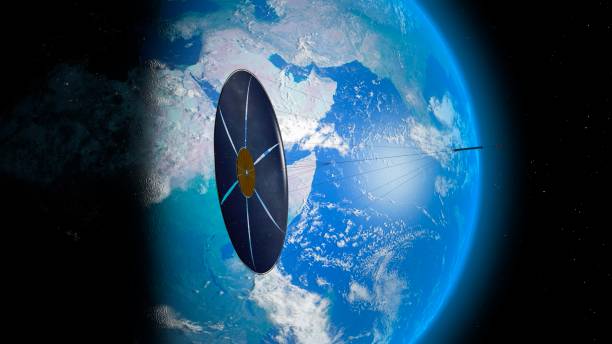
A laser sail is simple in theory. You build a giant array of lasers on Earth. You attach a thin, reflective sail to a tiny spacecraft. The lasers fire at the sail. Photons have momentum. When they bounce off the sail, they push it forward. No fuel onboard. Just light and a very light probe. That is the idea behind Breakthrough Starshot, a real research program aiming to send gram-scale probes to Alpha Centauri at about 20 percent the speed of light. At that speed, the trip takes roughly 20 years. Compare that to 70,000 years.
The spacecraft would be a StarChip, a wafer-sized probe with cameras, sensors, a power supply, and a laser communication system. The sail would be a few meters across and incredibly thin, maybe a few hundred atoms thick. The ground laser array would need to be enormous, on the order of kilometers, and produce gigawatts of power for a few minutes. That burst would accelerate the probe at tens of thousands of g’s. The probe would not survive if it were fragile. Every component would need to be hardened. The sail would need to handle extreme heat and light pressure without tearing. It would need to stay perfectly flat and reflective. Any wrinkle or wobble could send the probe off course.
The engineering problems are brutal. First, the laser array. Gigawatt-class continuous lasers are not off-the-shelf. They exist in labs, but not at the scale and cost needed. Second, the sail. It has to reflect most of the laser light, absorb almost none, and survive the acceleration. Materials like silicon nitride and molybdenum disulfide are being studied. Third, pointing. The laser must stay locked on a sail that is moving away at increasing speed. That requires adaptive optics and precision tracking. Fourth, communication. A tiny transmitter sending data across 4.37 light-years is a weak signal. We would need a large receiving array on Earth, and the probe would need to aim its beam with incredible accuracy. Fifth, dust. Interstellar space is not empty. At 20 percent light speed, even a tiny grain of dust hits like a bomb. The probe would need shielding or a way to avoid debris. We do not have a clean solution yet.
But the payoff is huge. A flyby of Proxima b, the potentially habitable planet in the Alpha Centauri system, would return images and data within our lifetimes. Even a few hours of close observation could tell us about its atmosphere, climate, and surface. That would be the first direct look at another world outside our solar system. It would also prove that interstellar travel is possible, at least for machines. Right now, interstellar travel feels like a far-future fantasy. A laser sail makes it a hard engineering problem with a clear path.
Human travel is a different beast. A laser sail can push a gram-scale probe. It cannot push a person. Humans need food, water, radiation shielding, gravity, and a reason not to go crazy in a metal can. Even a fusion-powered ship is decades or centuries away. But robotic precursors come first. Every interstellar mission will be built on the lessons from the first tiny probes. Laser sails are the most realistic first step. They use known physics, not exotic wormholes or antimatter. They require money, engineering, and time. The nearest stars are still absurdly far. But for the first time, we have a plan that does not rely on magic. That is why the interstellar mission horizon runs through a sail and a laser.
Space News
Latest Articles
New rockets, upcoming launches, and the stories shaping humanity's push off this planet. No astronomy degree required.