LIDAR and the final approach sensor suite
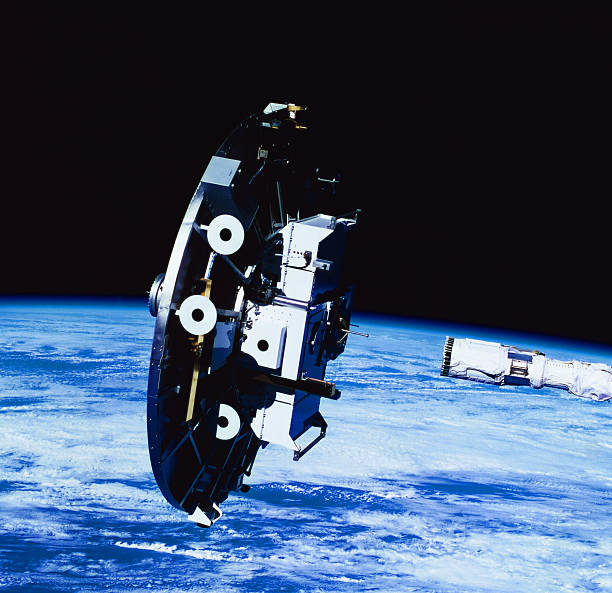
You have probably heard of LIDAR from self-driving cars or your buddy’s drone. Light Detection and Ranging works by firing laser pulses and measuring how long they take to bounce back. Time equals distance, and lots of pulses mean you get a point cloud—a 3D map of whatever is in front of you. In space, LIDAR has one massive advantage over cameras or radar: it works in total darkness, against the blackness of space, and it does not get confused by the sun’s glare off a shiny solar panel. When you are trying to dock with a space station that is lit by direct sunlight on one side and pitch black on the other, cameras can fail. LIDAR does not care.
The final approach sensor suite used on spacecraft like SpaceX’s Dragon and NASA’s upcoming lunar landers is not just one LIDAR unit. It is a layered system. You have long-range sensors that lock onto the target kilometers out, providing coarse position and velocity data. As you close in, the LIDAR array switches to a higher resolution mode, scanning the target’s docking port with millimeter precision. Tilt, yaw, range, and closing rate are all calculated dozens of times per second. The spacecraft’s flight computer compares that data to the desired approach corridor and fires thrusters to correct any drift before it becomes a problem.
Why does this matter for the future of space travel? Because autonomous docking is no longer a luxury—it is a necessity. Crewed missions to the Moon and Mars will require cargo ships to dock without human pilots. Lunar Gateway, the planned orbiting station around the Moon, will have no permanent crew. That means every resupply vehicle, every module, and every lander must approach and attach itself without a joystick jockey on board. The same goes for in-space refueling, which is essential for Starship and other deep space architectures. You cannot refuel a ship that you cannot safely mate with.
The technology has evolved fast. Early docking systems used radar and manual control from astronauts, which worked but demanded constant attention and left zero margin for error. Modern LIDAR-based systems have redundancy built in, with multiple units cross-checking each other. If one sensor fails, the others take over. If the LIDAR’s laser gets blocked by debris or a thruster plume, the system can fall back to infrared cameras or even visual light cameras, though those are less reliable. The key is that the suite is designed to degrade gracefully, not catastrophically.
There is also a hardcore engineering challenge here. In the vacuum of space, LIDAR lasers have to be powerful enough to get a return signal from a reflective surface that might be hundreds of meters away, yet safe enough not to damage sensitive optics on the target spacecraft. The scanning mechanisms must survive launch vibration, thermal cycling from minus 150 to plus 150 degrees Celsius, and the occasional hard jolt during docking itself. Every component is built to military or space-grade specs, and every unit gets tested in thermal vacuum chambers that simulate the exact conditions of orbit.
What comes next is even cooler. Engineers are working on LIDAR systems that can handle docking with uncooperative targets—dead satellites or debris that have no reflective markers or communication links. That is the breakthrough needed for on-orbit servicing, repair, and active debris removal. Imagine a tugboat in space that can fly up to a dead satellite, scan its shape with LIDAR, and grab onto a fuel valve or a structural hard point that was never designed to be grabbed. That is the direction we are heading, and it will only work if the sensor suite is fast, smart, and completely reliable.
For the casual space fan, the takeaway is simple. Every time you see a video of Dragon approaching the International Space Station, or a rendering of Starship sidling up to a fuel depot, what you are really watching is LIDAR and an integrated sensor suite doing the heavy lifting. Without it, docking is a white-knuckle gamble. With it, it becomes routine. And routine is exactly what we need if we are going to build a permanent presence off this planet.
Space News
Latest Articles
New rockets, upcoming launches, and the stories shaping humanity's push off this planet. No astronomy degree required.