Hydroponics versus aeroponics in microgravity
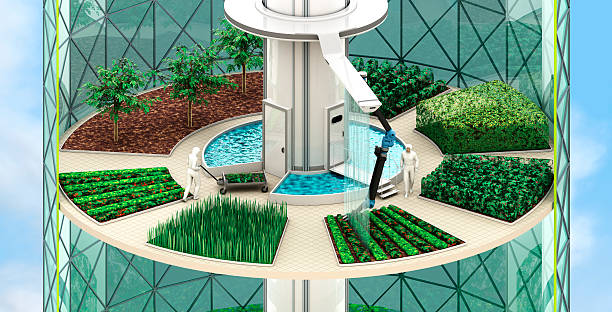
Let’s start with hydroponics. It’s the older, more proven method. You grow plants with their roots submerged in a nutrient-rich water solution. No soil. Just water, minerals, and a pump to keep things moving. On Earth, it works great. It’s how your fancy local greenhouse grows basil in January. In space, it’s trickier. Water doesn’t stay in a bucket when gravity disappears. It floats away in blobs. That means you have to confine the root zone inside a sealed container and pump the nutrient solution through it under controlled pressure. NASA has tested this on the ISS with their Veggie system. Lettuce and radishes have been grown. It works. But the downsides are real. Water is heavy to launch, and in microgravity, you have to keep it moving constantly. If a pump fails, roots dry out fast or drown in stagnant water pockets that don’t drain. You also have to manage biofilm and microbial growth in the water, because bacteria love a warm, wet loop with no gravity to stir it up.
Now enter aeroponics. This is the newer, more aggressive approach. Instead of roots sitting in water, they hang in air. A misting system blasts them with a fine spray of nutrient solution every few minutes. The roots get oxygen directly from the air, which theoretically means faster growth and less risk of root rot. In microgravity, aeroponics has a major advantage: you don’t have to contain a large volume of free liquid. The mist is contained inside a chamber, but it’s not pooling anywhere. That means less water waste, less weight, and less complexity in handling fluid physics. You can also use less total water because you’re only putting a thin film on the roots, not soaking them. For long-duration missions where every liter of water counts, that’s a big deal.
But aeroponics has its own problems. The mist nozzles clog. In microgravity, the tiny water droplets can coalesce into bigger ones that stick to the chamber walls or the roots themselves, which defeats the whole point. And the system is more sensitive to failure. If the misting stops for even a few hours, roots in dry air die quickly. On the ISS, the Plant Habitat team tested aeroponic-like systems with modified misters. They grew peppers and dwarf tomatoes. Results were promising—faster growth and higher yields than hydroponics for some crops. But they also reported that nozzle maintenance in zero-G is a pain. You can’t just unscrew a clogged nozzle and let the drip fall to the floor. Everything floats, and any repair means opening a sealed chamber, which introduces contaminants.
So which one wins? It depends on the mission and the crop. For leafy greens and quick-cycle plants like lettuce or herbs, hydroponics is reliable and well understood. The ISS Veggie system has proven it can work for years. But for crops that need more oxygen at the roots or that you want to grow denser and faster, aeroponics edges ahead. The real kicker is water efficiency. In microgravity, water is not just food—it’s also radiation shielding, crew drinking supply, and coolant. Saving water means saving mass, and mass is the most expensive thing you can launch. Aeroponics uses about 30 to 50 percent less water than hydroponics for the same yield. That’s a huge deal when your supply chain is a rocket that costs thousands of dollars per pound.
The other factor is system complexity. Hydroponics requires pumps, filters, and a lot of plumbing to prevent air bubbles from forming in the nutrient lines. In microgravity, air bubbles don’t float away. They sit right in the pipe and block flow. Aeroponics has its own plumbing problems, but because it uses mist, the air-water mixture is more forgiving. You’re not trying to keep a continuous column of liquid moving. You’re pulsing mist in short bursts. That reduces the chance of catastrophic bubble blockages.
For the average reader who’s not a botanist, the bottom line is this: Hydroponics is the safe, proven option for space farming today. It’s what we know. But aeroponics is the smarter bet for the future. As we build permanent habitats on the Moon or Mars, water will be precious and every gram counts. Aeroponics offers a leaner, more water-efficient system that can produce higher yields in the same footprint. The trade-off is you need better engineering to prevent clogged nozzles and moisture drift. Neither is perfect. But if you’re betting on which one will feed the first Martian settlers, put your money on the misters.
Space News
Latest Articles
New rockets, upcoming launches, and the stories shaping humanity's push off this planet. No astronomy degree required.