Night launches and why they hit different
The first thing you notice is the light. In broad daylight, a rocket’s exhaust blends into the sky. You see the flame, sure, but it washes out against the sun. At night, that exhaust becomes a sun. When the engines ignite in darkness, the ground lights up like a stadium. The concrete pad, the surrounding marsh, the crowd’s faces—everything turns stark and molten for a split second. Then the rocket lifts, and you’re staring into a man-made star climbing away from Earth. It’s not just bright; it’s aggressive. The flame cuts through black air, and the smoke plumes glow orange from the inside, backlit by a burn that’s hotter than anything nature produces. You feel it in your chest before your brain catches up. That’s the difference. Day launches show you a machine doing work. Night launches show you a fire that shouldn’t exist in the dark.
The sound hits differently too, because you don’t see it coming as clearly. During the day, you track the rocket visually, and the roar feels predictable. You see the smoke, you brace, the noise washes over you. At night, the rocket moves through a void. Your eyes follow a climbing jet of flame, but there’s no visual reference for distance. So when the sound arrives—first a crackle, then a deep, thudding vibration that shakes your ribs—it arrives like an invisible fist. The delay between seeing the flame and feeling the sound is longer in the dark because your depth perception is shot. That mismatch tricks your brain into thinking the rocket is both near and impossibly far. It’s disorienting in the best way. If you’ve ever stood at a concert and felt the bass in your sternum, multiply that by ten and add the knowledge that you’re watching something leave the planet.
Timing is critical for night launches. They usually happen in the launch windows that maximize insertion into specific orbits—often around sunset or the early hours of the morning. For a casual fan, that means you need to check the schedule and plan for a slightly late night or an early alarm. Websites like Space Launch Now or the official SpaceX stream give you accurate times down to the second. But don’t rely on the stream alone. If you can, get to a viewing spot on the ground. The Kennedy Space Center Visitor Complex offers night launch viewing packages, but free spots along the beach in Cocoa Beach or Playalinda Beach give you an unobstructed horizon. Arrive early. The parking fills fast, and the best spots go to people who brought a chair and a cooler. Bring bug spray—Florida insects don’t care about rocket science.
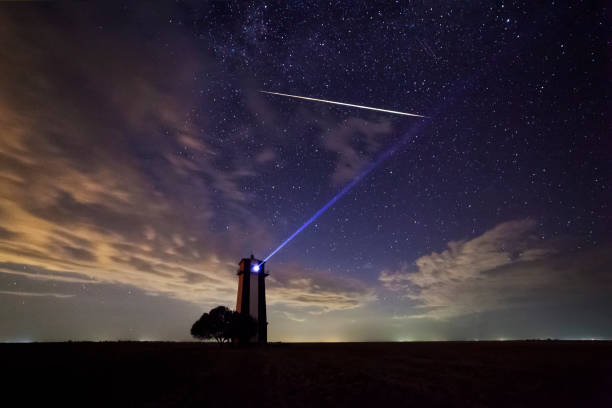
One thing most people don’t realize is how long the visible trail lasts at night. During the day, the exhaust plume disappears into the blue after a few minutes. At night, the upper atmosphere catches the sunlight, and the plume turns into a glowing, twisting ribbon that hangs in the sky for five or ten minutes after the rocket is gone. It looks like a slow-motion lightning strike frozen in place. If the launch happens right before dawn or after dusk, you get the added effect of the twilight phenomenon—a blue-black sky with a bright, slowly fading scar. That’s the moment when casual viewers usually pull out their phones and just stare, because no filter can capture it.
Don’t ignore the psychological shift either. A night launch strips away the sterile, corporate feel that sometimes comes with modern spaceflight. You’re not watching a livestream of a clean room. You’re watching a controlled explosion in the dark, powered by tens of thousands of pounds of propellant, aimed straight up at nothing but stars. It reminds you that space travel is still dangerous, still experimental, still a game of pushing physics to its limits. That tension is quieter at night. You stand in the dark, wait for the countdown, and then suddenly the whole sky lights up like a second sunrise. For a few minutes, you forget about your phone, your job, your bills. You’re just a human watching another human’s invention tear through the atmosphere. That’s why night launches hit different. They don’t just show you a rocket. They show you a crack in the dark, and through that crack, you see where we’re going.
Space News
Latest Articles
New rockets, upcoming launches, and the stories shaping humanity's push off this planet. No astronomy degree required.