Lunar regolith and the agriculture experiments

Regolith is the Moon’s top layer of crushed rock, dust, and glass shards left behind by billions of years of asteroid impacts. It looks like gray flour. It smells like burnt gunpowder, according to Apollo astronauts who tracked it into their landers. And it’s toxic, abrasive, and completely devoid of organic matter. Yet this lifeless powder is the single most important resource for any sustained human presence on the Moon. Forget the flashy stuff like water ice at the poles. If you can’t grow food in regolith, you’re not building a base. You’re building a very expensive camping trip.
NASA’s return plans, grouped under Artemis and the broader Moon to Mars architecture, hinge on using local materials. Dragging soil from Earth is a non-starter. At roughly $10,000 per pound to launch, you’d go broke before you planted a single basil plant. So researchers have spent the last few years figuring out if lunar dirt can be coaxed into supporting crops. The short answer is: maybe, but it’s going to take some heavy lifting.
Early experiments back on Earth used simulated regolith made from volcanic ash and crushed basalt. Scientists at the University of Florida got thale cress to germinate in it, but the plants struggled. They were stunted, showed signs of stress, and didn’t grow as well as control plants in normal potting soil. Real lunar samples returned by Apollo missions were even worse. The grains are jagged and electrostatically charged from constant exposure to solar radiation. It’s like trying to grow tomatoes in broken glass that sticks to everything.
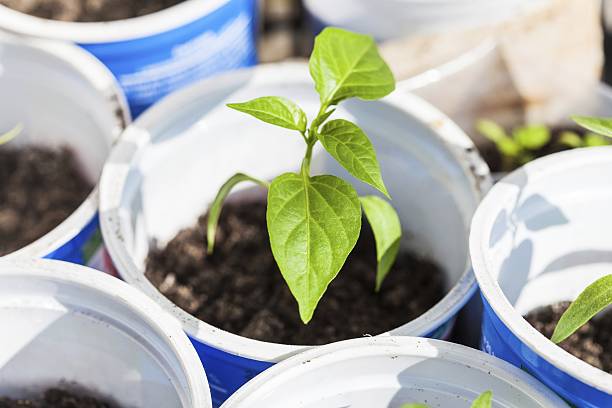
The breakthrough came when researchers figured out that regolith isn’t the problem—it’s more like a starting point for a soil that doesn’t exist yet. You can’t just dump seeds in the dust and walk away. You have to add organic material, or at least pass nutrients through a system that mimics what Earth soil does naturally. That means bringing in waste—human waste, specifically. Urine and solid waste contain nitrogen, phosphorus, and potassium, the same three numbers you see on a bag of fertilizer at Home Depot. Mixed with processed regolith, those biological leftovers create a medium that can actually hold moisture and support root systems.
China’s Chang’e-4 mission took this a step further. In 2019, it sprouted cotton seeds in a sealed biosphere on the far side of the Moon. The plants died after a few days because the temperature dropped overnight to minus 170 degrees Fahrenheit, but it proved that germination was possible outside a lab. That’s the kind of proof of concept that matters. Now the question isn’t whether plants can sprout in lunar dirt. It’s whether they can survive long enough to produce food for a crew that might be stuck there for months.
The Artemis program plans to establish a base near the lunar south pole. That region has water ice in permanently shadowed craters, which gives you drinking water and hydrogen for rocket fuel. But water alone doesn’t make a meal. You need a greenhouse module that can regulate heat, light, and pressure. You need LED arrays tuned to the specific wavelengths plants use for photosynthesis. And you need a reliable way to flush heavy metals out of regolith before they poison the crop. Lunar dust is rich in aluminum, iron, and silicon, but it lacks the carbon and nitrogen that plants need to build proteins. You can add those from recycled waste or imported supplies, but you can’t afford to keep shipping them from Earth.
That’s the real destination problem. The Moon isn’t just a place to visit. It’s the test bed for living off another world. Every plant that grows in regolith brings us closer to Mars, where the soil is even more toxic and the supply lines are measured in years, not days. The technology isn’t ready yet. Yield rates are still too low, and we don’t know how long-term exposure to low gravity affects plant development. But the direction is clear. The next decade will see sealed growth chambers delivered to the lunar surface, and some of them will be running on nothing but ground-up Moon rock and astronaut garbage.
If you’re following space travel because you want to see people live somewhere other than Earth, stop looking at launch videos. Look at the dirt. That’s where the future is hiding.
Space News
Latest Articles
New rockets, upcoming launches, and the stories shaping humanity's push off this planet. No astronomy degree required.