Peggy Whitson most days in space for US

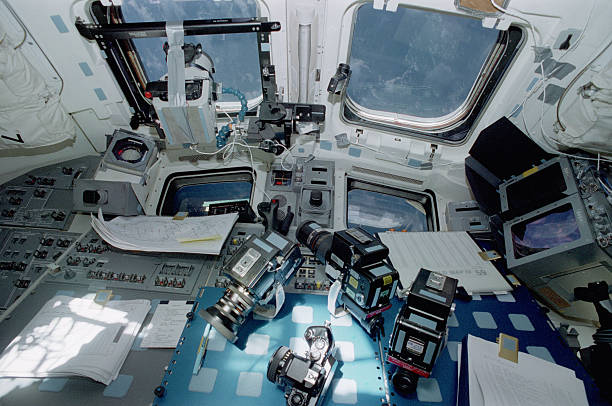
Whitson didn’t stumble into space. She earned it the old-fashioned way: biochemistry degrees from Iowa’s Wesleyan and Rice, then a decade at NASA’s Johnson Space Center as a researcher. Her first flight came in 2002 on Expedition 5, a six-month stay on the International Space Station. That’s already a long time. Most people start checking out after a few weeks of microgravity—bone density loss, muscle atrophy, the constant pressure of being sealed in with the same three people. But Whitson didn’t just endure; she thrived. She logged two spacewalks on that mission, became the first female chief of the Astronaut Office, and later commanded the station twice. When she finally came home for good after her third mission in 2017, she had done ten spacewalks totaling over 60 hours, held the record for oldest female astronaut at 56, and had lived in space longer than any other U.S. astronaut in history.
Why does any of this matter for a 20-something guy reading this from his couch? Because Whitson’s story isn’t about space. It’s about what humans can tolerate when they refuse to accept limits. Space is a brutal place. Your body starts falling apart the moment you leave Earth’s gravity. Your bones get brittle. Your immune system gets confused. Your eyeballs flatten. Every single system in your body is fighting a war against the environment, and the environment is winning. But Whitson stayed for 289 days on her last mission alone. That’s not a vacation. That’s a test of human endurance, and she passed it with a calm, methodical, no-drama approach that a lot of people mistake for boring. It’s not boring. It’s professional.
Whitson also represents a quiet kind of dominance in a field that still has a public perception problem. The “women in STEM” conversation often gets framed as a struggle, and it has been. But Whitson didn’t spend her time talking about it. She spent her time on the ISS performing experiments, fixing equipment, and commanding a crew of international astronauts. When Russian cosmonauts had trouble with English or procedures, she led anyway. When equipment failed, she fixed it. She didn’t ask for permission. She just did the work. That’s the kind of human behavior that actually moves the needle—not speeches, but action.
Her record is going to be broken eventually. That’s how exploration works. But the number of days isn’t the point. The point is that a human being with a pulse, working with the same tools and technology available to anyone at NASA, spent 675 days off the planet. That’s almost 2% of an average human lifespan. Think about that. Every birthday, holiday, and Super Bowl she missed. Every sunrise she watched from a speed where the whole world rolled by in 90 minutes. She kept going back because the work mattered, and because she knew that every day she spent up there was one more day of data that helps us figure out how to live on Mars, or the Moon, or wherever humans decide to go next.
Whitson is now a private astronaut, flying missions with companies like Axiom Space. She’s not done. And that’s the real headline: humans aren’t done either. We’re just getting started. The first person to spend 1,000 days in space is probably alive right now, and they’re probably studying biochemistry or welding or some other gritty trade that doesn’t make the front page. Whitson proved that you don’t need to be a superhero. You need to be stubborn, competent, and comfortable with being uncomfortable for a very long time. That’s a human trait, not a gender trait. But since this section is called “Women Who Crushed the Space Game,” let’s be clear: Peggy Whitson crushed it so hard that her name is still at the top of the American record books. And that’s not going to change until someone else decides they want it more.
Space News
Latest Articles
New rockets, upcoming launches, and the stories shaping humanity's push off this planet. No astronomy degree required.