Pregnancy and reproduction ethics on another planet

Let’s be blunt. The first generation of Martians won’t be settlers in the romantic sense. They’ll be highly trained professionals on a fixed-term rotation, like oil rig workers with ten-year contracts and a death wish if they screw up. The Decade Plan calls for a steady buildup of infrastructure, but it also assumes a population that doesn’t reproduce naturally for at least the first fifteen to twenty years. That assumption is naive. Humans are not robots. When you put healthy adults in a confined, high-stress environment with limited privacy and zero escape routes, babies will happen. Whether by accident, by defiance, or by a basic human urge to build something that lasts beyond a shift report, pregnancies will occur. And the ethical and legal framework for dealing with that in a vacuum-sealed tin can a hundred million miles from the nearest OB-GYN does not exist.
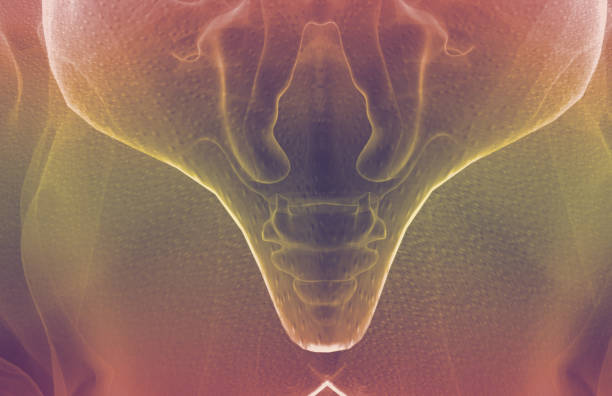
Start with the medical reality. A pregnant woman on Mars faces hazards that would shut down any terrestrial IVF clinic. Low gravity, even at Martian 0.38g, has unknown effects on fetal development. We know bone density and muscle mass degrade in microgravity, but what about organ formation, neural tube closure, or placental blood flow in partial gravity? Animal studies in orbit suggest developmental abnormalities, but we have zero human data. A Mars colony would be asking women to serve as de facto test subjects for a pregnancy experiment with no ethical review board on the other end of the radio. The fifteen-minute communication delay means no real-time emergency medical support. If a complication arises—placental abruption, preeclampsia, premature labor—the person in charge is a general practitioner who trained for trauma surgery, not obstetrics. The colony’s entire medical supply chain is three or four launches away. A single high-risk pregnancy could drain resources meant for the whole crew.
Then there’s the reproductive ethics knot tied around consent and compulsion. Who decides if a pregnancy is allowed to continue? The woman? The colony director? Earth-based mission control? If the colony has a strict policy against childbirth until infrastructure is stable, does that translate into mandatory contraception? What about forced terminations? In a closed system with limited oxygen, water, and food, a new human is an existential drain. But enforcing a no-births policy in a population of free adults is a recipe for rebellion, black-market contraceptives, and secret childbirths that end in neonatal death or severe disability. American men in their twenties tend to value personal autonomy and individual rights. That instinct collides hard with the collective survival logic of a Mars colony. You cannot have it both ways. If you want a frontier society, you have to accept that people will make babies. If you want a sterile research outpost, you need to treat reproduction as a medical and legal violation subject to penalties that would be unconstitutional on Earth.
The legal vacuum is even worse. If a child is born on Mars, what nationality does it hold? What rights does it have? Under current Outer Space Treaty provisions, no nation can claim sovereignty over celestial bodies, which means no nation’s family law or citizenship statutes automatically apply. A Mars-born child could be stateless, undocumented, and literally outside any legal framework that recognizes their existence. That’s not just an abstract human rights issue. It means no pediatric care standards, no educational requirements, no inheritance rights, and no pathway to return to Earth without a passport no government will issue. The Decade Plan needs to include a Mars Citizenship Code, drafted now, before the first baby is delivered in a habitat module by a geologist with a tablet guide and shaky hands.
None of this is meant to kill the dream. Colonizing Mars is the most ambitious thing our species has ever attempted, and it deserves serious engineering. But engineering without ethics is just high-tech barbarism. The men reading this site are the ones who will design those habitats, those life support loops, those radiation shields. You need to start thinking about the one variable you cannot control: human biology. A Mars colony that ignores reproduction ethics is a colony that will tear itself apart. Plan for it now, or watch your decade of work get undone by a positive pregnancy test and a screaming match over whose moral code gets to run the show.
Space News
Latest Articles
New rockets, upcoming launches, and the stories shaping humanity's push off this planet. No astronomy degree required.