Solar sails and the LightSail 2 demonstration
The basic idea is almost stupidly simple. Instead of burning fuel, a solar sail uses the momentum of photons—particles of light—from the Sun to push a spacecraft. When sunlight hits a large, reflective sail, it imparts a tiny amount of force. Individually, that force is laughably small, roughly the weight of a paperclip on your fingertip. But in the vacuum of space, with no friction to slow you down, that constant, gentle push adds up over time. A solar sail can accelerate continuously for months or years, reaching speeds no chemical rocket can match for long-duration missions.
This is the kind of propulsion that matters for getting a probe to the outer solar system or even interstellar space. A chemical rocket can give you a fast kick, but then it’s done. A solar sail keeps pushing. Over weeks and months, that constant acceleration can build velocity far beyond what any fuel-burning engine can achieve. And you don’t have to carry any propellant. The Sun does the heavy lifting, and the Sun is not running out of fuel anytime soon.
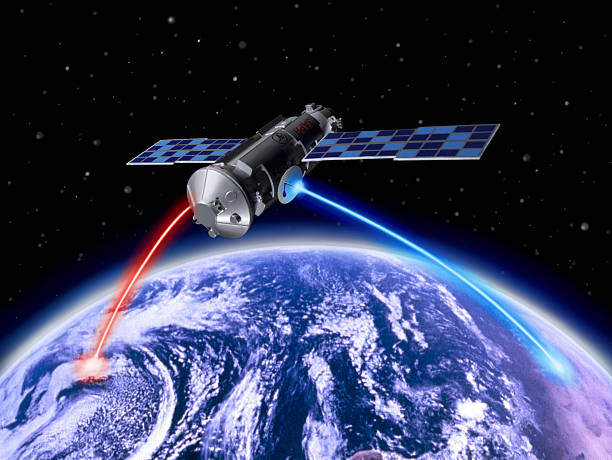
That was the theory. But no one had really demonstrated it in Earth orbit until the Planetary Society, a nonprofit space advocacy group, decided to build and fly LightSail 2. The project was a crowdfunded, low-budget affair—total cost was around seven million dollars, pocket change for NASA. In 2019, LightSail 2 hitched a ride to space on a Falcon Heavy launch. Once deployed in low Earth orbit, it unfurled a thin, Mylar sail about the size of a boxing ring, roughly 32 square meters. Then the real test began.
The LightSail 2 team didn’t just want to prove the sail could deploy, which was the goal of the earlier LightSail 1. They wanted to show it could actually change orbit using only the pressure of sunlight. The spacecraft was equipped with a control system that adjusted the sail’s angle relative to the Sun, like a sailboat tacking against the wind. By tilting the sail at the right times during each orbit, LightSail 2 could raise its altitude. And it worked. Over the course of two and a half years, the tiny satellite raised its orbit by several kilometers, all without a single drop of propellant. That was the first time a spacecraft in Earth orbit had demonstrated controlled, propellant-free propulsion using sunlight alone.
This is not a gimmick. LightSail 2 proved that solar sailing is a viable, practical technology for small satellites. The implications are direct. If you want to send a CubeSat to study an asteroid or to monitor space weather beyond Earth’s orbit, a solar sail eliminates the need for a heavy onboard propulsion system. You can pack more science instruments, or you can build a lighter, cheaper spacecraft. For commercial operators, that means lower launch costs and longer mission lifetimes. For deep space probes, it means the ability to reach destinations like Jupiter or even the Kuiper Belt without the staggering fuel requirements of a chemical burn.
The technology is not without trade-offs. Solar sails are useless in the inner solar system if you need to brake or turn quickly. They are slow to start, and their effectiveness drops off as you get farther from the Sun, where sunlight is weaker. But for missions that can take a slow, steady approach, they are a game-changer. Future designs using thinner materials and larger sails could push small payloads to speeds that would make the Voyager probes look sluggish.
LightSail 2 did its job and then some. It deorbited in late 2022, but the data it collected is already informing next-generation sail designs. NASA has its own solar sail project, the Advanced Composite Solar Sail System, which aims to fly an even larger, more rigid sail using lightweight composites instead of metal booms. The Japanese have already flown their own demonstrator, IKAROS, back in 2010, which proved solar sailing between planets was possible. LightSail 2 proved it works in the messy, drag-filled environment of low Earth orbit, which is actually a harder test than deep space.
For casual space fans, this is the kind of quiet, incremental progress that tends to get overlooked next to flashy rocket launches and astronaut splashdowns. But solar sails represent a fundamental shift in how we think about propulsion. They trade brute force for endurance, and in space, endurance wins. LightSail 2 showed that we don’t have to burn things to move. Sometimes you just need a big mirror and a little patience.
Space News
Latest Articles
New rockets, upcoming launches, and the stories shaping humanity's push off this planet. No astronomy degree required.