Soyuz descent module the brutal landing
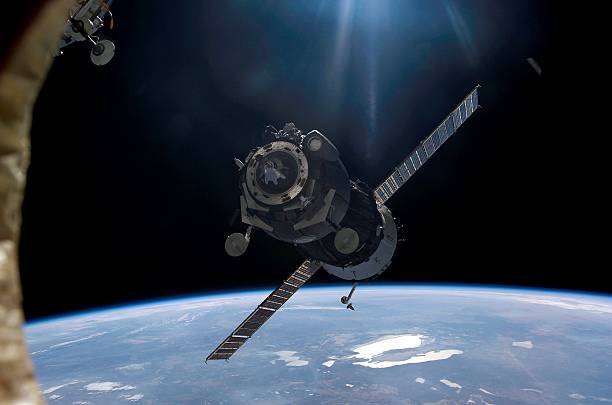
Forget the Hollywood version where astronauts step out of a capsule, grin, and wave at cameras. Real Soyuz landings are a brutal, messy, and deeply human ordeal. If you’re a casual space enthusiast, you probably think of spaceflight as the risky part—the launch, the fire, the G-forces. But the return to Earth is where the human body gets kicked in the teeth. And for Russian cosmonauts, this has been the norm for over fifty years.
The Soyuz descent module is small. Claustrophobic small. Three grown men in flight suits cram into a space roughly the size of a compact car’s back seat. There’s no room to stretch, no window to watch the Earth get closer. Just metal, insulation, and the growing pressure of an atmosphere that wants to slow you down from 17,500 miles per hour to zero in under ten minutes. That deceleration is the killer. It’s not the gentle pull you feel on a plane landing. It’s a sustained, crushing force that can hit up to 4 or 5 Gs—meaning your body suddenly weighs four to five times its normal mass. Your arms feel like lead. Your chest compresses. Breathing becomes a conscious effort. And because the capsule hits the atmosphere at a precise angle—too shallow and you skip off like a stone, too steep and you burn up—there’s no margin for error. Every second of that descent is a human being’s body fighting physics.
Then comes the parachute. A single main chute deploys high above the ground, and for a moment, there’s relative quiet. But the Soyuz parachute system is not the soft, floating descent you see with SpaceX’s Crew Dragon. It’s a violent, oscillating drop. The capsule swings back and forth like a pendulum, slamming the occupants against their harnesses. The cosmonauts have trained for this, but training can’t fully prepare you for the disorientation, the nausea, the feeling that your organs are being rearranged. The chute slows the fall from supersonic to about 20 feet per second. That’s still fast enough to break bones if something goes wrong. And something does go wrong more often than you’d think—parachute lines twist, backup chutes fail, and the capsule can hit the ground sideways, tumbling across the steppe like a discarded can.
But the worst part isn’t the G-forces or the parachute. It’s the landing itself. The Soyuz uses a set of solid-fuel retrorockets that fire just seconds before impact to soften the blow. Those rockets are supposed to slow the capsule from 20 feet per second to a survivable 5 feet per second. When they work, you get a thud. When they don’t, you get a spine-compressing slam. Cosmonauts have walked away from landings where the retrorockets failed, but they’ve also ended up with cracked ribs, herniated discs, and internal bruising. The capsule’s seat is custom-molded to each crew member’s body, but even that can’t protect you from the brute force of a 2.4-ton metal can hitting dirt at highway speeds.
What makes this human experience unique is how Russian cosmonauts handle it. They don’t complain. It’s cultural. The Russian space program operates on a kind of stoic endurance that would make a Navy SEAL nod in respect. They call the Soyuz “the workhorse,” and they treat its roughness as a cost of business. After landing, the recovery team—Russian helicopters, doctors, and technicians—rushes to the capsule. They pry open the warped hatch. The cosmonauts are pulled out, often needing assistance to stand. Their legs have been weightless for months, so they can barely walk. Their inner ears are scrambled, so the world spins. They sit in folding chairs on the open steppe, wrapped in blankets, sipping tea, waiting for their bodies to remember what gravity feels like. It’s unglamorous. It’s human.
Compare this to the American approach. SpaceX’s Crew Dragon uses parachutes and a water landing. It’s softer. The seats are designed with energy absorption and recline at an angle to spread the G-load. Crew Dragon lands in the ocean, which acts like a giant cushion. Soyuz lands on solid ground, because Russia has more steppe than ocean. The American system treats the astronaut like cargo that must be handled carefully. The Russian system treats the cosmonaut like a soldier who can take a hit.
This matters because spaceflight is not just a technical achievement—it’s a human one. Every Soyuz descent module that slams into Kazakhstan carries men who have been cooped up in zero gravity for half a year, whose bodies have weakened, whose bones have lost density, whose muscles have atrophied. They chose to do this. They knew what the ride back would feel like. And still, they strap in, take the beating, and get out smiling for the cameras, even if they’re wobbly and bruised. That’s the Russian way. It’s not elegant. It’s not comfortable. But it works, and it has worked for decades.
So the next time you watch a Soyuz landing, don’t focus on the hardware. Focus on the men inside. The capsule is a machine. The landing is a procedure. But the endurance, the pain, and the quiet dignity of crawling out of a scorched metal coffin on a frozen steppe—that’s the human part. And in the age of reusable rockets and cushy commercial capsules, that raw, blunt, unforgiving return to Earth is something we should remember. Space isn’t safe. It never was. And the Soyuz descent module is a reminder that getting there is only half the fight. Coming home is where you earn your scars.
Space News
Latest Articles
New rockets, upcoming launches, and the stories shaping humanity's push off this planet. No astronomy degree required.