VERITAS and the radar mapping mission
VERITAS stands for Venus Emissivity, Radio Science, InSAR, Topography, and Spectroscopy. It’s a mouthful, but the mission is simple: map the entire surface of Venus in high resolution using radar. The last time we got a global radar map of Venus was with NASA’s Magellan mission, which ended in 1994. That data was revolutionary for its time, but it’s like comparing a flip phone camera to a modern DSLR. VERITAS will deliver ten times the resolution of Magellan, revealing details as small as 15 meters across. That means we’ll finally see individual volcanic flows, tectonic faults, and impact craters with enough clarity to start answering big questions.
Why does Venus matter? Because it’s not just a cautionary tale about runaway greenhouse gases. It’s a planetary laboratory right next door. Venus and Earth are nearly the same size and mass. They formed from the same cosmic ingredients. But somewhere along the line, Venus went sideways. Its surface temperature hovers around 900 degrees Fahrenheit. The atmospheric pressure at ground level is crushing, equivalent to being 3,000 feet deep in the ocean. Sulfuric acid rains from the sky. It’s a hellscape. But it wasn’t always that way. Evidence suggests Venus may have had liquid water and a breathable atmosphere for billions of years. Something triggered a catastrophic climate shift. Understanding what happened to Venus might help us understand what could happen to Earth.
VERITAS will carry two primary instruments. The first is a synthetic aperture radar that will pierce through the planet’s perpetual cloud deck. This radar will map topography, surface roughness, and electrical properties. The second is a near-infrared spectrometer that will measure the composition of surface rocks. By looking at specific wavelengths of light that leak through the clouds, scientists can identify minerals that betray past water activity or volcanic processes. The combination of these two tools will give us the first complete geological survey of Venus in a generation.
But the mission isn’t just about pretty pictures. VERITAS will target specific unresolved mysteries. One is whether Venus has active plate tectonics. Earth’s plates move and recycle, which helps regulate our climate. Venus may have a different style of tectonics, called stagnant lid, where the crust is one solid piece. Or it might have episodic resurfacing events, where massive volcanic eruptions paint over the entire planet every few hundred million years. VERITAS will look for signs of ongoing volcanic activity by measuring surface heat flow and deformation. If we see changes between old Magellan data and new VERITAS images, that’s smoking gun evidence that Venus is still alive.
Another target is the mysterious “coronae,” which are ring-like features that may be volcanic or tectonic in origin. These structures could be key to understanding how Venus handles internal heat. There are also tessera terrain, which are highly deformed highlands that may represent the planet’s oldest surviving crust. Understanding when and how these formed could tell us about the early evolution of terrestrial planets, including Earth.
VERITAS is scheduled to launch no earlier than 2031. That seems far off, but planetary missions take years to build. The spacecraft will enter an elliptical polar orbit around Venus, dipping as low as 200 miles above the surface to get high-resolution shots. Over the course of its primary mission, it will map nearly the entire planet multiple times, allowing scientists to build digital elevation models and detect surface changes.
There’s also a human angle here. NASA has selected two Venus missions in the Discovery Program: VERITAS and DAVINCI. VERITAS is the orbiter; DAVINCI will drop a probe through the atmosphere. Together, they represent the first dedicated Venus missions from the United States in over thirty years. Europe’s EnVision mission will join the party later this decade. Venus is suddenly a hot destination again.
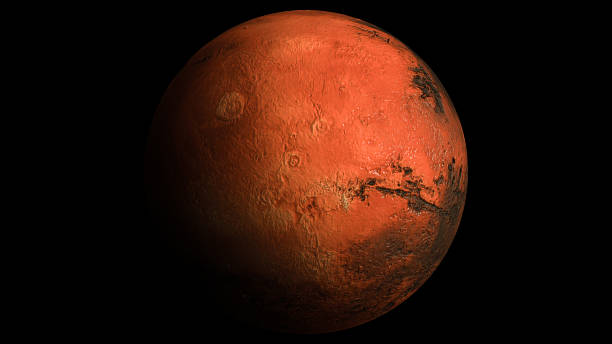
For the casual space enthusiast, VERITAS matters because it fills a massive gap in our understanding of the solar system. We’ve sent rovers to Mars, orbiters to Jupiter, and probes to the outer planets. But we’ve left Venus in the dark. That ends soon. When VERITAS starts beaming back radar maps, we’ll finally see Venus the way we’ve seen Mars—up close, detailed, and waiting to be understood. It might not be a place we ever visit in person, but it’s a world that holds clues to our own planet’s past, present, and future.
Space News
Latest Articles
New rockets, upcoming launches, and the stories shaping humanity's push off this planet. No astronomy degree required.