Rocket cargo for military logistics
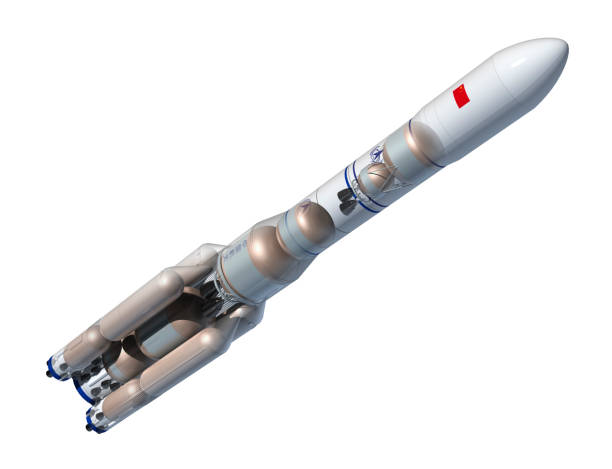
The idea is brutally simple. Right now, if the Pentagon needs to rush a pallet of supplies to a contested airfield in the Pacific, they rely on C-17 Globemasters or C-5 Galaxies. Those planes take hours, sometimes days, and they need secure runways. A rocket can go from Cape Canaveral to a landing zone in the South China Sea in 30 minutes. No runways. No air refueling. No enemy air defense threats during a slow descent. Just a point-to-point suborbital hop that makes a cargo plane look like a horse-drawn wagon.
The program driving this is the Air Force’s Rocket Cargo Vanguard, run by the Air Force Research Laboratory. In 2021, they gave SpaceX a $102 million contract to start demonstrating how a Starship-class vehicle could deliver military payloads. This isn’t about launching a few small boxes. The goal is to land 100 tons of equipment anywhere on Earth with enough precision to put a wheeled vehicle within a mile of a pickup point. That’s more than a C-17 can carry, without needing a single gallon of jet fuel burned in the combat zone.
The technology you should care about is the landing burn. For cargo rockets to work for the military, they can’t just crash into a hardened pad like a NASA lunar lander. They have to set down on a dirt strip, a dry lake bed, or even a ship deck with no prior survey. That means real-time terrain mapping, supersonic retropropulsion, and throttle control that adjusts for wind shear and dust clouds. Starship’s current test flights—the ones that end in explosions or hard landings—are literally rehearsing this. Every RUD is a data point for the Pentagon.
But here’s the part that separates rocket cargo from a gimmick: reusability. The military isn’t spending billions to throw away a rocket every time they need to resupply a battalion. They need a booster that can fly, land, refuel, and fly again within hours. That’s the same reusability problem SpaceX is solving for Mars. The Air Force is essentially piggybacking on that commercial development. They don’t have to invent a new rocket. They just have to adapt the one already flying.
There are obvious hurdles. Rocket cargo is loud. A Starship launch is a sonic event that shakes windows for miles. You can’t exactly do that behind friendly lines without alerting every enemy radar for a thousand kilometers. The military is looking at remote launch sites on islands or mobile offshore platforms to keep the noise away from populated areas. They’re also studying how to seal standard shipping containers inside a payload bay that has to withstand 4 Gs and vacuum. That means rethinking how pallets are strapped down and whether sensitive electronics can survive the vibration.
The other killer challenge is cost per pound. Right now, launching a Falcon Heavy costs roughly $1,500 per kilogram to orbit. That’s way too expensive for routine cargo. But the whole point of Starship is to drive that down to under $100 per kilogram. If they hit that target, rocket cargo becomes cheaper than airlifting the same load in a C-130. The math changes completely when you account for the cost of defending a runway, repairing battle damage, and losing a $250 million aircraft to a SAM.
What this means for you as a space enthusiast is that the future you’re watching isn’t just about Mars colonies and orbital hotels. The rockets you see exploding on livestreams are the same ones that will be delivering ammunition to a Marine Expeditionary Unit before you finish lunch. The Pentagon is already working on the command-and-control software to route supply chains through space. The Army’s 18th Airborne Corps ran a week-long exercise in 2023 where they simulated using rocket cargo to bypass a contested coastline. It worked on paper.
The bottom line is this: if you want to understand where military logistics is heading, stop looking at airplanes and start watching rocket reentry footage. The future is already in testing, and it moves at Mach 20.
Space News
Latest Articles
New rockets, upcoming launches, and the stories shaping humanity's push off this planet. No astronomy degree required.