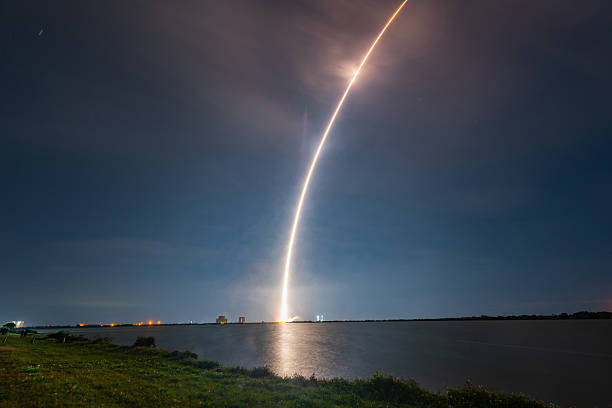
SpaceX early landing attempts montage
The first serious attempt came in January 2015, during the CRS-5 mission to the International Space Station. The Falcon 9 first stage separated, flipped around, and began its guided descent toward the autonomous droneship Just Read the Instructions positioned off the Florida coast. The landing legs deployed. The grid fins steered. And then, about ten seconds before touchdown, the hydraulic fluid for those grid fins ran out. The booster lost control, slammed into the droneship at an angle, and exploded. The ship was damaged. The booster was a smoldering mess. But here’s the thing nobody talks about—the guidance actually worked. The rocket made it to the right spot. It just ran out of juice at the worst possible moment. That failure taught SpaceX that you can’t treat a rocket landing like a controlled hover. You have to build margin for every single variable, or you end up with a debris field.
Three months later, during the CRS-6 mission, they tried again. This time the hydraulic system held. The booster descended right onto the center of the droneship. For a split second, it looked perfect. Then the lateral velocity kicked in. The rocket tipped over, slammed into the deck, and detonated. The telemetry showed a throttle valve had stuck, delaying the engine response by a fraction of a second. That fraction was the difference between a standing booster and a fireball. If you think rocket science is about big explosions and dramatic failures, you’re wrong. It’s about milliseconds and valve tolerances. That second failure drilled into the engineering team that landing a rocket isn’t like landing a plane. It’s like balancing a broomstick on your finger during an earthquake, and if your reflexes are even a hair late, the whole thing comes apart.
Then came the truly brutal one. In June 2015, during the CRS-7 mission, the Falcon 9 didn’t even get a chance to attempt a landing. The rocket broke apart two minutes and nineteen seconds after liftoff. A two-foot-long steel strut inside the second-stage helium tank failed under the aerodynamic load. The tank burst, the liquid oxygen vented, and the entire vehicle disintegrated over the Atlantic. That wasn’t a landing failure. That was a fundamental structural failure that grounded the entire fleet for six months. Elon Musk called it the most difficult and complex failure they had ever analyzed. But here’s the hard lesson: that failure forced SpaceX to completely re-evaluate their quality control. They found flawed struts from a supplier. They tested every single component to destruction. They became paranoid about failure modes they hadn’t even considered. And that paranoia—that obsessive, pain-in-the-ass attention to detail—is what made the Falcon 9 the most reliable rocket in operation today.
The drone ship landings kept failing. In February 2016, the CRS-8 attempt ended when a landing leg failed to lock, and the booster toppled over. In June 2016, another landing leg failure caused the rocket to list and slide off the deck. Each time, the press ran headlines about “another SpaceX rocket explosion.” Each time, the public saw a fireball and assumed the whole program was a circus act. But inside the Hawthorne factory, engineers were methodically collecting data, running simulations, and fixing one variable at a time. The landing leg locks got redesigned. The throttle response got refined. The guidance software got rewritten. Every failure stripped away another assumption and replaced it with a hard, tested fact.
Then, on April 8, 2016, during the CRS-8 mission, the booster came down on the droneship Of Course I Still Love You, touched down with its legs locked, and stayed standing. No fire. No tip-over. No explosion. Just a rocket sitting upright, dripping condensation, looking like it had been waiting there the whole time. The room at mission control erupted. But if you watch the full livestream archive, you’ll notice something—the landing itself looked almost boring. That’s because the real drama happened in the three years of failures that came before it.
The hard lesson from SpaceX’s early landing attempts isn’t that failure is okay. It’s that failure is necessary only if you actually learn from it. Most aerospace companies would have abandoned reusability after the first drone ship explosion. SpaceX treated each explosion as a line of code in the solution. They burned through boosters, damaged ships, and spent millions on test flights that the public called disasters. But every single one of those disasters taught something real about thrust vectoring, grid fin aerodynamics, leg deployment timing, and the goddamn throttle valve latency. Those lessons cannot be simulated. They have to be earned in fire and saltwater.
Today, when you see a Falcon 9 booster land on a pad at Cape Canaveral, it looks routine. It should. The routine came at a cost. Every successful landing is a monument to three years of rockets turned to scrap. And that’s the real story—not the landings themselves, but the brutal, unglamorous, failure-riddled path that made them possible.
Space News
Latest Articles
New rockets, upcoming launches, and the stories shaping humanity's push off this planet. No astronomy degree required.