Super-Earths and the mass-radius relationship
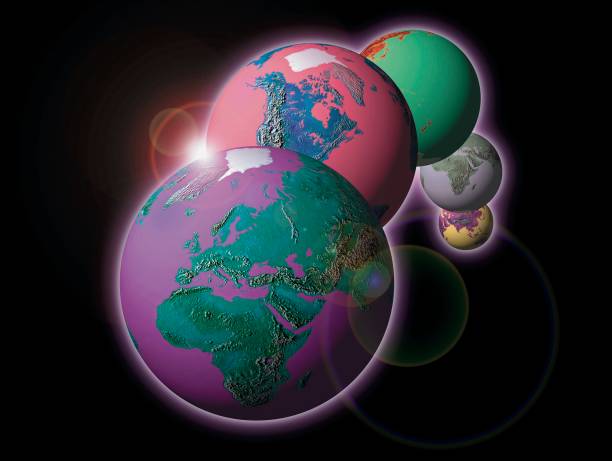
Let’s get the basics straight. A Super-Earth is any rocky planet with a mass between about one and ten times that of Earth. That’s a broad range, and it covers a lot of territory. The mass-radius relationship is the simple mathematical link that tells astronomers how big a planet should be given its mass. If you know the mass, you can estimate the radius, and vice versa. For a planet made of the same stuff as Earth—silicate rock and iron—a higher mass means a tighter squeeze. Gravity compresses the interior more, so a five-Earth-mass planet isn’t five times bigger in radius. It’s maybe only twice as big. This compression changes everything about what the surface feels like and whether the planet is even habitable.
Now, why should you care? Because the mass-radius relationship is your first clue about whether a destination is worth the trip. If a planet is too massive, the surface gravity becomes a problem. Imagine weighing 300 pounds right now. On a five-Earth-mass planet, you’d feel like you’re carrying a full-grown man on your back at all times. Your heart would struggle to pump blood. Your bones would need to be thicker. Your rocket would need to burn insane amounts of fuel just to land and then launch again. That’s not a vacation spot; that’s a punishment.
But there’s a more interesting angle. Some Super-Earths sit right in that sweet spot where the mass-radius relationship suggests a world that could hold onto a thick atmosphere and liquid water. These are the ones inside the habitable zone of their star—the region where temperatures allow water to exist on the surface. That’s the real destination. Astronomers have already found candidates like Kepler-452b, a Super-Earth about 60% larger than Earth in radius, with a mass that suggests it’s rocky. The habitable zone there is real, but the age of the star raises questions. You don’t want to arrive on a planet that’s already past its prime, where the atmosphere has been stripped away by an aging sun.
The mass-radius relationship also tells you whether a planet is truly rocky or a puffy mini-Neptune. That distinction matters. If you see a planet with a radius that’s too big for its mass, it means there’s a thick envelope of gas—hydrogen, helium, maybe water vapor—surrounding a small rocky core. That’s not a destination you can walk on. That’s a gas giant lite, with crushing atmospheric pressure at the surface. But if the radius fits the mass for a rocky composition, you’re looking at a solid surface. You could build there. You could mine there. You could live there, if the gravity and radiation cooperate.
The most promising Super-Earths for future destinations are those where the mass-radius relationship lines up with a planet that has a decent atmosphere, liquid water, and surface gravity within human tolerance. That tolerance is not infinite. Studies suggest humans can adapt to up to about three times Earth’s gravity over time, but it comes with serious health costs. A planet with three or four Earth masses might push the limit. A planet with five or six is likely too harsh. So the real targets are the Super-Earths at the lower end of the mass range—maybe two to three Earth masses.
And here’s the kicker: the data is still incomplete. We have thousands of exoplanet candidates, but precise mass and radius measurements are hard to get. That means every new discovery could shift our understanding of what’s out there. The TRAPPIST-1 system, for example, has seven Earth-sized planets, but they’re all crammed tightly around a dim red dwarf. The mass-radius relationship suggests some are rocky, some might be icy, and all of them are probably tidally locked. That’s a trade-off. You get the right size and mass, but you lose the day-night cycle and face constant stellar flares.
So when you think about destinations in the galaxy, stop picturing Mars. Start thinking about Super-Earths. They are the most common type of planet in the habitable zone. The mass-radius relationship is the tool that separates the potential homesteads from the dead rocks and the gas balls. It’s not romantic. It’s physics. But it’s the difference between arriving somewhere you can actually stand and arriving somewhere that instantly crushes you. If you’re betting on the future of human space travel, bet on the Super-Earths that check the mass-radius box. That’s where the next real destinations are hiding.
Space News
Latest Articles
New rockets, upcoming launches, and the stories shaping humanity's push off this planet. No astronomy degree required.