The Merlin engine from joke to legend
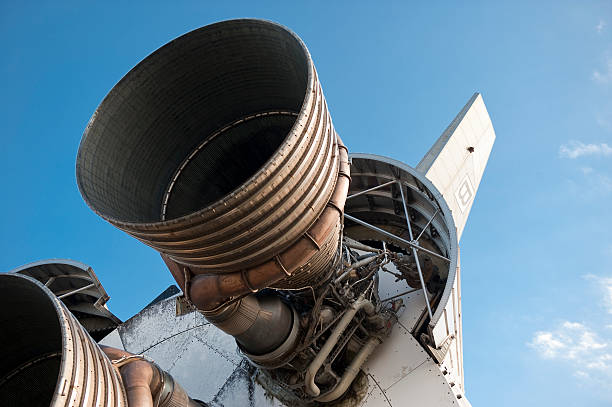
The Merlin engine was born out of necessity. In 2002, when Elon Musk founded SpaceX, the cost of launching anything into orbit was astronomically high. The incumbents—Boeing, Lockheed Martin, and their joint venture United Launch Alliance—charged hundreds of millions of dollars per launch. Their engines, like the Russian-built RD-180 used on the Atlas V, were proven but expensive to procure and politically risky. Musk’s thesis was simple: if you could build a simpler, cheaper engine that could be produced in high volume, you could undercut the entire industry. The first version of the Merlin, introduced on the Falcon 1, was a clear product of that philosophy. It used a pintle injector, a design that was notoriously difficult to tune but offered dramatic simplicity in manufacturing. Where other engines required precision-machined injector plates with hundreds of tiny holes, the Merlin used a single, adjustable pintle. This made it easier to build, test, and iterate. But early test flights were disasters. The Falcon 1 failed three times before reaching orbit in 2008, and each failure was blamed, at least in part, on the engine. Industry veterans called it a joke, a toy engine that could never scale.
The turning point came with the Falcon 9 and its Block 1 Merlin 1C engine. By 2010, SpaceX had iterated the Merlin through several major revisions, increasing its thrust and reliability. The Merlin 1C, which used a regeneratively cooled nozzle and a turbopump, pushed the engine to 95,000 pounds of thrust at sea level. But the real game-changer was the Merlin 1D, introduced in 2013. This engine produced 147,000 pounds of thrust, had a thrust-to-weight ratio that exceeded any other liquid oxygen and rocket-grade kerosene engine ever built, and could be throttled down to 70% of its maximum power for landing burns. The 1D was not just a better engine; it was a fundamentally different approach to rocket propulsion. Where traditional aerospace agencies had spent decades engineering engines for maximum performance at a single operating point, SpaceX designed the Merlin to be reusable, throttleable, and cheap to replace. This was a philosophy born not from NASA or the Air Force, but from a private company acting as its own agency, answerable to no one but its customers and its own bottom line.
The Merlin’s role in enabling Falcon 9 reusability cannot be overstated. When SpaceX first demonstrated the ability to land a Falcon 9 first stage on a droneship in 2016, the engine had already logged dozens of flights. The same engine that had been written off as a joke a decade earlier was now performing three precise burns on each mission: a boost phase, a reentry burn, and a landing burn, all while being exposed to extreme thermal and mechanical stress. No other engine had ever been asked to do this. The Merlin’s simplicity, which critics had mocked, turned out to be its greatest strength. Because it had fewer moving parts and a more forgiving design, it could survive the shock of reentry and the rapid thermal cycling of reuse. Today, a single Merlin engine can be flown more than a dozen times with minimal refurbishment. That capability has driven launch costs from $50 million per flight down to as low as $15 million for a reused Falcon 9, a price point that has forced every other launch provider in the world to either adapt or die.
The broader lesson for the space industry is clear. The Merlin engine succeeded not because it was the most advanced or the most powerful, but because it was designed by an agency that was built to iterate fast, ignore long-standing norms, and take failure as a learning opportunity rather than a career-ending event. NASA and the traditional military-industrial complex had become agencies defined by risk aversion, where a failed test could kill a program and cost a contractor millions of dollars in penalties. SpaceX, acting as its own regulating and executing agency, flipped that model. They built engines in-house, tested them aggressively, and treated each failure as data rather than a disaster. The result is an engine that has now flown on over 300 missions, launched astronauts to the International Space Station, and delivered thousands of satellites to orbit. The toy engine became the standard.
For the casual observer tracking the future of space travel, the Merlin engine is more than a piece of hardware. It is a symbol of how a single, well-executed technology can disrupt an entire industry when the agency behind it is willing to reject conventional wisdom. The joke, it turns out, was on everyone who underestimated what a simple, cheap, reusable engine could do. The Merlin is now a legend, not because it is exotic, but because it is brutally effective. And as SpaceX moves toward Starship and the Raptor engine, the lessons learned from the Merlin will define how the next generation of space vehicles is built. The engine that almost nobody believed in changed everything.
keywords: Merlin Engine SpaceX Reusability
Space News
Latest Articles
New rockets, upcoming launches, and the stories shaping humanity's push off this planet. No astronomy degree required.