T-38 jets keeping pilots sharp
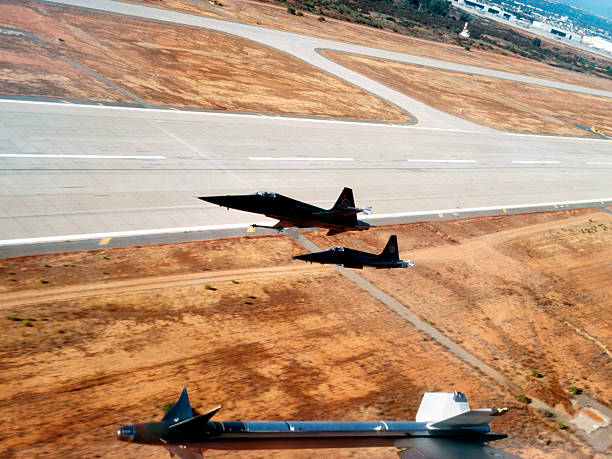
The T-38 has been in service since the early 1960s. It predates the Apollo program, the Space Shuttle, and the entire commercial space industry. It is not a modern aircraft. It has no fly-by-wire safety net, no glass cockpit, and no autopilot that will save you from a stall spin. When something goes wrong, it’s on you. That’s the point. NASA and the Air Force don’t fly these jets because they are efficient. They fly them because they are unforgiving. And unforgiving environments reveal who you really are. You cannot fake composure when the engine flames out at night over the Gulf. You cannot negotiate with physics. You either execute the emergency checklist from memory while your heart rate spikes to 160, or you don’t go to space.
This is where the so-called “right stuff” gets separated from the resume. A candidate can have a PhD in astrophysics, perfect vision, and a decade of research, but if they freeze up in a high-G turn or fail to prioritize tasks under time pressure, they are not fit for a crew vehicle. The T-38 program is a filter, and it is designed to break people who cannot handle the cognitive load of a dynamic emergency. Every flight is a test of situational awareness, communication discipline, and instinct. The jet does not care about your credentials. It only cares about your inputs. And that is the most honest feedback a human can get.
Why does this matter for space travel? Because spaceflight is not a smooth ride. Launch aborts, cabin pressure leaks, thruster malfunctions—these are not theoretical. They are the job. The astronauts who fly on Crew Dragon, Starliner, or future lunar landers need to operate at peak mental efficiency when everything goes wrong at once. Simulators can reproduce the procedures, but they cannot reproduce the adrenaline of a real emergency at 500 knots. The T-38 gives that. It gives the visceral, physical reality of being in control of a high-performance system that can kill you in seconds if you hesitate. It trains the human nervous system to stay calm when calm is the hardest thing to hold onto.
There is also the less glamorous side: the grind. T-38 flying is not all dogfights and supersonic passes. It is preflight briefs, weather checks, maintenance delays, and long debriefs where your instructor picks apart every mistake. You learn to manage fatigue, to eat when you can, to sleep when you can, and to perform regardless. That is the daily reality of an astronaut’s life. The public sees the launch and the spacewalk. They do not see the hundreds of hours of uncomfortable, repetitive, high-stakes training that makes those moments possible. The T-38 is the backbone of that training. It keeps pilots sharp by never letting them get soft.
For the casual space enthusiast, this might sound like an odd footnote to the grand story of human exploration. But it is the core of it. The spacecraft get smarter every year. The computers get faster. The margins get safer. But the human remains the limiting factor. The human still has to make the call, override the automation, or manually fly the vehicle when the software glitches. The T-38 program ensures that the person in that seat is not just a passenger in their own mission. They are a pilot. They are a decision-maker. They are someone who has been tested by fire—or by jet fuel—and did not break.
When you read about the next crew heading to the Moon or Mars, remember that they spent years in the back of a two-seat trainer, sweating through emergency procedures that most people cannot even name. That is the grind. That is the human element. And it is why the T-38 will keep flying long after the engineers say it should be retired. Because you cannot simulate experience. You have to earn it, one flight at a time.
Space News
Latest Articles
New rockets, upcoming launches, and the stories shaping humanity's push off this planet. No astronomy degree required.