The ISS Legacy: The Test Bed That Will Get Us to Mars

The biggest legacy is human endurance. Before the ISS, we knew people could survive a few weeks in space. We did not know what six months or a year does to the body. The station answered that with brutal clarity. Bones lose density. Muscles waste. Fluids shift upward and mess with eyesight. Radiation exposure adds up. Astronauts exercise two hours a day just to slow the damage. Those problems are not abstract anymore. They are engineering requirements. Any Mars mission will last two to three years. The ISS gave us the first real dataset for keeping a crew alive that long.
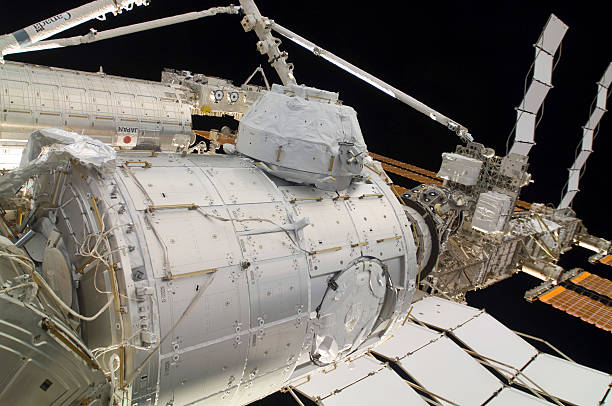
Life support is another inheritance. On the station, every breath and every drop of water gets recycled. The Environmental Control and Life Support System turns sweat, urine, and humidity back into drinking water. It scrubs carbon dioxide from the air. It is not perfect, and it breaks. Astronauts and ground controllers have spent years fixing clogged valves, replacing failed pumps, and troubleshooting software. That maintenance grind is the point. A Mars crew cannot call home for a spare part. The ISS taught us how to build systems that can be repaired, bypassed, and upgraded in orbit. That knowledge is already flowing into designs for lunar habitats and deep-space transports.
The station also proved that international cooperation can survive politics. The U.S. and Russia kept working together through tensions that would have killed most joint projects. Europe, Japan, and Canada built modules and hardware that became essential. That model is messy, but it works. Future missions to the moon and Mars will need the same kind of coalition. No single country can foot the bill or supply every skill. The ISS showed that shared costs and shared risk can produce real results.
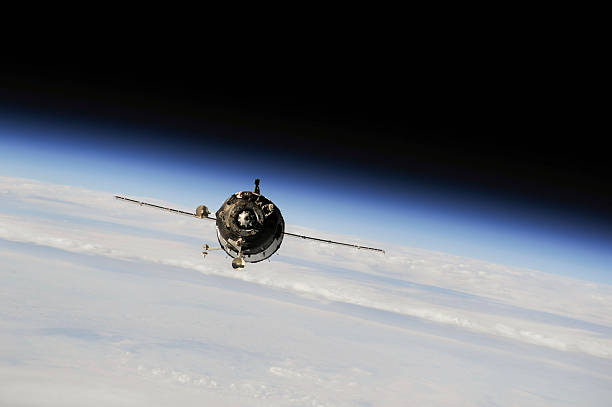
Then there is the commercial angle. For years, the ISS was the only game in town. Now it is a customer. SpaceX’s Cargo Dragon and Crew Dragon fly there. Boeing’s Starliner is trying to join them. Companies are learning how to operate in low Earth orbit without NASA owning every decision. That shift is the bridge to commercial space stations. Axiom Space is already attaching modules to the ISS with plans to spin off its own station. Blue Origin and others are pitching free-flying labs. When the ISS is deorbited, likely around 2030 or 2031, those commercial platforms are supposed to take over. The ISS legacy is not just the hardware. It is the market it helped create.
The station also changed how we do science. Microgravity research on protein crystals, combustion, fluid physics, and tissue engineering has led to real-world applications. Some of it sounds boring. It is not. Understanding how fire behaves in space helps design safer spacecraft. Growing protein crystals can improve drug development. Studying how plants grow in orbit matters if we want to feed crews on long missions. The ISS turned low Earth orbit into a laboratory that no ground-based facility can replicate. That is why NASA wants a successor station, not a gap. The point is to keep the lab open. The ISS proved it can be done.
For anyone paying attention to the future of space travel, the ISS is not a museum piece. It is the reason the next steps are possible. It revealed the hard limits of the human body. It proved that recycling systems can work, even when they fail. It built a coalition that can survive bad headlines. It handed off low Earth orbit to private companies. And it gave engineers a place to make mistakes before the mistakes get fatal. Mars is still a long way off. The moon is still a challenge. But the blueprint is not theoretical. It was written 250 miles above your head, one supply run and one spacewalk at a time.
Space News
Latest Articles
New rockets, upcoming launches, and the stories shaping humanity's push off this planet. No astronomy degree required.