The Life Support Shell: Why Real Spacesuits Are Wearable Spacecraft
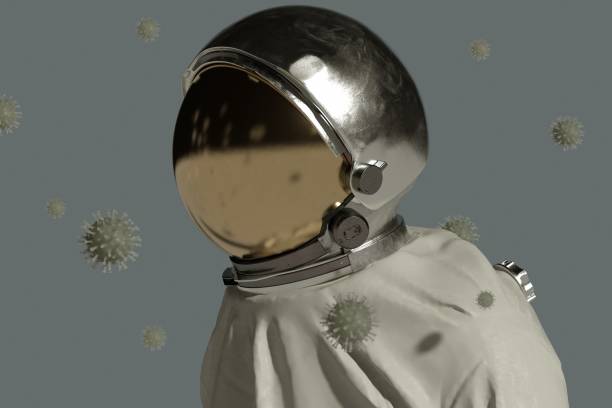
The first job is pressure. In space, there’s no atmosphere to push against your body. Without a pressurized suit, fluids in your tissues would boil, your lungs would rupture, and you’d lose consciousness fast. A suit has to hold roughly one-third to one atmosphere of pure oxygen or a mixed-gas environment. That pressure also makes the suit stiff. Every joint becomes a fight. Engineers use bearings, pleats, and hard upper torsos to let astronauts bend their arms and legs without turning the suit into a balloon. The hard upper torso is exactly what it sounds like: a rigid shell that anchors the arms, helmet, and backpack. It’s not comfortable. It’s structural.
Then there’s the backpack, usually called the Portable Life Support System, or PLSS. This is the real heart of the shell. It holds oxygen tanks, a carbon dioxide scrubber, a battery, a radio, and a cooling system. When you breathe out, the scrubber catches CO2 before it builds up and poisons you. When you work hard, you generate heat. A liquid cooling garment pulls that heat away from your skin and dumps it into space through a sublimator or radiator. Without that, you’d sweat inside a sealed bag and overheat in minutes. The PLSS also manages humidity, pressure, and sometimes water. It is a mini environmental control system strapped to your back.
The outer layer is not just for looks. It’s a thermal micrometeoroid garment, or TMG. It blocks sunlight, reflects heat, and absorbs tiny impacts from dust and debris. In low Earth orbit, a paint fleck moving fast enough can punch through soft material. On the Moon or Mars, dust is worse. Lunar dust is sharp, abrasive, and clingy. It can jam seals, scratch visors, and get into lungs. Future suits need dust-resistant fabrics and joints that don’t grind themselves to death. The suit also has to handle radiation. A suit can’t stop a solar flare like a bunker, but it can add layers and give astronauts time to get to shelter.
Mobility is the hard trade-off. A suit that protects you well is heavy and stiff. A suit that moves well is thin and risky. Apollo suits worked for a few hours on the lunar surface. Artemis suits, like NASA’s xEMU and commercial designs, are built for longer stays and more varied body types. They need to let astronauts kneel, bend, and climb. They need to support a full day of work, not a quick photo op. That means better bearings, flexible joints, and a life support shell that can be serviced or swapped. It also means planning for failure. If a fan dies or a seal leaks, the astronaut needs warnings, backups, and a way back to safety.
The future of space travel depends on this gear more than most people realize. You can’t build a Moon base or send people to Mars if every step outside requires a fragile, custom suit that wears out in a few walks. The suit has to become reliable infrastructure. It has to be repairable. It has to work with rovers, airlocks, and habitats. It has to keep a person alive long enough to do real work: geology, construction, maintenance, science. That’s the difference between visiting space and living there.
So when you see a next-gen spacesuit, don’t just look at the helmet or the logo. Look at the shell. The pressure bladder, the cooling tubes, the scrubber, the battery, the dust layers, the joints that fight you every time you move. That’s the real engineering. The life support shell is what turns a human being into someone who can walk around on another world and come back. Everything else is just mission planning. The shell is survival.
Space News
Latest Articles
New rockets, upcoming launches, and the stories shaping humanity's push off this planet. No astronomy degree required.