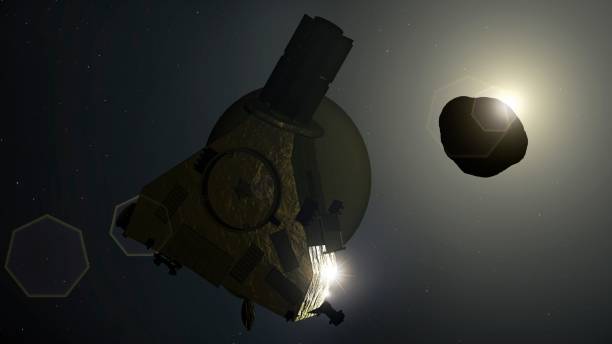
The Pioneer anomaly and the slowing down
First, a quick reality check on what these missions were built for. Pioneer 10 was the first spacecraft to cross the asteroid belt, survive Jupiter’s radiation, and send back close-ups of the gas giant. Pioneer 11 followed up by slingshotting off Jupiter’s gravity to reach Saturn. Both carried golden plaques with messages for any alien who might find them drifting in a million years. But after their primary missions ended, they became cosmic drifters. And that’s when engineers noticed something off.
The anomaly shows up when you track the spacecraft’s radio signal. By 1980, after both Pioneers had passed the last major planets, their trajectories started diverging from predictions. They were decelerating. Not because they ran into something—space is mostly empty. The deceleration was tiny: about 8.74 × 10^-10 meters per second squared. To put that in perspective, that’s roughly a billionth of Earth’s gravity. A hair on a scale. But over years, that tiny drag adds up. By the time Pioneer 10 was past Pluto’s orbit, it was off by hundreds of thousands of kilometers from where it should have been.
For a mission that relies on precise radio tracking, this was a serious problem. If you’re running a space probe, you need to know exactly where it is to aim a dish at it. The Pioneer anomaly meant that navigation predictions were getting worse with every passing month. Engineers couldn’t blame it on solar wind or gas leaks—the slowdown was steady and consistent across both probes, even though they went in different directions. It looked like a new force of nature. Or a flaw in our understanding of gravity.
The mystery lasted for over a decade. Conspiracy types loved it. But the reality was more mundane, and more revealing. In 2012, a team at the Jet Propulsion Lab finally cracked it after combing through decades of data from both spacecraft. The culprit was heat. Not from engines or instruments—from the spacecraft’s own radioisotope thermoelectric generators, or RTGs. These plutonium-powered bricks produce electricity and, as a byproduct, heat. And heat radiates out into space. If that heat hits the back of the dish antenna, it creates a tiny photon recoil—like pushing off the inside of your car to change direction. Over years, that asymmetrical heat leakage nudged the Pioneers back toward the Sun.
The key insight was that the heat wasn’t radiating evenly. The RTGs were mounted on booms, but the spacecraft body itself was acting like a radiator. Sunlight heated one side, and the craft’s own thermal output created a net force. Once the team modeled that heat distribution correctly, the anomaly vanished. The math matched the slowdown within a fraction of a percent. No new physics. Just good old thermodynamics messing with spacecraft that weren’t designed for precision interstellar flight.
Why does this matter for someone reading SpacePilgrim.com? Because every mission that follows—every Voyager, every New Horizons, every future interstellar probe—has to account for this effect. The Pioneer anomaly taught us that even a few watts of heat can throw off a trajectory if you’re not careful. Modern spacecraft like the Voyagers were built with better thermal balancing. New Horizons included attitude control thrusters that can compensate for similar nudges. And the next generation of outer planet missions, like NASA’s planned Uranus orbiter, will have onboard accelerometers to measure every tiny push from heat and light in real time.
The Pioneer anomaly also forced a hard look at how we track deep space missions. Ground-based radio tracking is incredibly accurate, but it’s not perfect. The lessons from Pioneers 10 and 11 led to improvements in how NASA models spacecraft systems—accounting for heat leaks, gas leaks, and even the pressure of sunlight hitting antenna edges. These aren’t glamorous fixes. But they’re the difference between knowing where your billion-dollar probe is and losing it in the dark.
Finally, the Pioneer missions themselves were outer planet masterpieces. They showed us that a simple, rugged spacecraft could survive decades in deep space. They mapped Jupiter’s radiation belts, discovered Saturn’s new moon, and proved that human engineering could cross the asteroid belt without getting pulverized. Their slowdown was not a failure—it was a finicky lesson in real-world physics. And now, as we dream of sending probes to Neptune’s moon Triton or beyond the heliosphere, we’ll remember that even a ghost of a push from your own waste heat can change a trajectory. The Pioneers slowed down. But what they taught us speeds up every mission that follows.
Space News
Latest Articles
New rockets, upcoming launches, and the stories shaping humanity's push off this planet. No astronomy degree required.